Top videos
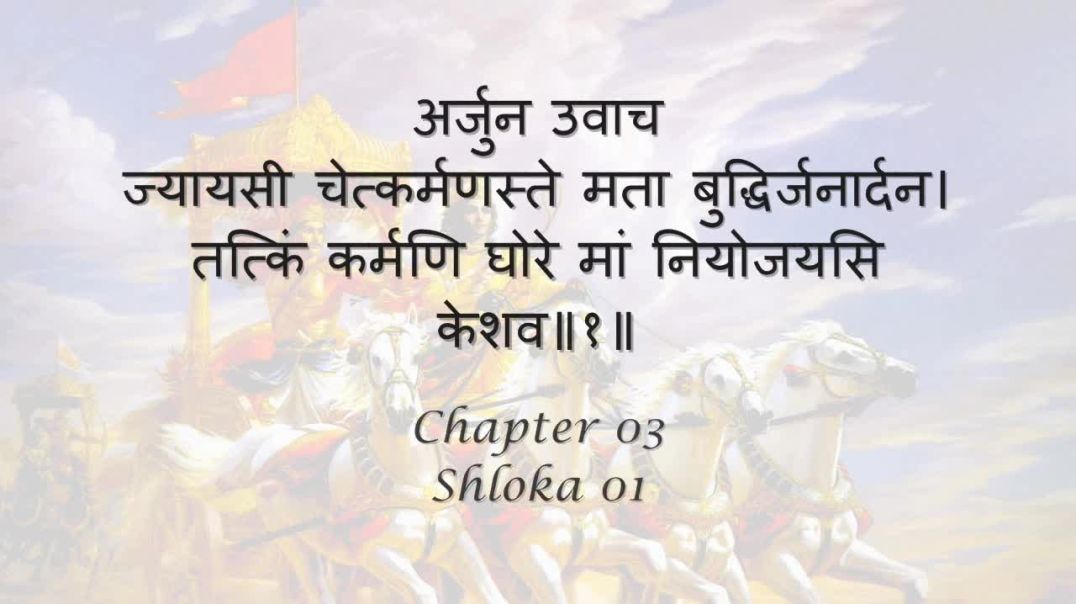
Sanskrit recitation, followed by Hindi translation of Chapter 3, Verse 1.
Text:
अर्जुन उवाच
ज्यायसी चेत्कर्मणस्ते मता बुद्धिर्जनार्दन।
तत्किं कर्मणि घोरे मां नियोजयसि केशव॥१॥
Translation:
अर्जुन बोलेः हे जनार्दन! यदि आपको कर्म की अपेक्षा ज्ञान श्रेष्ठ मान्य है तो फिर हे केशव! मुझे भयंकर कर्म में क्यों लगाते हैं?
~~~~~~~~~~~~~~~~
OVERVIEW:
The Bhagavad Gita is a 700-verse scripture that is part of the Hindu epic Mahabharata. This scripture contains a conversation between Pandava prince Arjuna and his guide Lord Krishna on a variety of theological and philosophical issues.
Faced with a fratricidal war, a despondent Arjuna turns to his charioteer Krishna for counsel on the battlefield. Krishna, through the course of the Gita, imparts to Arjuna wisdom, the path to devotion, and the doctrine of selfless action.
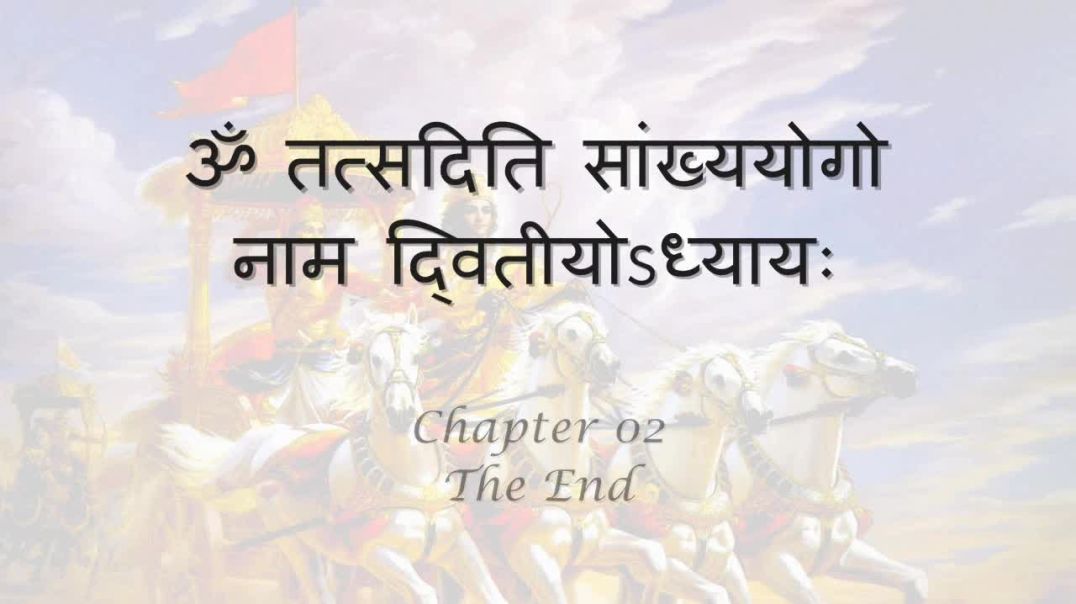
Sanskrit recitation, followed by Hindi translation of Chapter 2, Verse .
Text:
एषा ब्राह्मी स्थितिः पार्थ नैनां प्राप्य विमुह्यति।
स्थित्वास्यामन्तकालेऽपि ब्रह्मनिर्वाणमृच्छति।।७२।।
ॐ तत्सदिति सांख्ययोगो नाम द्वितीयोऽध्यायः
Translation:
हे अर्जुन! यह ब्रह्म को प्राप्त हुए पुरुष की स्थिति है। इसको प्राप्त होकर योगी कभी मोहित नहीं होता और अन्तकाल में भी इस ब्राह्मी स्थिति में स्थित होकर ब्रह्मानन्द को प्राप्त हो जाता है।
~~~~~~~~~~~~~~~~
OVERVIEW:
The Bhagavad Gita is a 700-verse scripture that is part of the Hindu epic Mahabharata. This scripture contains a conversation between Pandava prince Arjuna and his guide Lord Krishna on a variety of theological and philosophical issues.
Faced with a fratricidal war, a despondent Arjuna turns to his charioteer Krishna for counsel on the battlefield. Krishna, through the course of the Gita, imparts to Arjuna wisdom, the path to devotion, and the doctrine of selfless action.
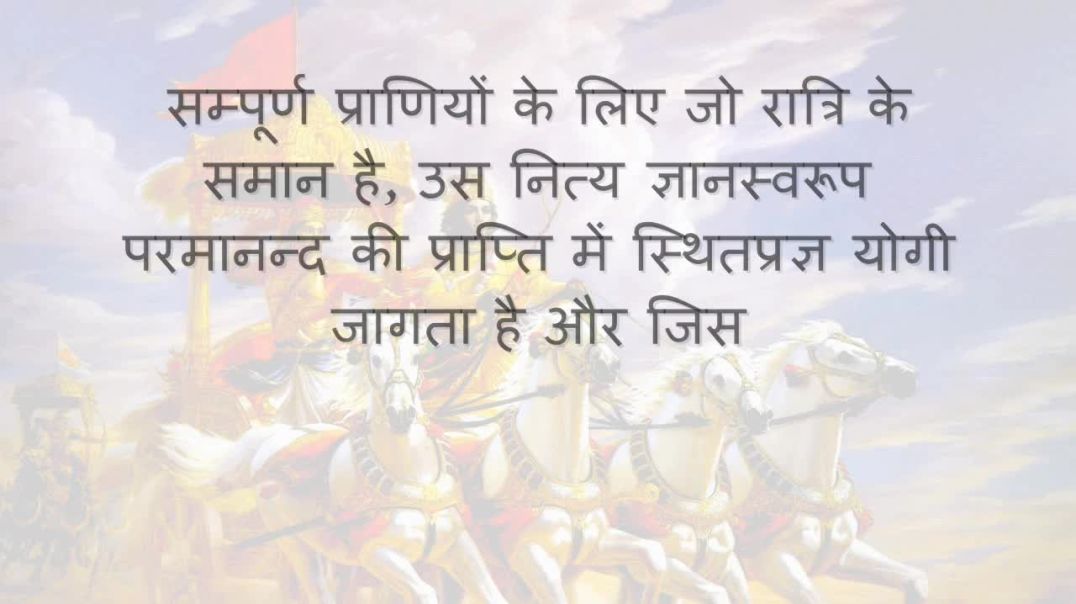
Sanskrit recitation, followed by Hindi translation of Chapter 2, Verse .
Text:
या निशा सर्वभूतानां तस्यां जागर्ति संयमी।
यस्यां जाग्रति भूतानि सा निशा पश्यतो मुनेः।।६९।।
Translation:
सम्पूर्ण प्राणियों के लिए जो रात्रि के समान है, उस नित्य ज्ञानस्वरूप परमानन्द की प्राप्ति में स्थितप्रज्ञ योगी जागता है और जिस नाशवान सांसारिक सुख की प्राप्ति में सब प्राणी जागते हैं, परमात्मा के तत्त्व को जानने वाले मुनि के लिए वह रात्रि के समान है।
~~~~~~~~~~~~~~~~
OVERVIEW:
The Bhagavad Gita is a 700-verse scripture that is part of the Hindu epic Mahabharata. This scripture contains a conversation between Pandava prince Arjuna and his guide Lord Krishna on a variety of theological and philosophical issues.
Faced with a fratricidal war, a despondent Arjuna turns to his charioteer Krishna for counsel on the battlefield. Krishna, through the course of the Gita, imparts to Arjuna wisdom, the path to devotion, and the doctrine of selfless action.
SHOW LESS
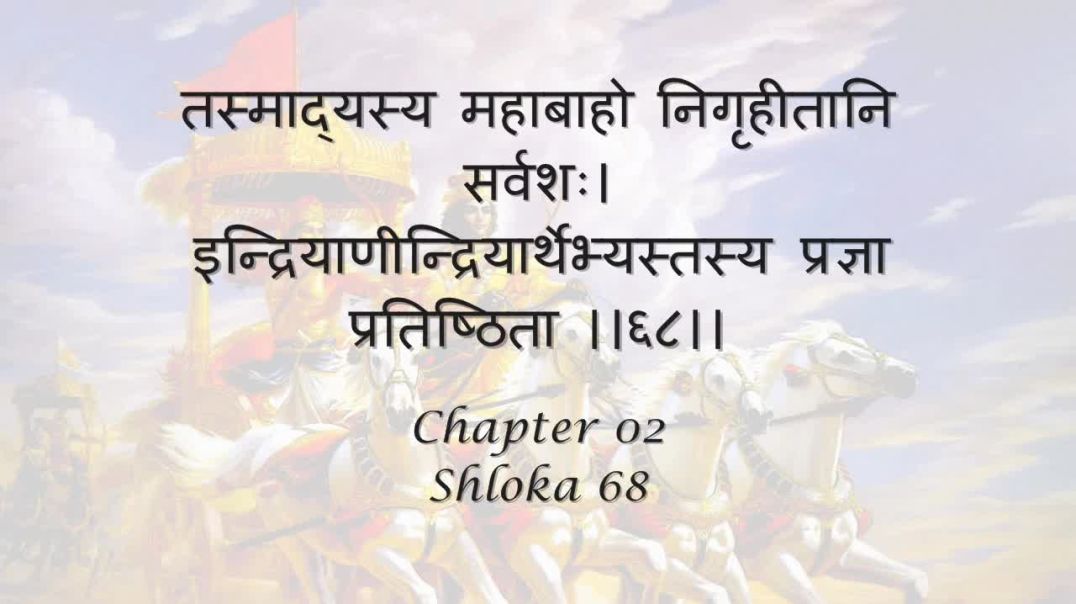
Sanskrit recitation, followed by Hindi translation of Chapter 2, Verse .
Text:
तस्माद्यस्य महाबाहो निगृहीतानि सर्वशः।
इन्द्रियाणीन्द्रियार्थेभ्यस्तस्य प्रज्ञा प्रतिष्ठिता।।६८।।
Translation:
इसीलिए हे महाबाहो! जिस पुरुष की इन्द्रियाँ इन्द्रियों के विषयों से सब प्रकार निग्रह की हुई हैं, उसी की बुद्धि स्थिर है।
~~~~~~~~~~~~~~~~
OVERVIEW:
The Bhagavad Gita is a 700-verse scripture that is part of the Hindu epic Mahabharata. This scripture contains a conversation between Pandava prince Arjuna and his guide Lord Krishna on a variety of theological and philosophical issues.
Faced with a fratricidal war, a despondent Arjuna turns to his charioteer Krishna for counsel on the battlefield. Krishna, through the course of the Gita, imparts to Arjuna wisdom, the path to devotion, and the doctrine of selfless action.
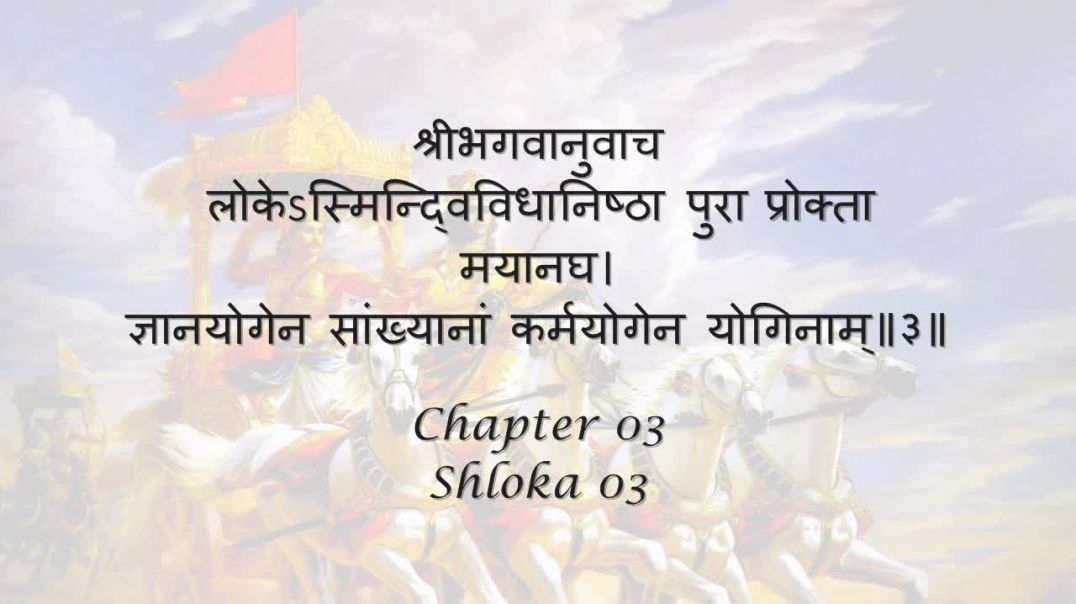
Sanskrit recitation, followed by Hindi translation of Chapter 3, Verse 3.
Text:
श्रीभगवानुवाच
लोकेऽस्मिन्द्विविधा निष्ठा पुरा प्रोक्ता मयानघ।
ज्ञानयोगेन सांख्यानां कर्मयोगेन योगिनाम्॥३॥
Translation:
श्री भगवनान बोलेः हे निष्पाप! इस लोक में दो प्रकार की निष्ठा मेरे द्वारा पहले कही गयी है। उनमें से सांख्ययोगियों की निष्ठा तो ज्ञानयोग से और योगियों की निष्ठा कर्मयोग से होती है।
~~~~~~~~~~~~~~~~
OVERVIEW:
The Bhagavad Gita is a 700-verse scripture that is part of the Hindu epic Mahabharata. This scripture contains a conversation between Pandava prince Arjuna and his guide Lord Krishna on a variety of theological and philosophical issues.
Faced with a fratricidal war, a despondent Arjuna turns to his charioteer Krishna for counsel on the battlefield. Krishna, through the course of the Gita, imparts to Arjuna wisdom, the path to devotion, and the doctrine of selfless action.
SHOW LESS

How to tie a tie easy way for Beginners Windsor knot

How to make a Bowtie from Necktie

4 Awesome ideas how to tie a Necktie
No 1 Halwa In India _ Oldest Punjabi Street Food _ Street Food India
official_Sahi_Hai
Nri Sardarji Ka Zen Dhaba _ Car Me Punjabi Dhaba _ Street Food India
official_Sahi_Hai
Punjab's Shahi Nazrana Nutri _ Veg Biryani _ Street Food India
official_Sahi_Hai

Rawalpindi Chole Kulche _ Pakistan Street Food In India _ 95 Years Old Recipe
official_Sahi_Hai
Rs 20 Me Unlimited Food _ Asha Didi ka Punjabi Dhaba _ Street Food India
official_Sahi_Hai

Rs 119 मे Deluxe Desi Ghee Thali _ Sharma Punjabi Dhaba _ Street Food India
official_Sahi_Hai

Sardarji Ka Punjabi Dhaba _ Double Tadka Dal Fry, Rarha Nutri, Palak Chaap _ Street Food India
official_Sahi_Hai
Sarson ka Saag, Makki ki Roti Unlimited _ ₹ 80 only _ Street Food India
official_Sahi_Hai
Shankar Ka Secret Formula Kesar Malai Milk _ Gulab Jamun _ Ludhiana Street Food
official_Sahi_Hai
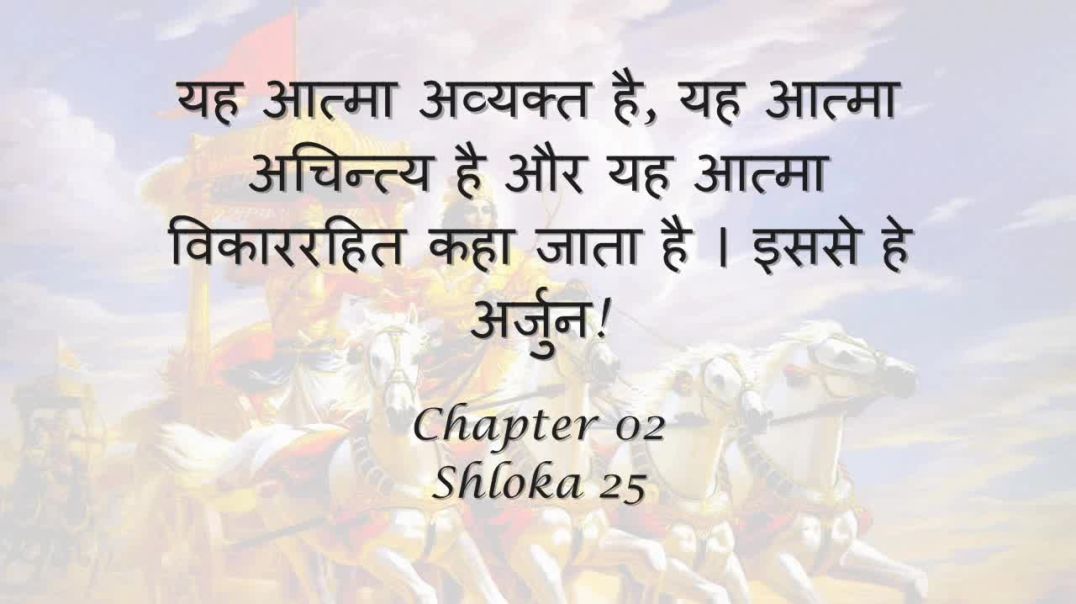
Sanskrit recitation, followed by Hindi translation.
Text:
अव्यक्तोऽयमचिन्त्योऽयमविकार्योऽयमुच्यते।
तस्मादेवं विदित्वैनं नानुशोचितुमर्हसि।।२५।।
Translation:
यह आत्मा अव्यक्त है, यह आत्मा अचिन्त्य है और यह आत्मा विकाररहित कहा जाता है। इससे हे अर्जुन! इस आत्मा को उपयुक्त प्रकार से जानकर तू शोक करने को योग्य नहीं है अर्थात् तुझे शोक करना उचित नहीं है।
~~~~~~~~~~~~~~~~
OVERVIEW:
The Bhagavad Gita is a 700-verse scripture that is part of the Hindu epic Mahabharata. This scripture contains a conversation between Pandava prince Arjuna and his guide Lord Krishna on a variety of theological and philosophical issues.
Faced with a fratricidal war, a despondent Arjuna turns to his charioteer Krishna for counsel on the battlefield. Krishna, through the course of the Gita, imparts to Arjuna wisdom, the path to devotion, and the doctrine of selfless action.

alarulu kuriyaga naaDenadae
alakala gulukula alamaelumaMga
araviri sobagula ativalu mechchaga
ara tera maruguna naaDe nadae
varusaga poorvadu vaaLapu tirupula
hari garagiMpuchu alamaelumaMga
maTTapu malapula maTTelakelapula
taTTeDi naDapula daaTenadae
peTTina vajrapu peMDepu daLukulu
aTTiTTu chimmuchu alamaelumaMga
chiMdula paaTala SiripolayaaTala
aMdela mrOtala naaDe nadae
kaMduva tiruveMkaTapati mechchaga
aMdapu tirupula alamaelumaMga
~~~~~~~~~~~~~~~~
INFO:
Track: Alarulu
Album: Sri Annamacharya Nitya Sankeerthanalu Part - 1
Performer: Nemani Suryaprakash
Sanskrit recitation, followed by Hindi translation.
Text:
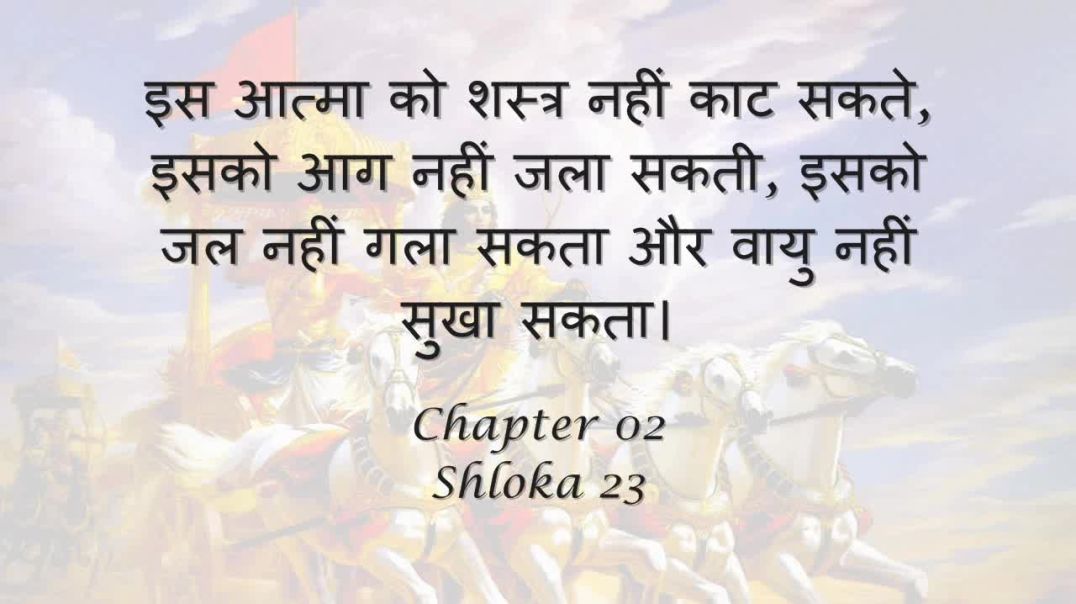
नैनं छिन्दन्ति शस्त्राणि नैनं दहति पावकः
न चैनं क्लेदयन्त्यापो न शोषयति मारुतः।।२३।।
Translation:
इस आत्मा को शस्त्र नहीं काट सकते, इसको आग नहीं जला सकती, इसको जल नहीं गला सकता और वायु नहीं सुखा सकता।
~~~~~~~~~~~~~~~~
OVERVIEW:
The Bhagavad Gita is a 700-verse scripture that is part of the Hindu epic Mahabharata. This scripture contains a conversation between Pandava prince Arjuna and his guide Lord Krishna on a variety of theological and philosophical issues.
Faced with a fratricidal war, a despondent Arjuna turns to his charioteer Krishna for counsel on the battlefield. Krishna, through the course of the Gita, imparts to Arjuna wisdom, the path to devotion, and the doctrine of selfless action.