Musik
Unterkategorie
Sanskrit recitation, followed by Hindi translation of Chapter 2, Verse .
Text:
प्रसादे सर्वदुःखानां हानिरस्योपजायते।
प्रसन्नचेतसो ह्याशु बुद्धिः पर्यवतिष्ठते।।६५।।
Translation:
अन्तःकरण की प्रसन्नता होने पर इसके सम्पूर्ण दुःखों का अभाव हो जाता है और उस प्रसन्न चित्तवाले कर्मयोगी की बुद्धि शीघ्र ही सब ओर से हटकर एक परमात्मा में ही भली भाँति स्थिर हो जाती है।
~~~~~~~~~~~~~~~~
OVERVIEW:
The Bhagavad Gita is a 700-verse scripture that is part of the Hindu epic Mahabharata. This scripture contains a conversation between Pandava prince Arjuna and his guide Lord Krishna on a variety of theological and philosophical issues.
Faced with a fratricidal war, a despondent Arjuna turns to his charioteer Krishna for counsel on the battlefield. Krishna, through the course of the Gita, imparts to Arjuna wisdom, the path to devotion, and the doctrine of selfless action.
Sanskrit recitation, followed by Hindi translation of Chapter 2, Verse .
Text:
नास्ति बुद्धिरयुक्तस्य न चायुक्तस्य भावना।
न चाभावयतः शान्तिरशान्तस्य कुतः सुखम् ।।६६।।
Translation:
न जीते हुए मन और इन्द्रियों वाले पुरुष में निश्चयात्मिका बुद्धि नहीं होती और उस अयुक्त मनुष्य के अन्तःकरण में भावना भी नहीं होती तथा भावनाहीन मनुष्य को शान्ति नहीं मिलती और शान्तिरहित मनुष्य को सुख कैसे मिल सकता है?
~~~~~~~~~~~~~~~~
OVERVIEW:
The Bhagavad Gita is a 700-verse scripture that is part of the Hindu epic Mahabharata. This scripture contains a conversation between Pandava prince Arjuna and his guide Lord Krishna on a variety of theological and philosophical issues.
Faced with a fratricidal war, a despondent Arjuna turns to his charioteer Krishna for counsel on the battlefield. Krishna, through the course of the Gita, imparts to Arjuna wisdom, the path to devotion, and the doctrine of selfless action.
Sanskrit recitation, followed by Hindi translation of Chapter 2, Verse .
Text:
इन्द्रियाणां हि चरतां यन्मनोऽनुविधीयते।
तदस्य हरति प्रज्ञां वायुर्नावमिवाम्भसि ।।६७।।
Translation:
क्योंकि जैसे जल में चलने वाली नाव को वायु हर लेती है, वैसे ही विषयों में विचरती हुई इन्द्रियों में से मन जिस इन्द्रिय के साथ रहता है वह एक ही इन्द्रिय इस अयुक्त पुरुष की बुद्धि को हर लेती है।
~~~~~~~~~~~~~~~~
OVERVIEW:
The Bhagavad Gita is a 700-verse scripture that is part of the Hindu epic Mahabharata. This scripture contains a conversation between Pandava prince Arjuna and his guide Lord Krishna on a variety of theological and philosophical issues.
Faced with a fratricidal war, a despondent Arjuna turns to his charioteer Krishna for counsel on the battlefield. Krishna, through the course of the Gita, imparts to Arjuna wisdom, the path to devotion, and the doctrine of selfless action.
Shiva Stotram composed by Adi Shankaracharya.
LYRICS:
प्रभुं प्राणनाथं विभुं विश्वनाथं जगन्नाथनाथं सदानंद भाजां |
भवद्भव्य भूतेश्वरं भूतनाथं शिवं शंकरं शंभुमीशानमीडे || १ ||
गळे रुंडमालं तनौ सर्पजालं महाकालकालं गणेशाधिपालां |
जटाजूटगंगोत्तरंगैर्विशिष्यं शिवं शंकरं शंभुमीशानमीडे || २ ||
मुदामाकरं मंडनं मंडयंतं महामंडलं भस्मभूषाधरं तं |
अनादिंह्यपारं महामोहमारं शिवं शंकरं शंभुमीशानमीडे || ३ ||
वटाधो निवासं महाट्टाट्टहासं महापापनाशं सदा सुप्रकाशं |
गिरीशं गणेशं सुरेशं महेशं शिवं शंकरं शंभुमीशानमीडे || ४ ||
गिरींद्रात्मजा संगृहीतार्थदेहं गिरौसंस्थितं सर्वदा सन्नगेहं |
परब्रह्म ब्रह्मादिभिर्वंद्यमानं शिवं शंकरं शंभुमीशानमीडे || ५ ||
कपालं त्रिशूलं कराभ्यां दधानं पदांभोजनम्राय कामं ददानं |
बलीवर्धयानां सुराणां प्रधानं शिवं शंकरं शंभुमीशानमीडे || ६ ||
शरच्चंद्र गात्रं गणानंद पात्रं त्रिनेत्रं धनेशस्य मित्रं |
अपर्णा कलत्रं सदा सच्चरित्रं शिवं शंकरं शंभुमीशानमीडे || ७ ||
हरं सर्पहारं चिताभूविहारं भवं वेदसारं सदा निर्विकारं |
स्मशाने वसंतं मनोजं दहंतं शिवं शंकरं शंभुमीशानमीडे || ८ ||
स्वयं यः प्रभाते नरश्शूलपाणेः पठेत् स्तोत्ररत्नं त्विहप्राप्यरत्नं |
सपुत्रं सुधान्यं समित्रं कळत्रं विचित्रैः समाराध्य मोक्षं प्रयाति || फलशृति ||
Sanskrit recitation, followed by Hindi translation of Chapter 3, Verse 5.
Text:
न हि कश्चित्क्षणमपि जातु तिष्ठत्यकर्मकृत्।
कार्यते ह्यवशः कर्म सर्वः प्रकृतिजैर्गुणैः॥५॥
Translation:
निःसंदेह कोई भी मनुष्य किसी भी काल में क्षणमात्र भी बिना कर्म किये नहीं रहता, क्योंकि सारा मनुष्य समुदाय प्रकृति जनित गुणों द्वारा परवश हुआ कर्म करने के लिए बाध्य किया जाता है।
~~~~~~~~~~~~~~~~
OVERVIEW:
The Bhagavad Gita is a 700-verse scripture that is part of the Hindu epic Mahabharata. This scripture contains a conversation between Pandava prince Arjuna and his guide Lord Krishna on a variety of theological and philosophical issues.
Faced with a fratricidal war, a despondent Arjuna turns to his charioteer Krishna for counsel on the battlefield. Krishna, through the course of the Gita, imparts to Arjuna wisdom, the path to devotion, and the doctrine of selfless action.
SHOW LESS
Sanskrit recitation, followed by Hindi translation of Chapter 3, Verse 4.
Text:
न कर्मणामनारम्भान्नैष्कर्म्यं पुरुषोऽश्नुते।
न च संन्यसनादेव सिद्धिं समधिगच्छति॥४॥
Translation:
मनुष्य न तो कर्मों का आरम्भ किये बिना निष्कर्मता को यानि योगनिष्ठा को प्राप्त होता है और न कर्मों के केवल त्यागमात्र से सिद्धि यानी सांख्यनिष्ठा को ही प्राप्त होता है।
~~~~~~~~~~~~~~~~
OVERVIEW:
The Bhagavad Gita is a 700-verse scripture that is part of the Hindu epic Mahabharata. This scripture contains a conversation between Pandava prince Arjuna and his guide Lord Krishna on a variety of theological and philosophical issues.
Faced with a fratricidal war, a despondent Arjuna turns to his charioteer Krishna for counsel on the battlefield. Krishna, through the course of the Gita, imparts to Arjuna wisdom, the path to devotion, and the doctrine of selfless action.
Sanskrit recitation, followed by Hindi translation of Chapter 3, Verse 3.
Text:
श्रीभगवानुवाच
लोकेऽस्मिन्द्विविधा निष्ठा पुरा प्रोक्ता मयानघ।
ज्ञानयोगेन सांख्यानां कर्मयोगेन योगिनाम्॥३॥
Translation:
श्री भगवनान बोलेः हे निष्पाप! इस लोक में दो प्रकार की निष्ठा मेरे द्वारा पहले कही गयी है। उनमें से सांख्ययोगियों की निष्ठा तो ज्ञानयोग से और योगियों की निष्ठा कर्मयोग से होती है।
~~~~~~~~~~~~~~~~
OVERVIEW:
The Bhagavad Gita is a 700-verse scripture that is part of the Hindu epic Mahabharata. This scripture contains a conversation between Pandava prince Arjuna and his guide Lord Krishna on a variety of theological and philosophical issues.
Faced with a fratricidal war, a despondent Arjuna turns to his charioteer Krishna for counsel on the battlefield. Krishna, through the course of the Gita, imparts to Arjuna wisdom, the path to devotion, and the doctrine of selfless action.
SHOW LESS
Sanskrit recitation, followed by Hindi translation of Chapter 3, Verse 2.
Text:
व्यामिश्रेणेव वाक्येन बुद्धिं मोहयसीव मे।
तदेकं वद निश्चित्य येन श्रेयोऽहमाप्नुयाम्॥२॥
Translation:
आप मिले हुए-से वचनों से मेरी बुद्धि को मानो मोहित कर रहे हैं। इसलिए उस एक बात को निश्चित करके कहिए जिससे मैं कल्याण को प्राप्त हो जाऊँ।
~~~~~~~~~~~~~~~~
OVERVIEW:
The Bhagavad Gita is a 700-verse scripture that is part of the Hindu epic Mahabharata. This scripture contains a conversation between Pandava prince Arjuna and his guide Lord Krishna on a variety of theological and philosophical issues.
Faced with a fratricidal war, a despondent Arjuna turns to his charioteer Krishna for counsel on the battlefield. Krishna, through the course of the Gita, imparts to Arjuna wisdom, the path to devotion, and the doctrine of selfless action.
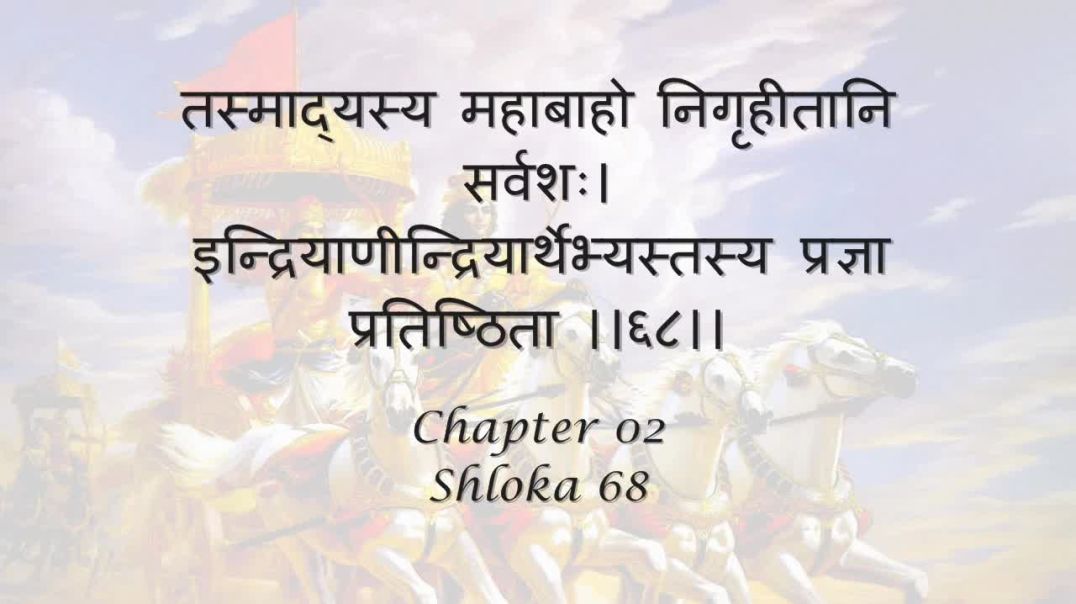
Sanskrit recitation, followed by Hindi translation of Chapter 2, Verse .
Text:
तस्माद्यस्य महाबाहो निगृहीतानि सर्वशः।
इन्द्रियाणीन्द्रियार्थेभ्यस्तस्य प्रज्ञा प्रतिष्ठिता।।६८।।
Translation:
इसीलिए हे महाबाहो! जिस पुरुष की इन्द्रियाँ इन्द्रियों के विषयों से सब प्रकार निग्रह की हुई हैं, उसी की बुद्धि स्थिर है।
~~~~~~~~~~~~~~~~
OVERVIEW:
The Bhagavad Gita is a 700-verse scripture that is part of the Hindu epic Mahabharata. This scripture contains a conversation between Pandava prince Arjuna and his guide Lord Krishna on a variety of theological and philosophical issues.
Faced with a fratricidal war, a despondent Arjuna turns to his charioteer Krishna for counsel on the battlefield. Krishna, through the course of the Gita, imparts to Arjuna wisdom, the path to devotion, and the doctrine of selfless action.

Bilvashtakam is a powerful chant that speaks of the power and glory of offering bilva leaves to Lord Shiva. They are to be offered in a group of three leaves and are said to have features that identify them with Lord Shiva himself.
TEXT:
Tridalam trigunakaram trinetram cha triyayudham
Trijanmapapasamharam ekabilvam shivarpanam
Trishakhaih bilvapatraishcha hyachchidraih komalaih shubhaih .
Tavavapujam karishhyami ekabilvam shivarpanam
Koti kanya maha danam tila parvata kotayah
Kanchanam sheela danena ekabilvam shivarpanam
Kashikshetranivasam cha kalabhairavadarshanam
Prayagamadhavam druishtva ekabilvam shivarpanam
Induvare vratam sthitwa niraharo maheshwara
Naktam haoushyami devecha eka bilvam shivarpanam
Ramalinga pratistha cha vaivahika krutam tatha
tatakadi cha santanam eka bilvam shivarpanam
Akhanda bilva patram cha ayutam shiva poojanam
Krutam nama sahasrena eka bilvam shivarpanam
Umaya sahadevesha nandi vahana meva cha
Bhasma lepana sarvangam eka bilvam shivarpanam
Salagrameshu vipranam tatakam dasha koopayo
Yagyakoti saharacha eka bilvam shivarpanam
Dantikoti sahasreshu ashwamedha shatakratau
Kotikanya mahadanam ekabilvam shivarpanam
Bilvanam darshanam punyam sparshanam papa nashanam
Aghora papa samharam eka bilvam shivarpanam
Sahasra veda patheshu brahma sthapana muchyate
Aneka vrata kotinam eka bilvam shivarpanam
Annadana sahasreshu sahasropanayanam tatha
Aneka janma papani eka bilvam shivarpanam
Bilvashhtakamidam punyam yah patheth shivasannidhau.
shivalokamavapnoti eka bilvam shivarpanam
Lingashtakam Bhakti Video Song
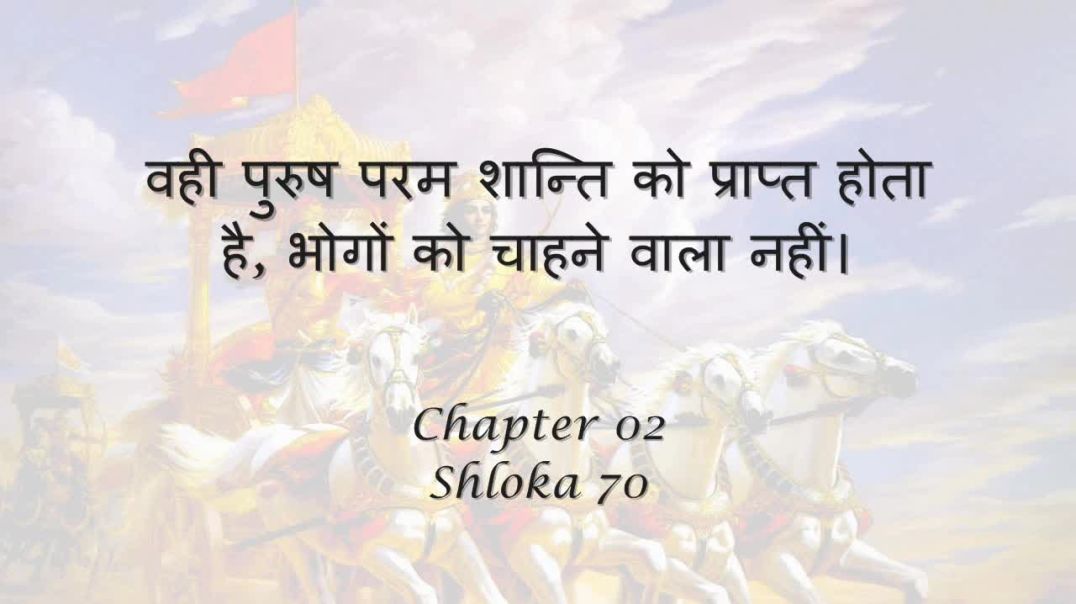
Sanskrit recitation, followed by Hindi translation of Chapter 2, Verse .
Text:
आपूर्यमाणमचलप्रतिष्ठं
समुद्रमापः प्रविशन्ति यद्वत्।
तद्वत्कामा यं प्रविशन्ति सर्वे
स शान्तिमाप्नोति न कामकामी ।।७०।।
Translation:
जैसे नाना नदियों के जल सब ओर से परिपूर्ण अचल प्रतिष्ठावाले समुद्र में उसको विचलित न करते हुए ही समा जाते हैं, वैसे ही सब भोग जिस स्थितप्रज्ञ पुरुष में किसी प्रकार का विकार उत्पन्न किये बिना ही समा जाते हैं, वही पुरुष परम शान्ति को प्राप्त होता है, भोगों को चाहने वाला नहीं।
~~~~~~~~~~~~~~~~
OVERVIEW:
The Bhagavad Gita is a 700-verse scripture that is part of the Hindu epic Mahabharata. This scripture contains a conversation between Pandava prince Arjuna and his guide Lord Krishna on a variety of theological and philosophical issues.
Faced with a fratricidal war, a despondent Arjuna turns to his charioteer Krishna for counsel on the battlefield. Krishna, through the course of the Gita, imparts to Arjuna wisdom, the path to devotion, and the doctrine of selfless action.
SHOW LESS
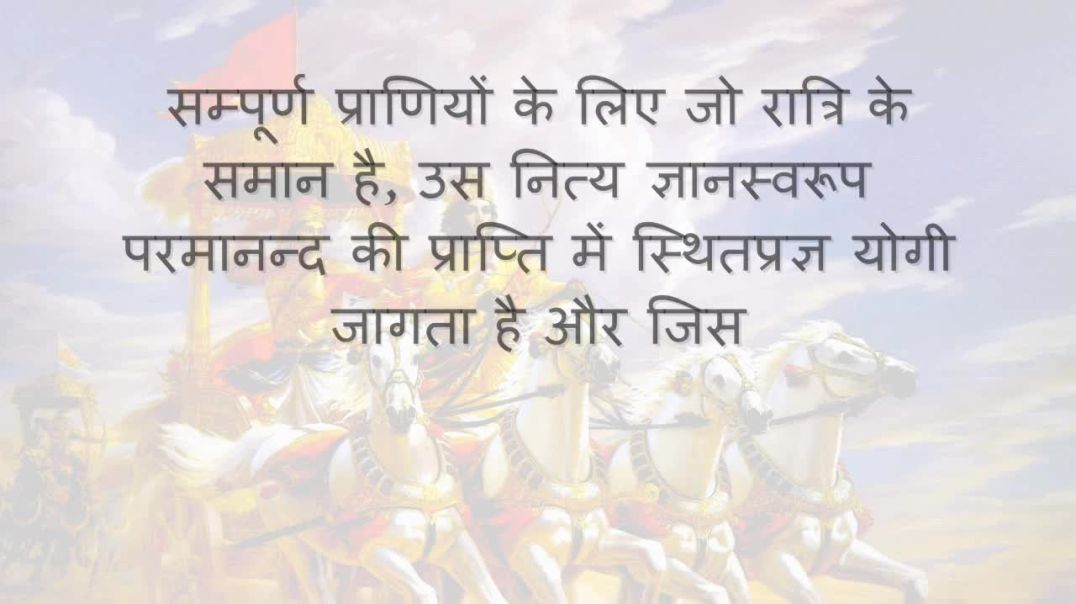
Sanskrit recitation, followed by Hindi translation of Chapter 2, Verse .
Text:
या निशा सर्वभूतानां तस्यां जागर्ति संयमी।
यस्यां जाग्रति भूतानि सा निशा पश्यतो मुनेः।।६९।।
Translation:
सम्पूर्ण प्राणियों के लिए जो रात्रि के समान है, उस नित्य ज्ञानस्वरूप परमानन्द की प्राप्ति में स्थितप्रज्ञ योगी जागता है और जिस नाशवान सांसारिक सुख की प्राप्ति में सब प्राणी जागते हैं, परमात्मा के तत्त्व को जानने वाले मुनि के लिए वह रात्रि के समान है।
~~~~~~~~~~~~~~~~
OVERVIEW:
The Bhagavad Gita is a 700-verse scripture that is part of the Hindu epic Mahabharata. This scripture contains a conversation between Pandava prince Arjuna and his guide Lord Krishna on a variety of theological and philosophical issues.
Faced with a fratricidal war, a despondent Arjuna turns to his charioteer Krishna for counsel on the battlefield. Krishna, through the course of the Gita, imparts to Arjuna wisdom, the path to devotion, and the doctrine of selfless action.
SHOW LESS
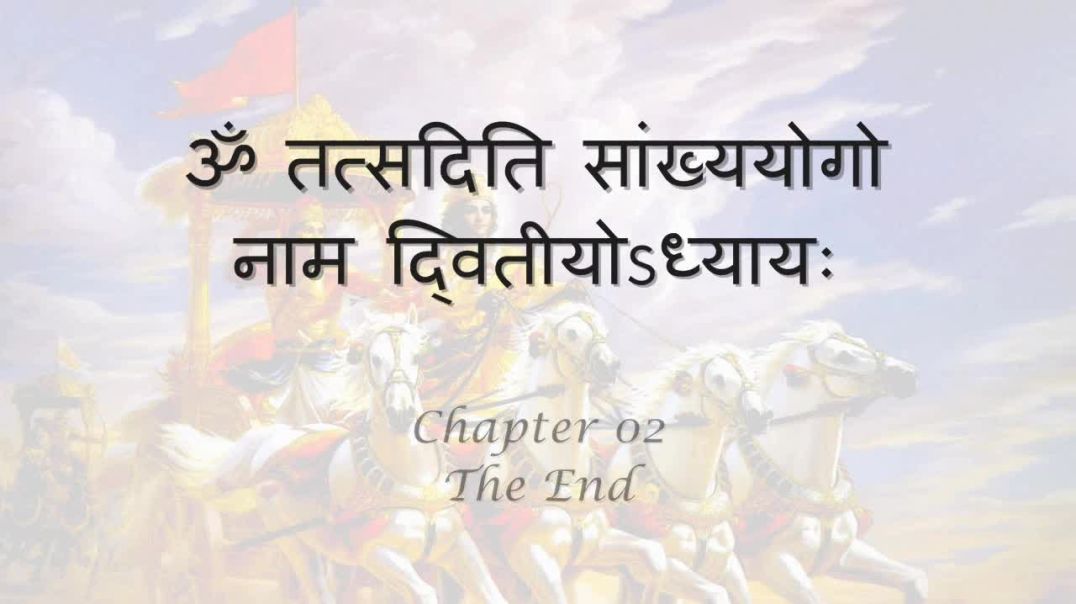
Sanskrit recitation, followed by Hindi translation of Chapter 2, Verse .
Text:
एषा ब्राह्मी स्थितिः पार्थ नैनां प्राप्य विमुह्यति।
स्थित्वास्यामन्तकालेऽपि ब्रह्मनिर्वाणमृच्छति।।७२।।
ॐ तत्सदिति सांख्ययोगो नाम द्वितीयोऽध्यायः
Translation:
हे अर्जुन! यह ब्रह्म को प्राप्त हुए पुरुष की स्थिति है। इसको प्राप्त होकर योगी कभी मोहित नहीं होता और अन्तकाल में भी इस ब्राह्मी स्थिति में स्थित होकर ब्रह्मानन्द को प्राप्त हो जाता है।
~~~~~~~~~~~~~~~~
OVERVIEW:
The Bhagavad Gita is a 700-verse scripture that is part of the Hindu epic Mahabharata. This scripture contains a conversation between Pandava prince Arjuna and his guide Lord Krishna on a variety of theological and philosophical issues.
Faced with a fratricidal war, a despondent Arjuna turns to his charioteer Krishna for counsel on the battlefield. Krishna, through the course of the Gita, imparts to Arjuna wisdom, the path to devotion, and the doctrine of selfless action.
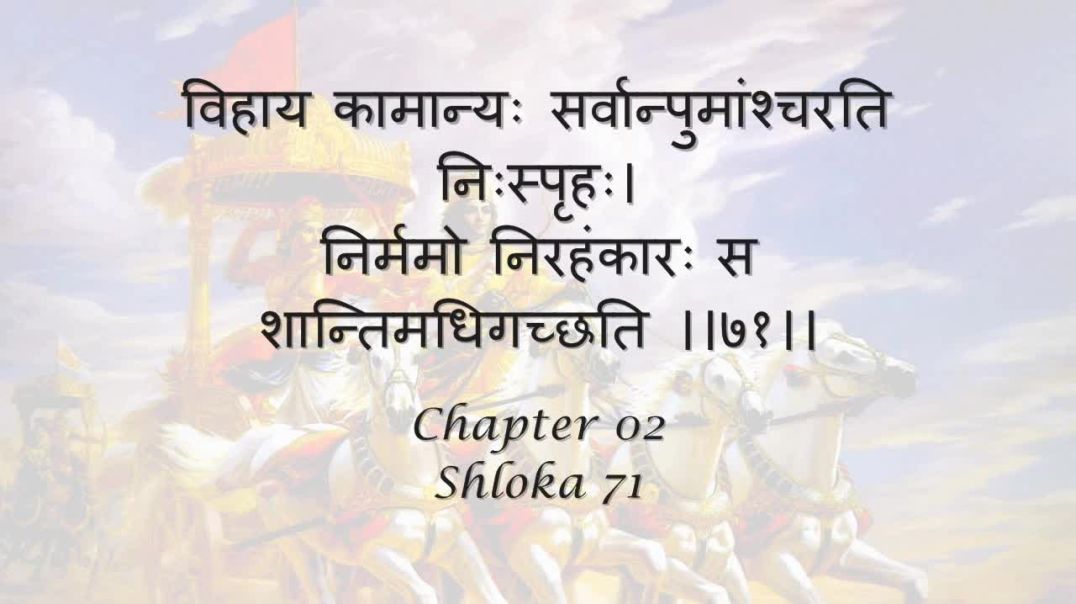
Sanskrit recitation, followed by Hindi translation of Chapter 2, Verse .
Text:
विहाय कामान्यः सर्वान्पुमांश्चरति निःस्पृहः।
निर्ममो निरहंकारः स शान्तिमधिगच्छति ।।७१।।
Translation:
जो पुरुष सम्पूर्ण कामनाओं को त्यागकर ममतारहित, अहंकार रहित और स्पृहा रहित हुआ विचरता है, वही शान्ति को प्राप्त होता है अर्थात् वह शान्ति को प्राप्त है।
~~~~~~~~~~~~~~~~
OVERVIEW:
The Bhagavad Gita is a 700-verse scripture that is part of the Hindu epic Mahabharata. This scripture contains a conversation between Pandava prince Arjuna and his guide Lord Krishna on a variety of theological and philosophical issues.
Faced with a fratricidal war, a despondent Arjuna turns to his charioteer Krishna for counsel on the battlefield. Krishna, through the course of the Gita, imparts to Arjuna wisdom, the path to devotion, and the doctrine of selfless action.
SHOW LESS
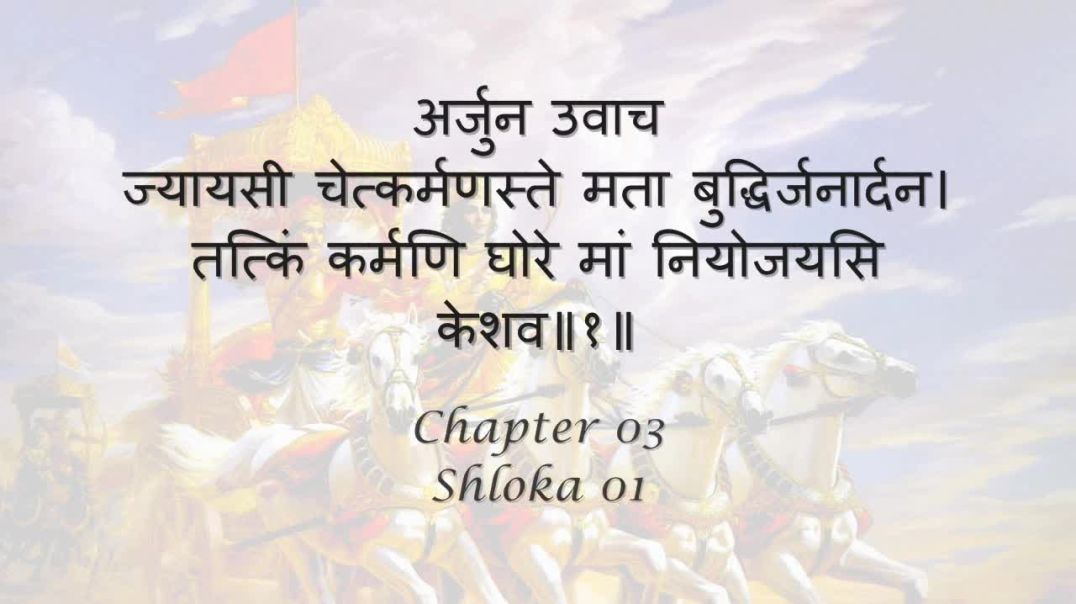
Sanskrit recitation, followed by Hindi translation of Chapter 3, Verse 1.
Text:
अर्जुन उवाच
ज्यायसी चेत्कर्मणस्ते मता बुद्धिर्जनार्दन।
तत्किं कर्मणि घोरे मां नियोजयसि केशव॥१॥
Translation:
अर्जुन बोलेः हे जनार्दन! यदि आपको कर्म की अपेक्षा ज्ञान श्रेष्ठ मान्य है तो फिर हे केशव! मुझे भयंकर कर्म में क्यों लगाते हैं?
~~~~~~~~~~~~~~~~
OVERVIEW:
The Bhagavad Gita is a 700-verse scripture that is part of the Hindu epic Mahabharata. This scripture contains a conversation between Pandava prince Arjuna and his guide Lord Krishna on a variety of theological and philosophical issues.
Faced with a fratricidal war, a despondent Arjuna turns to his charioteer Krishna for counsel on the battlefield. Krishna, through the course of the Gita, imparts to Arjuna wisdom, the path to devotion, and the doctrine of selfless action.
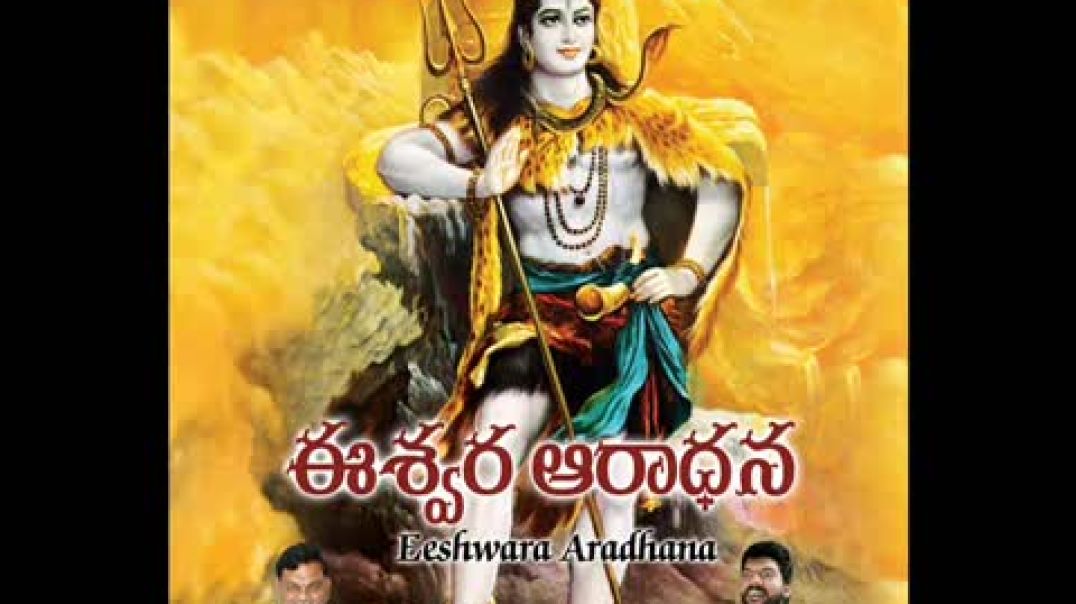
Beautiful stotram dedicated to the God of Varanasi - Kashi Vishwanath (Lord Shiva)
LYRICS:
Ganga Taranga Ramaneeya Jata Kalapam
Gowri Nirantara Vibushitha Vama Bhagam
Narayana Priya Mananga Madapaharam
Varanasi Purapathim Bhaja Vishwanatham
Vachamagocharamaneka Guna Swarupam
Vagesha Vishnu Surasevitha Paadapitham
Vamena Vigraharena Kalatra Vantham
Varanasi Purapathim Bhaja Vishwanatham
Bhootadipam Bhujaga Bhushana Bhushitangam
Vyagrajinambaradaram Jatilam Trinetram
Paashankushabhaya Varaprada Shula Bhanim
Varanasi Purapathim Bhaja Vishwanatham
Shithamsishobhita Kirita Virajamaanam
Halekshanana Na Vishobhita Panchabhanam
Nagadipa Rachita Bhasura Karna Pooram
Varanasi Purapathim Bhaja Vishwanatham
Panchananam Duritha Mattha Mathanga Janaam
Nagaanthakam Dhanuja Pungava Pannaganam
Dhavanalam Marana Shoka Jarataveenaam
Vaaranasi Purapathim Bhaja Vishwanatham
Thejomayam Saguna Nirguna Madvitheeyam
Anandakandamapirrajitha Maprameyam
Nagaatmakam Sakala Nishkamalamaathma Roopam
Varanasi Purapathim Bhaja Vishwanatham
Ashaam Vihayaa Parivruthya Parathya Nindam
Uperachincha Sunivarya Mana Samaadhow
Aghaya Hruthkamala Madya Gatham Pravesham
Varanasi Purapathim Bhaja Vishwanatham
Ragaadidhosha Rahitha Swajananu Raagam
Vyragya Shanti Nilayam Girija Sahayam
Madhurya Dhairya Subhagam Garalaa Bhiramam
Varanasi Purapathim Bhaja Vishwanatham
Varanasi Purapateh Stavanam Shivasya
Vyaakhyaatam Ashtakamidam Pathate Manushya
Vidyaam Shriyam Vipula Soukhyam-ananta Keertim
Sampraapya Dehavilaye Labhate Cha Moksham
Vishvanaathaashtakam Idam Punyam Yah Pathet Shiva Sannidhau
Shiva Lokam Avaapnoti Shivena Saha Modate
vAgarthAviva samprktau vAgarthapratipattaye
jagata: pitarau vande pArvati parameshvarau
1 Om Sivaya namah
2 Om Maheshwaraaya namah
3 Om Shambhave namah
4 Om Pinaakine namah
5 Om Sashishekharaya namah
Vedic prayer to Lord Rudra (Shiva).
Om Agnaavishhnuu sajoshhasemaa vardhantu vaam girah Dyumnairvaajebhiraagatamh
Vaajashcha me prasavashcha me prayatishcha me
prasitishcha me dhiitishcha me kratushcha me
svarashcha me shlokashcha me shraavashcha me
shrutishcha me jyotishcha me suvashcha me
praanashcha me apaanashcha me vyaanashcha me
asushcha me chittam cha ma aadhiitam cha me
vaakcha me manashcha me chakshushcha me
shrotram cha me dakshashcha me balam cha ma ojashcha me
sahashcha ma aayushcha me jaraa cha ma aatmaa cha me
tanuushcha me sharma cha me varma cha me
angaani cha me asthaani cha me paruushhi cha me shariiraani cha me ||1||
................
================================
TEXT (Sanskrit):
~~~~~~~~~~~~~~~~
ॐ अग्ना॑विष्णो स॒जोष॑से॒माव॑र्धन्तु वां॒ गिरः॑ ।
द्यु॒म्नैर्-वाजे॑भिराग॑तम् ।
वाज॑श्च मे प्रस॒वश्च॑ मे॒ प्रय॑तिश्च मे॒ प्रसि॑तिश्च मे
धी॒तिश्च॑ मे क्रतु॑श्च मे॒ स्वर॑श्च मे॒ श्लोक॑श्च मे॒
श्रा॒वश्च॑ मे॒ श्रुति॑श्च मे॒ ज्योति॑श्च मे॒ सुव॑श्च मे
प्रा॒णश्च॑ मेஉपा॒नश्च॑ मे व्या॒नश्च॒ मेஉसु॑श्च मे
चि॒त्तं च॑ म॒ आधी॑तं च मे॒ वाक्च॑ मे॒ मन॑श्च मे॒
चक्षु॑श्च मे॒ श्रोत्रं॑ च मे॒ दक्ष॑श्च मे॒
बलं॑ च म॒ ओज॑श्च मे॒ सह॑श्च म॒ आयु॑श्च मे
ज॒रा च॑ म आ॒त्मा च॑ मे त॒नूश्च॑ मे॒ शर्म॑ च मे॒
वर्म॑ च॒ मेஉङ्गा॑नि च मे॒உस्थानि॑ च मे॒ परूग्ं॑षि च मे॒
शरी॑राणि च मे ॥ 1 ॥
................
================================
ABOUT:
The Chamakam is an ancient prayer from the Yajurveda. In the days of old, the priest of the Vedic sacrifice (yajna) would chant this long supplication to the Divine while pouring oblations into the holy fire. These days, as yajna rituals are rare, the Chamakam is mostly chanted in temples of Shiva following the other famous Yajurvedic prayer known as Sri Rudram or Rudradhyaya. In essence, the Chamakam supplicates the Divine to provide all the necessary things for humanity's continued survival and prosperity. Though the reciter repeatedly says me meaning "to me" (grant me), it should be understood that the supplication is on behalf of humanity, and not the individual.
Namakam (recited by Veda Pandits)