Musik
Unterkategorie
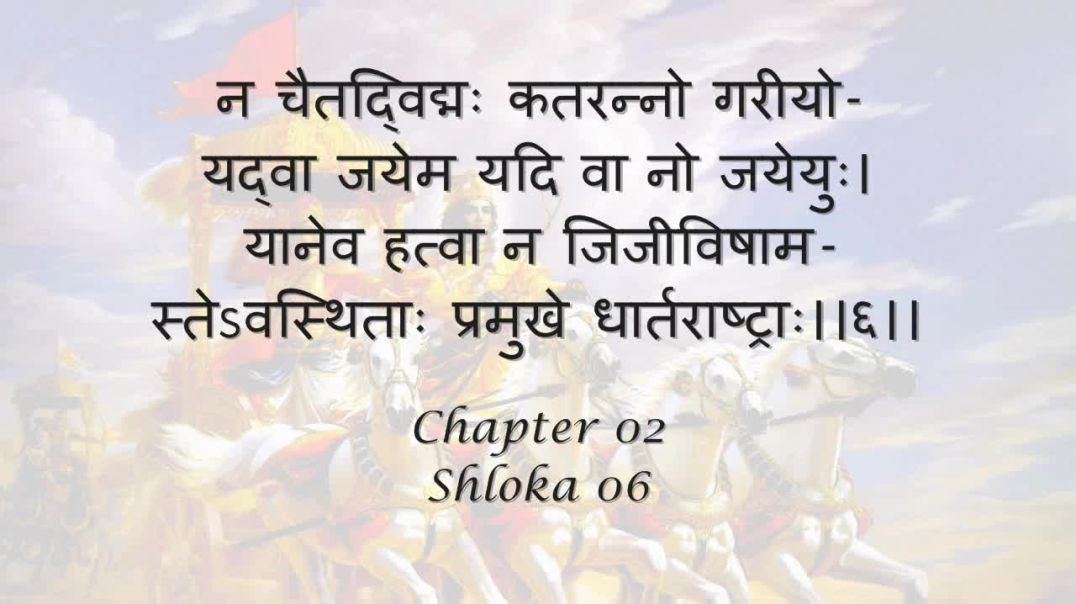
Sanskrit recitation, followed by Hindi translation.
Text:
कार्पण्यदोषोपहतस्वभावः
पृच्छामि त्वां धर्मसम्मूढचेताः।
यच्छ्रेयः स्यान्निश्चितं ब्रूहि तन्मे
शिष्यस्तेऽहं शाधि मां त्वां प्रपन्नम् ।।७।।
Translation:
इसलिए कायरतारूप दोष से उपहत हुए स्वभाववाला तथा धर्म के विषय में मोहित चित्त हुआ मैं आपसे पूछता हूँ कि जो साधन निश्चित कल्याणकारक हो, वह मेरे लिए कहिए क्योंकि मैं आपका शिष्य हूँ, इसलिए आपके शरण हुए मुझको शिक्षा दीजिए।
~~~~~~~~~~~~~~~~
OVERVIEW:
The Bhagavad Gita is a 700-verse scripture that is part of the Hindu epic Mahabharata. This scripture contains a conversation between Pandava prince Arjuna and his guide Lord Krishna on a variety of theological and philosophical issues.
Faced with a fratricidal war, a despondent Arjuna turns to his charioteer Krishna for counsel on the battlefield. Krishna, through the course of the Gita, imparts to Arjuna wisdom, the path to devotion, and the doctrine of selfless action.
SHOW LESS
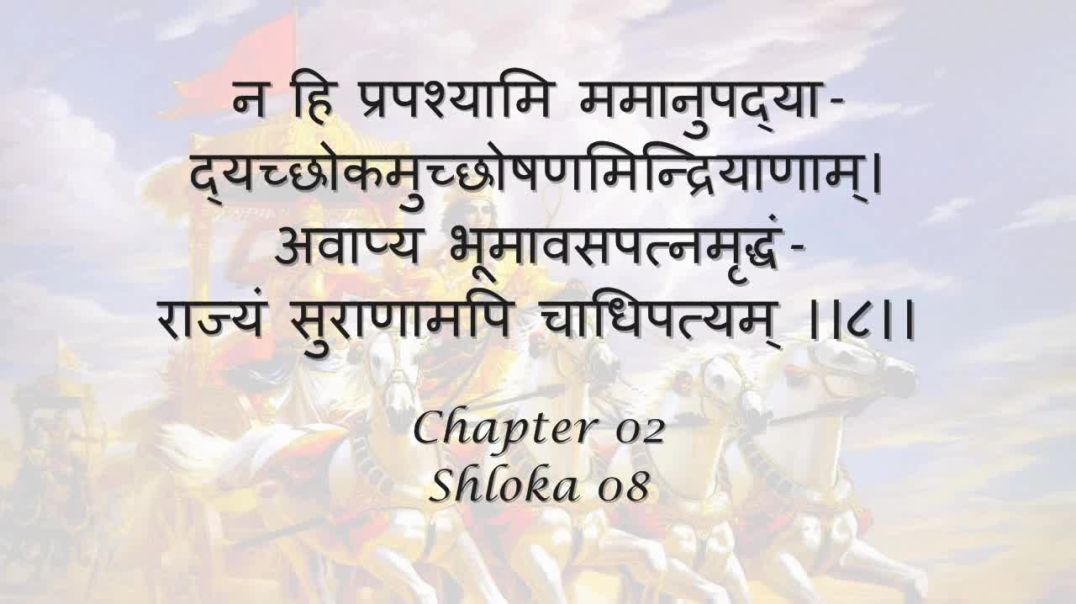
Sanskrit recitation, followed by Hindi translation.
Text:
न हि प्रपश्यामि ममापनुद्या-
द्यच्छोकमुच्छोषणमिन्द्रियाणाम्।
अवाप्य भूमावसपत्नमृद्धं-
राज्यं सुराणामपि चाधिपत्यम् ।।८।।
Translation:
क्योंकि भूमि में निष्कण्टक, धन-धान्यसम्पन्न राज्य को और देवताओं के स्वामीपने को प्राप्त होकर भी मैं उस उपाय को नहीं देखता हूँ, जो मेरी इन्द्रियों को सुखाने वाले शोक को दूर कर सके।
~~~~~~~~~~~~~~~~
OVERVIEW:
The Bhagavad Gita is a 700-verse scripture that is part of the Hindu epic Mahabharata. This scripture contains a conversation between Pandava prince Arjuna and his guide Lord Krishna on a variety of theological and philosophical issues.
Faced with a fratricidal war, a despondent Arjuna turns to his charioteer Krishna for counsel on the battlefield. Krishna, through the course of the Gita, imparts to Arjuna wisdom, the path to devotion, and the doctrine of selfless action.
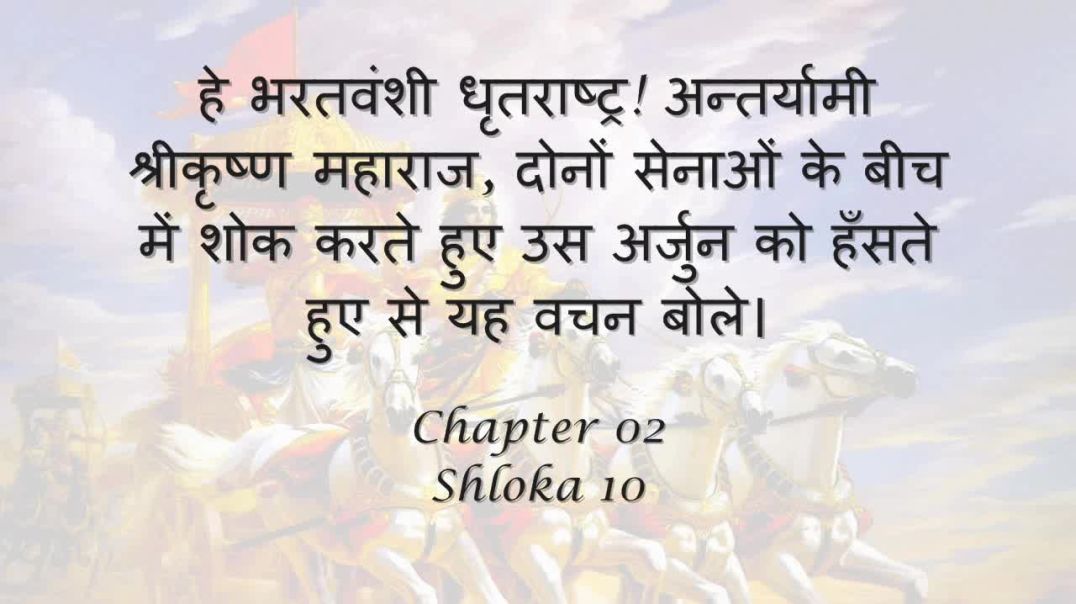
Sanskrit recitation, followed by Hindi translation.
Text:
तमुवाच हृषिकेशः प्रहसन्निव भारत।
सेनयोरुभयोर्मध्ये विषीदन्तमिदं वचः।।१०।।
Translation:
हे भरतवंशी धृतराष्ट्र! अन्तर्यामी श्रीकृष्ण महाराज दोनों सेनाओं के बीच में शोक करते हुए उस अर्जुन को हँसते हुए से यह वचन बोले।
~~~~~~~~~~~~~~~~
OVERVIEW:
The Bhagavad Gita is a 700-verse scripture that is part of the Hindu epic Mahabharata. This scripture contains a conversation between Pandava prince Arjuna and his guide Lord Krishna on a variety of theological and philosophical issues.
Faced with a fratricidal war, a despondent Arjuna turns to his charioteer Krishna for counsel on the battlefield. Krishna, through the course of the Gita, imparts to Arjuna wisdom, the path to devotion, and the doctrine of selfless action.
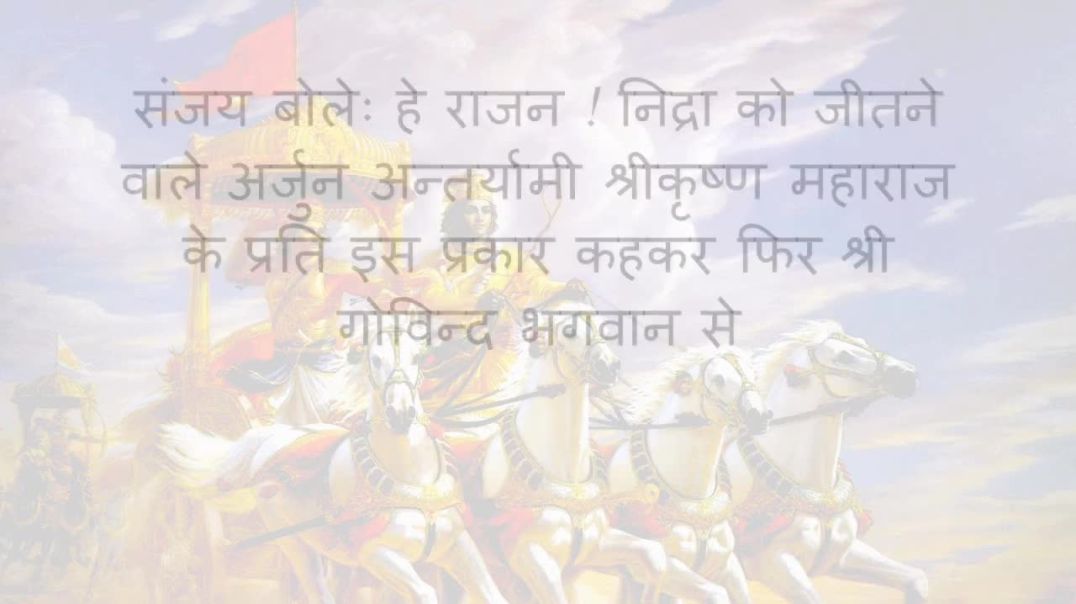
Sanskrit recitation, followed by Hindi translation.
Text:
संजय उवाच
एवमुक्त्वा हृषिकेशं गुडाकेशः परन्तप।
न योत्स्य इति गोविन्दमुक्त्वा तूष्णीं बभूव ह।।९।।
Translation:
संजय बोलेः हे राजन ! निद्रा को जीतने वाले अर्जुन अन्तर्यामी श्रीकृष्ण महाराज के प्रति इस प्रकार कहकर फिर श्री गोविन्द भगवान से 'युद्ध नहीं करूँगा' यह स्पष्ट कहकर चुप हो गये ।
~~~~~~~~~~~~~~~~
OVERVIEW:
The Bhagavad Gita is a 700-verse scripture that is part of the Hindu epic Mahabharata. This scripture contains a conversation between Pandava prince Arjuna and his guide Lord Krishna on a variety of theological and philosophical issues.
Faced with a fratricidal war, a despondent Arjuna turns to his charioteer Krishna for counsel on the battlefield. Krishna, through the course of the Gita, imparts to Arjuna wisdom, the path to devotion, and the doctrine of selfless action.
Sanskrit recitation, followed by Hindi translation.
Text:
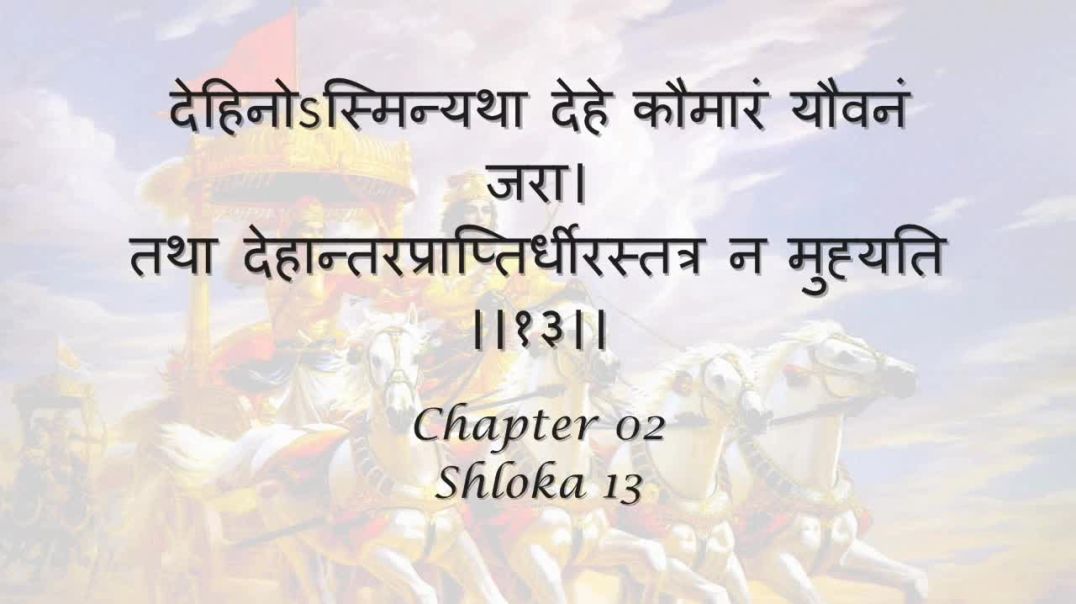
देहिनोऽस्मिन्यथा देहे कौमारं यौवनं जरा।
तथा देहान्तरप्राप्तिर्धीरस्तत्र न मुह्यति।।१३।।
Translation:
जैसे जीवात्मा की इस देह में बालकपन, जवानी और वृद्धावस्था होती है, वैसे ही अन्य शरीर की प्राप्ति होती है, उस विषय में धीर पुरुष मोहित नहीं होता।
~~~~~~~~~~~~~~~~
OVERVIEW:
The Bhagavad Gita is a 700-verse scripture that is part of the Hindu epic Mahabharata. This scripture contains a conversation between Pandava prince Arjuna and his guide Lord Krishna on a variety of theological and philosophical issues.
Faced with a fratricidal war, a despondent Arjuna turns to his charioteer Krishna for counsel on the battlefield. Krishna, through the course of the Gita, imparts to Arjuna wisdom, the path to devotion, and the doctrine of selfless action.
Sanskrit recitation, followed by Hindi translation.
Text:
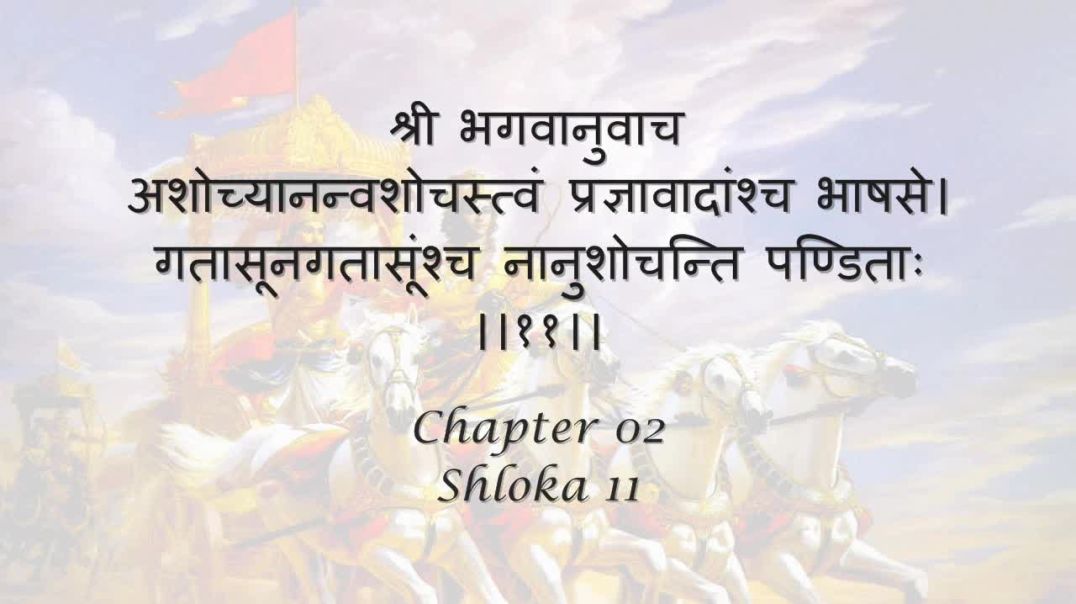
श्री भगवानुवाच
अशोच्यानन्वशोचस्त्वं प्रज्ञावादांश्च भाषसे।
गतासूनगतासूंश्च नानुशोचन्ति पण्डिताः।।११।।
Translation:
श्री भगवान बोलेः हे अर्जुन! तू न शोक करने योग्य मनुष्यों के लिए शोक करता है और पण्डितों के-से वचनों को कहता है, परन्तु जिनके प्राण चले गये हैं, उनके लिए और जिनके प्राण नहीं गये हैं उनके लिए भी पण्डितजन शोक नहीं करते।
~~~~~~~~~~~~~~~~
OVERVIEW:
The Bhagavad Gita is a 700-verse scripture that is part of the Hindu epic Mahabharata. This scripture contains a conversation between Pandava prince Arjuna and his guide Lord Krishna on a variety of theological and philosophical issues.
Faced with a fratricidal war, a despondent Arjuna turns to his charioteer Krishna for counsel on the battlefield. Krishna, through the course of the Gita, imparts to Arjuna wisdom, the path to devotion, and the doctrine of selfless action.
Sanskrit recitation, followed by Hindi translation.
Text:
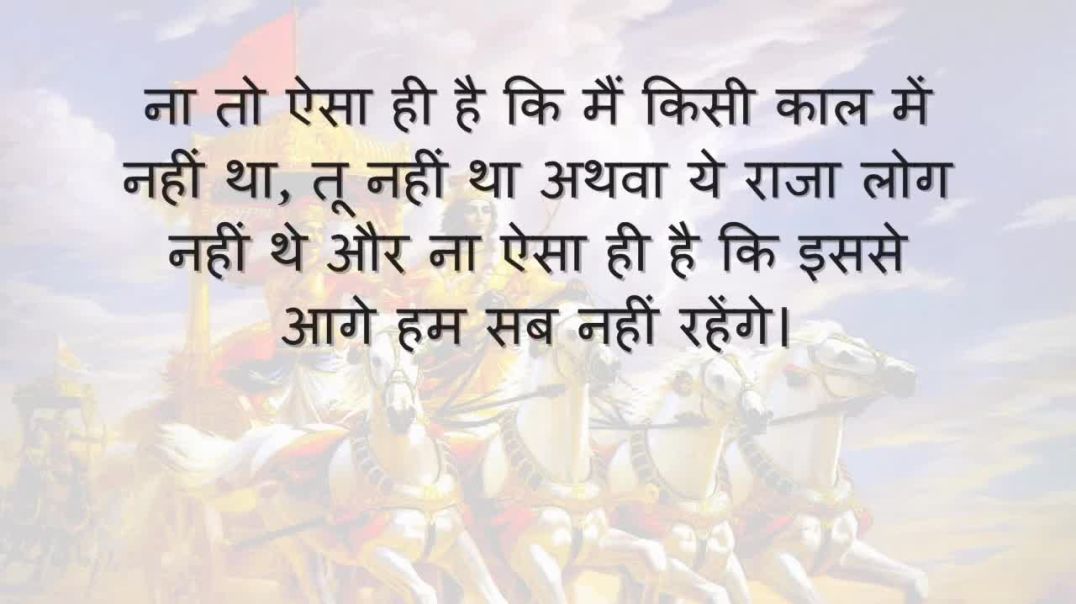
न त्वेवाहं जातु नासं न त्वं नेमे जनाधिपाः।
न चैव न भविष्यामः सर्वे वयमतः परम्।।१२।।
Translation:
ना तो ऐसा ही है कि मैं किसी काल में नहीं था, तू नहीं था अथवा ये राजा लोग नहीं थे और ना ऐसा ही है कि इससे आगे हम सब नहीं रहेंगे।
~~~~~~~~~~~~~~~~
OVERVIEW:
The Bhagavad Gita is a 700-verse scripture that is part of the Hindu epic Mahabharata. This scripture contains a conversation between Pandava prince Arjuna and his guide Lord Krishna on a variety of theological and philosophical issues.
Faced with a fratricidal war, a despondent Arjuna turns to his charioteer Krishna for counsel on the battlefield. Krishna, through the course of the Gita, imparts to Arjuna wisdom, the path to devotion, and the doctrine of selfless action.
Sanskrit recitation, followed by Hindi translation.
Text:
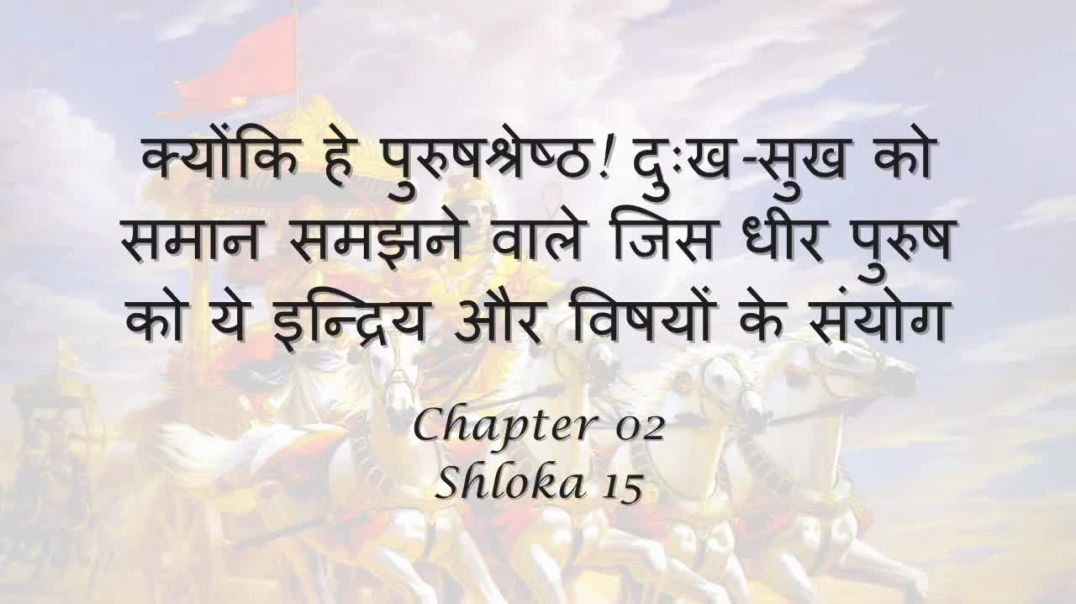
यं हि न व्यथयन्त्येते पुरुषं पुरुषर्षभ।
समदुःखसुखं धीरं सोऽमृतत्वाय कल्पते।।१५।।
Translation:
क्योंकि हे पुरुषश्रेष्ठ! दुःख-सुख को समान समझने वाले जिस धीर पुरुष को ये इन्द्रिय और विषयों के संयोग व्याकुल नहीं करते, वह मोक्ष के योग्य होता है।
~~~~~~~~~~~~~~~~
OVERVIEW:
The Bhagavad Gita is a 700-verse scripture that is part of the Hindu epic Mahabharata. This scripture contains a conversation between Pandava prince Arjuna and his guide Lord Krishna on a variety of theological and philosophical issues.
Faced with a fratricidal war, a despondent Arjuna turns to his charioteer Krishna for counsel on the battlefield. Krishna, through the course of the Gita, imparts to Arjuna wisdom, the path to devotion, and the doctrine of selfless action.
SHOW LESS
Sanskrit recitation, followed by Hindi translation.
Text:
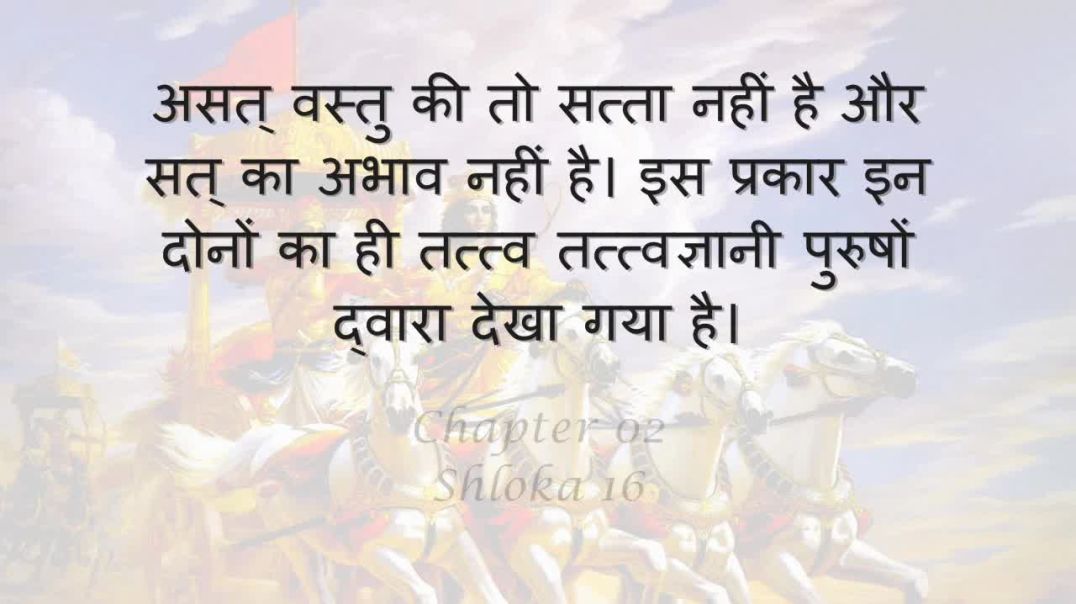
नासतो विद्यते भावो नाभावो विद्यते सतः।
उभयोरपि दृष्टोऽन्तस्त्वनयोस्तत्त्वदर्शिभिः।।१६।।
Translation:
असत् वस्तु की तो सत्ता नहीं है और सत् का अभाव नहीं है। इस प्रकार इन दोनों का ही तत्त्व तत्त्वज्ञानी पुरुषों द्वारा देखा गया है।
~~~~~~~~~~~~~~~~
OVERVIEW:
The Bhagavad Gita is a 700-verse scripture that is part of the Hindu epic Mahabharata. This scripture contains a conversation between Pandava prince Arjuna and his guide Lord Krishna on a variety of theological and philosophical issues.
Faced with a fratricidal war, a despondent Arjuna turns to his charioteer Krishna for counsel on the battlefield. Krishna, through the course of the Gita, imparts to Arjuna wisdom, the path to devotion, and the doctrine of selfless action.
SHOW LESS
Sanskrit recitation, followed by Hindi translation.
Text:
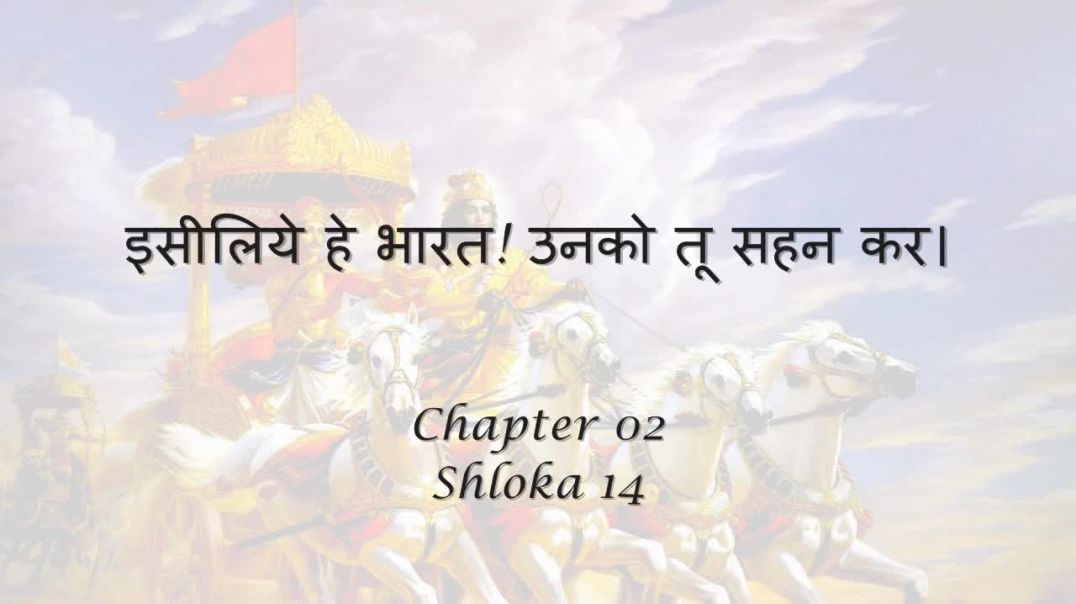
मात्रास्पर्शास्तु कौन्तेय शीतोष्णसुखदुःखदाः।
आगमापायिनोऽनित्यास्तांस्तितिक्षस्व भारत।।१४।।
Translation:
हे कुन्तीपुत्र! सर्दी-गर्मी और सुख-दुःख को देने वाले इन्द्रिय और विषयों के संयोग तो उत्पत्ति-विनाशशील और अनित्य हैं, इसीलिये हे भारत! उनको तू सहन कर।
~~~~~~~~~~~~~~~~
OVERVIEW:
The Bhagavad Gita is a 700-verse scripture that is part of the Hindu epic Mahabharata. This scripture contains a conversation between Pandava prince Arjuna and his guide Lord Krishna on a variety of theological and philosophical issues.
Faced with a fratricidal war, a despondent Arjuna turns to his charioteer Krishna for counsel on the battlefield. Krishna, through the course of the Gita, imparts to Arjuna wisdom, the path to devotion, and the doctrine of selfless action.

vinnapaalu vinavale vintha vinthalu
pannagapu domathera paikethavelayya
vinnapaalu vinavale....
thellavare jamekke devathalu munulu
allanalla nantha nintha nadivo vaare
challani thammi rekula sarasyapu kannulu
mella mellane vicchi melu kona velayya
vinnapaalu vinavale....
~~~~~~~~~~~~~~~~
INFO:
Track: Vinnapaalu
Album: Sri Annamacharya Nitya Sankeerthanalu Part - 1
Performer: Nemani Suryaprakash
Sanskrit recitation, followed by Hindi translation.
Text:
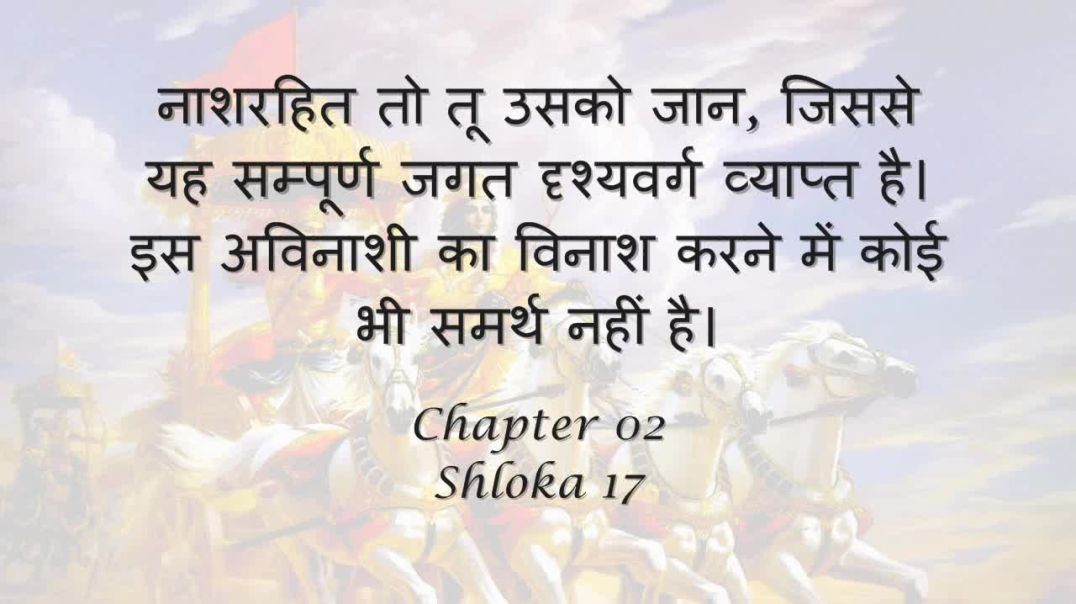
अविनाशि तु तद्विद्धि येन सर्वमिदं ततम्।
विनाशमव्ययस्यास्य न कश्चित्कर्तुमर्हति।।१७।।
Translation:
नाशरहित तो तू उसको जान, जिससे यह सम्पूर्ण जगत दृश्यवर्ग व्याप्त है। इस अविनाशी का विनाश करने में कोई भी समर्थ नहीं है।
~~~~~~~~~~~~~~~~
OVERVIEW:
The Bhagavad Gita is a 700-verse scripture that is part of the Hindu epic Mahabharata. This scripture contains a conversation between Pandava prince Arjuna and his guide Lord Krishna on a variety of theological and philosophical issues.
Faced with a fratricidal war, a despondent Arjuna turns to his charioteer Krishna for counsel on the battlefield. Krishna, through the course of the Gita, imparts to Arjuna wisdom, the path to devotion, and the doctrine of selfless action.
Sanskrit recitation, followed by Hindi translation.
Text:
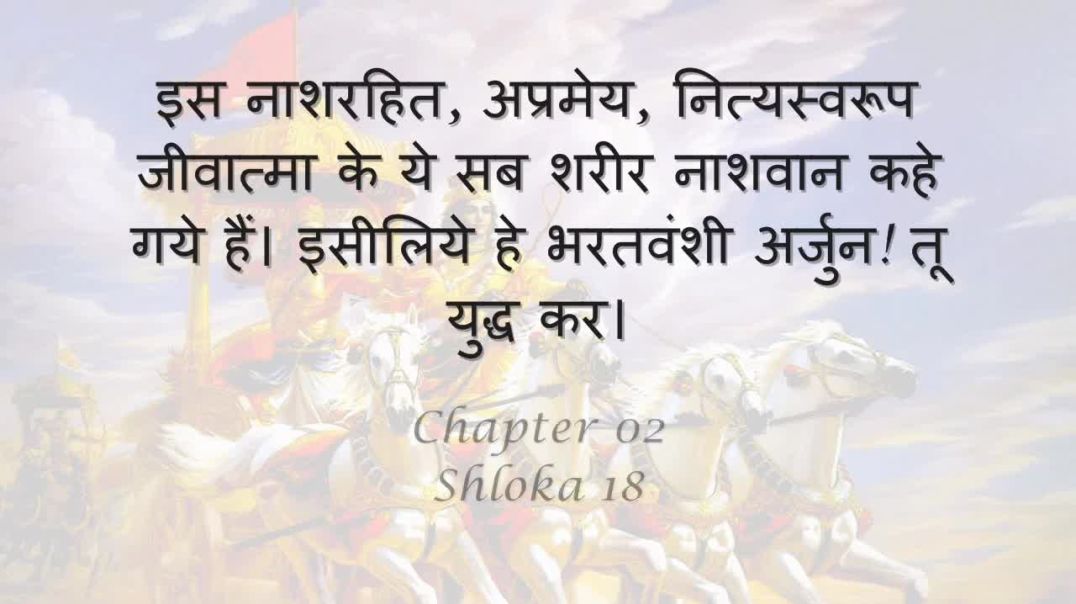
अन्तवन्त इमे देहा नित्यस्योक्ताः शरीरिणः।
अनाशिनोऽप्रमेयस्य तस्माद्युध्यस्व भारत।।१८।।
Translation:
इस नाशरहित, अप्रमेय, नित्यस्वरूप जीवात्मा के ये सब शरीर नाशवान कहे गये हैं। इसीलिये हे भरतवंशी अर्जुन ! तू युद्ध कर।
~~~~~~~~~~~~~~~~
OVERVIEW:
The Bhagavad Gita is a 700-verse scripture that is part of the Hindu epic Mahabharata. This scripture contains a conversation between Pandava prince Arjuna and his guide Lord Krishna on a variety of theological and philosophical issues.
Faced with a fratricidal war, a despondent Arjuna turns to his charioteer Krishna for counsel on the battlefield. Krishna, through the course of the Gita, imparts to Arjuna wisdom, the path to devotion, and the doctrine of selfless action.
Sanskrit recitation, followed by Hindi translation.
Text:
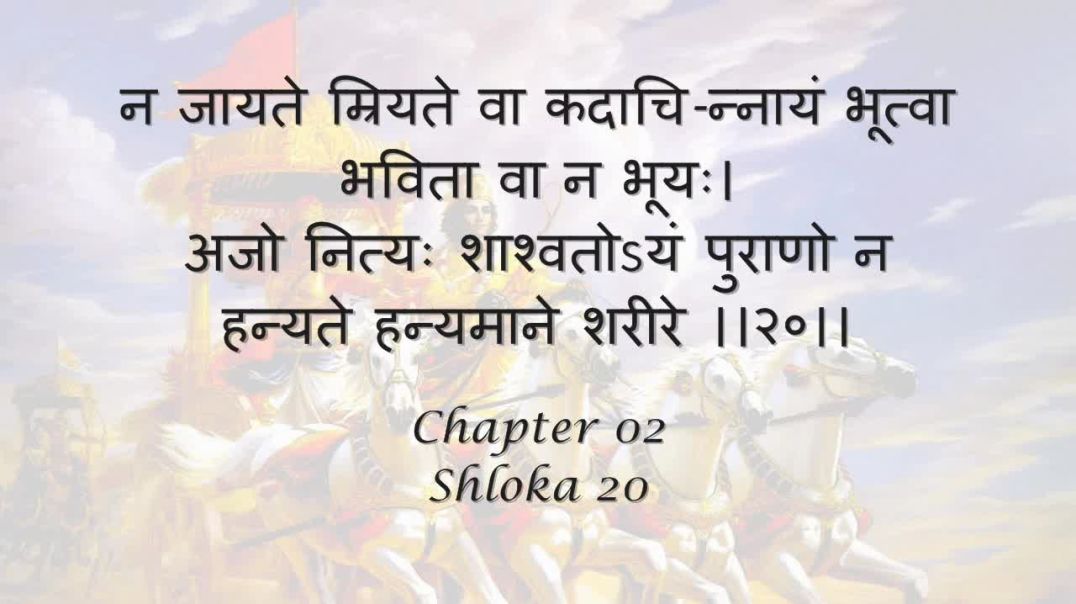
न जायते म्रियते वा कदाचि-न्नायं भूत्वा भविता वा न भूयः।
अजो नित्यः शाश्वतोऽयं पुराणो न हन्यते हन्यमाने शरीरे।।२०।।
Translation:
यह आत्मा किसी काल में भी न तो जनमता है और न मरता ही है तथा न यह उत्पन्न होकर फिर होने वाला ही है क्योंकि यह अजन्मा, नित्य, सनातन और पुरातन है। शरीर के मारे जाने पर भी यह नहीं मारा जाता।
~~~~~~~~~~~~~~~~
OVERVIEW:
The Bhagavad Gita is a 700-verse scripture that is part of the Hindu epic Mahabharata. This scripture contains a conversation between Pandava prince Arjuna and his guide Lord Krishna on a variety of theological and philosophical issues.
Faced with a fratricidal war, a despondent Arjuna turns to his charioteer Krishna for counsel on the battlefield. Krishna, through the course of the Gita, imparts to Arjuna wisdom, the path to devotion, and the doctrine of selfless action.
SHOW LESS

taMdanaana ahi - taMdanaana pure
taMdanaana bhaLaa - taMdanaana
brahmamokkaTe para - brahmamokkaTe
parabrahmamokkaTe para brahmamokkaTe
kaMduvagu heenaadhikamuliMdu laevu
aMdariki Sreeharae aMtaraatma
iMdulO jaMtukula maMtaanokkaTe
aMdariki Sreeharae aMtaraatma
niMDaara raaju nidriMchu nidrayu nokaTe
aMTanae baMTunidra adiyu nokaTe
meMDaina braahmaNuDu meTTubhoomi yokaTe
chaMDaalu DuMDaeTi saribhoomi yokaTae
kaDagi yaenugu meeda kaayu yeMDokaTae
puDami Sunakamu meeda bolayu yeMDokaTae
kaDupuNyulanu paapakarmulanu sarigaava
jaDiyu Sree vaeMkaTaeSvaruni naamamokaTe
~~~~~~~~~~~~~~~~
INFO:
Track: Thandanaana
Album: Sri Annamacharya Nitya Sankeerthanalu Part - 1
Performer: Nemani Suryaprakash
Sanskrit recitation, followed by Hindi translation.
Text:
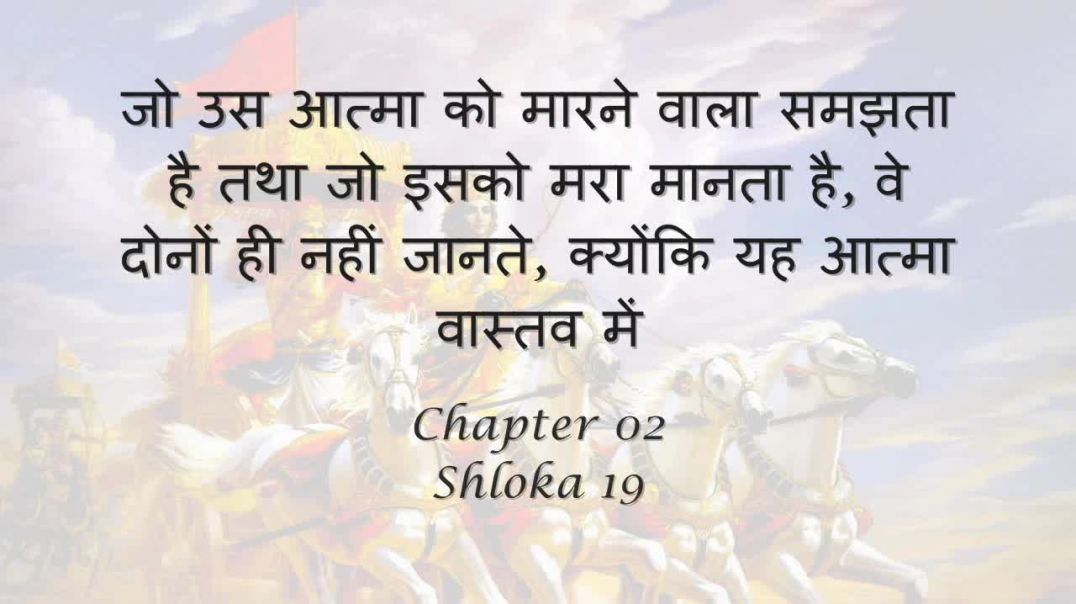
य एनं वेत्ति हन्तारं यश्चैनं मन्यते हतम्।
उभौ तौ न विजानीतो नायं हन्ति न हन्यते।।१९।।
Translation:
जो उस आत्मा को मारने वाला समझता है तथा जो इसको मरा मानता है, वे दोनों ही नहीं जानते, क्योंकि यह आत्मा वास्तव में न तो किसी को मारता है और न किसी के द्वारा मारा जाता है।
~~~~~~~~~~~~~~~~
OVERVIEW:
The Bhagavad Gita is a 700-verse scripture that is part of the Hindu epic Mahabharata. This scripture contains a conversation between Pandava prince Arjuna and his guide Lord Krishna on a variety of theological and philosophical issues.
Faced with a fratricidal war, a despondent Arjuna turns to his charioteer Krishna for counsel on the battlefield. Krishna, through the course of the Gita, imparts to Arjuna wisdom, the path to devotion, and the doctrine of selfless action.
SHOW LESS
Sanskrit recitation, followed by Hindi translation.
Text:
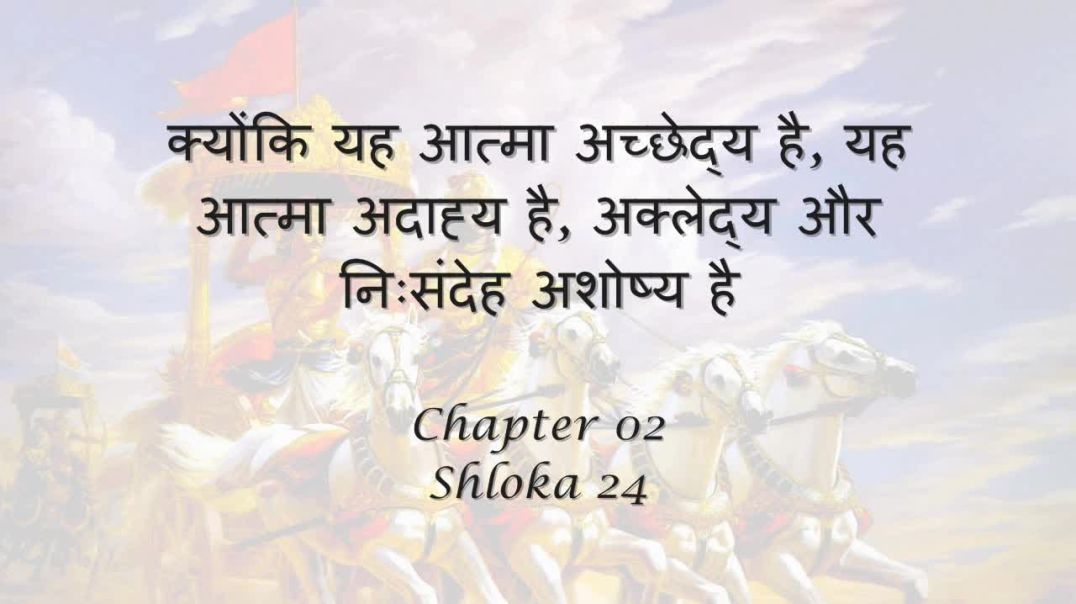
अच्छेद्योऽयमदाह्योऽयमक्लेद्योऽशोष्य एव च।
नित्यः सर्वगतः स्थाणुरचलोऽयं सनातनः।।२४।।
Translation:
क्योंकि यह आत्मा अच्छेद्य है, यह आत्मा अदाह्य है, अक्लेद्य और निःसंदेह अशोष्य है तथा यह आत्मा नित्य, सर्वव्यापि, अचल, स्थिर रहने वाला और सनातन है ।
~~~~~~~~~~~~~~~~
OVERVIEW:
The Bhagavad Gita is a 700-verse scripture that is part of the Hindu epic Mahabharata. This scripture contains a conversation between Pandava prince Arjuna and his guide Lord Krishna on a variety of theological and philosophical issues.
Faced with a fratricidal war, a despondent Arjuna turns to his charioteer Krishna for counsel on the battlefield. Krishna, through the course of the Gita, imparts to Arjuna wisdom, the path to devotion, and the doctrine of selfless action.
Sanskrit recitation, followed by Hindi translation.
Text:
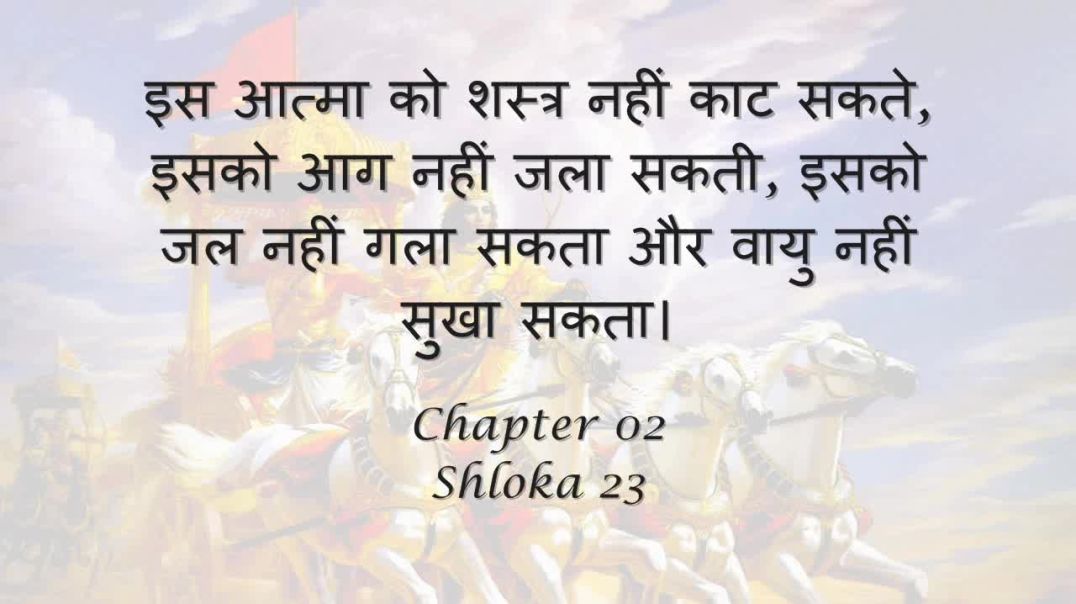
नैनं छिन्दन्ति शस्त्राणि नैनं दहति पावकः
न चैनं क्लेदयन्त्यापो न शोषयति मारुतः।।२३।।
Translation:
इस आत्मा को शस्त्र नहीं काट सकते, इसको आग नहीं जला सकती, इसको जल नहीं गला सकता और वायु नहीं सुखा सकता।
~~~~~~~~~~~~~~~~
OVERVIEW:
The Bhagavad Gita is a 700-verse scripture that is part of the Hindu epic Mahabharata. This scripture contains a conversation between Pandava prince Arjuna and his guide Lord Krishna on a variety of theological and philosophical issues.
Faced with a fratricidal war, a despondent Arjuna turns to his charioteer Krishna for counsel on the battlefield. Krishna, through the course of the Gita, imparts to Arjuna wisdom, the path to devotion, and the doctrine of selfless action.

alarulu kuriyaga naaDenadae
alakala gulukula alamaelumaMga
araviri sobagula ativalu mechchaga
ara tera maruguna naaDe nadae
varusaga poorvadu vaaLapu tirupula
hari garagiMpuchu alamaelumaMga
maTTapu malapula maTTelakelapula
taTTeDi naDapula daaTenadae
peTTina vajrapu peMDepu daLukulu
aTTiTTu chimmuchu alamaelumaMga
chiMdula paaTala SiripolayaaTala
aMdela mrOtala naaDe nadae
kaMduva tiruveMkaTapati mechchaga
aMdapu tirupula alamaelumaMga
~~~~~~~~~~~~~~~~
INFO:
Track: Alarulu
Album: Sri Annamacharya Nitya Sankeerthanalu Part - 1
Performer: Nemani Suryaprakash
Sanskrit recitation, followed by Hindi translation.
Text:
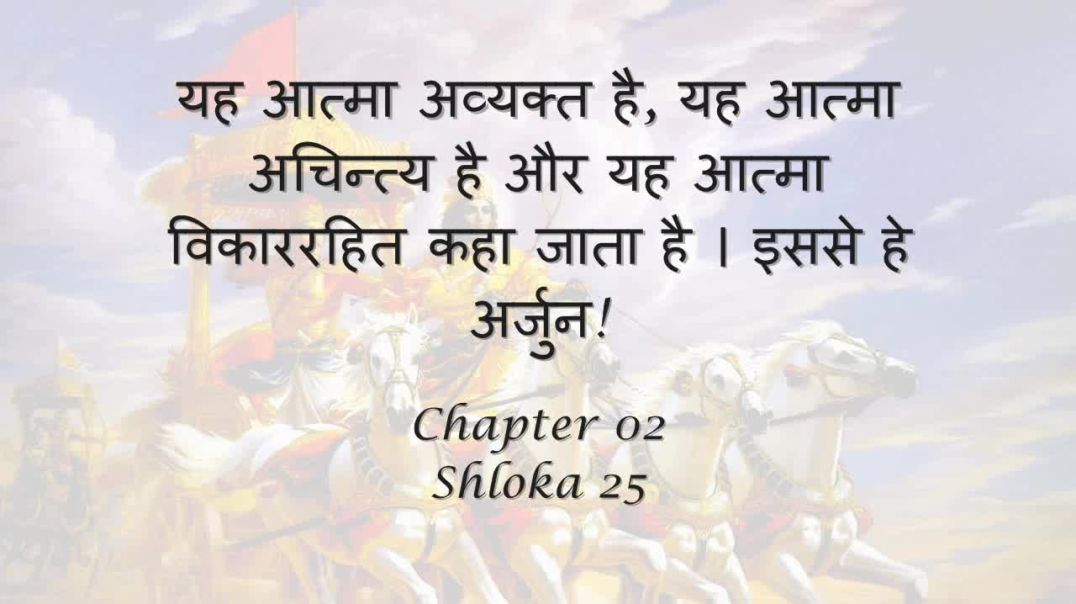
अव्यक्तोऽयमचिन्त्योऽयमविकार्योऽयमुच्यते।
तस्मादेवं विदित्वैनं नानुशोचितुमर्हसि।।२५।।
Translation:
यह आत्मा अव्यक्त है, यह आत्मा अचिन्त्य है और यह आत्मा विकाररहित कहा जाता है। इससे हे अर्जुन! इस आत्मा को उपयुक्त प्रकार से जानकर तू शोक करने को योग्य नहीं है अर्थात् तुझे शोक करना उचित नहीं है।
~~~~~~~~~~~~~~~~
OVERVIEW:
The Bhagavad Gita is a 700-verse scripture that is part of the Hindu epic Mahabharata. This scripture contains a conversation between Pandava prince Arjuna and his guide Lord Krishna on a variety of theological and philosophical issues.
Faced with a fratricidal war, a despondent Arjuna turns to his charioteer Krishna for counsel on the battlefield. Krishna, through the course of the Gita, imparts to Arjuna wisdom, the path to devotion, and the doctrine of selfless action.