Müzik
Alt Kategori
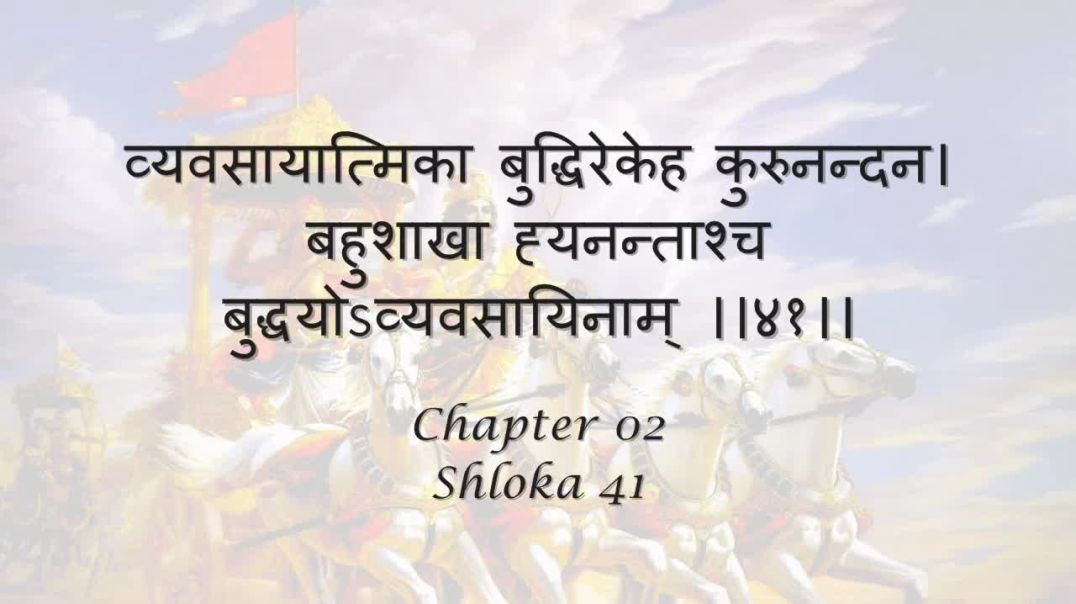
Sanskrit recitation, followed by Hindi translation of Chapter 2, Verse 41.
Text:
व्यवसायात्मिका बुद्धिरेकेह कुरुनन्दन।
बहुशाखा ह्यनन्ताश्च बुद्धयोऽव्यवसायिनाम्।।४१।।
Translation:
हे अर्जुन ! इस कर्मयोग में निश्चयात्मिका बुद्धि एक ही होती है, किन्तु अस्थिर विचार वाले विवेकहीन सकाम मनुष्यों की बुद्धियाँ निश्चय ही बहुत भेदोंवाली और अनन्त होती हैं।
~~~~~~~~~~~~~~~~
OVERVIEW:
The Bhagavad Gita is a 700-verse scripture that is part of the Hindu epic Mahabharata. This scripture contains a conversation between Pandava prince Arjuna and his guide Lord Krishna on a variety of theological and philosophical issues.
Faced with a fratricidal war, a despondent Arjuna turns to his charioteer Krishna for counsel on the battlefield. Krishna, through the course of the Gita, imparts to Arjuna wisdom, the path to devotion, and the doctrine of selfless action.
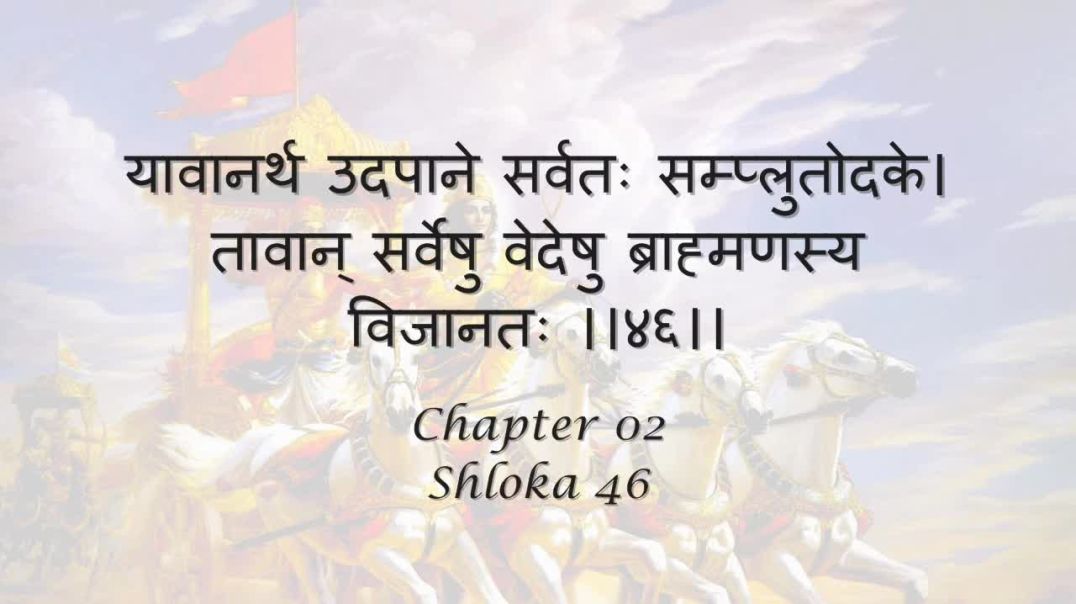
Sanskrit recitation, followed by Hindi translation of Chapter 2, Verse 46.
Text:
यावानर्थ उदपाने सर्वतः सम्प्लुतोदके।
तावान् सर्वेषु वेदेषु ब्राह्मणस्य विजानतः।।४६।।
Translation:
सब ओर से परिपूर्ण जलाशय के प्राप्त हो जाने पर छोटे जलाशय में मनुष्य का जितना प्रयोजन रहता है, ब्रह्म को तत्त्व से जानने वाले ब्राह्मण का समस्त वेदों में उतना ही प्रयोजन रह जाता है।
~~~~~~~~~~~~~~~~
OVERVIEW:
The Bhagavad Gita is a 700-verse scripture that is part of the Hindu epic Mahabharata. This scripture contains a conversation between Pandava prince Arjuna and his guide Lord Krishna on a variety of theological and philosophical issues.
Faced with a fratricidal war, a despondent Arjuna turns to his charioteer Krishna for counsel on the battlefield. Krishna, through the course of the Gita, imparts to Arjuna wisdom, the path to devotion, and the doctrine of selfless action.
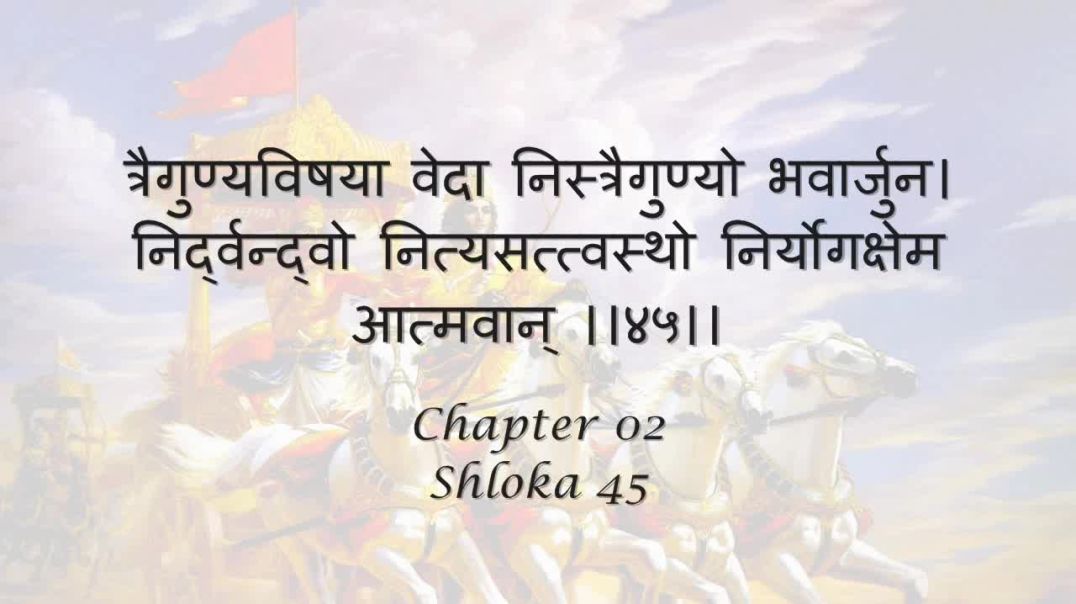
Sanskrit recitation, followed by Hindi translation of Chapter 2, Verse 45.
Text:
त्रैगुण्यविषया वेदा निस्त्रैगुण्यो भवार्जुन।
निर्द्वन्द्वो नित्यसत्त्वस्थो निर्योगक्षेम आत्मवान् ।।४५।।
Translation:
हे अर्जुन! वेद उपर्युक्त प्रकार से तीनों गुणों के कार्यरूप समस्त भोगों एवं उनके साधनों का प्रतिपादन करने वाले हैं, इसीलिये तू उन भोगों एवं उनके साधनों में आसक्तिहीन, हर्ष-शोकादि द्वन्द्वों से रहित, नित्यवस्तु परमात्मा में स्थित योग-क्षेम को न चाहने वाला और स्वाधीन अन्तःकरण वाला हो।
~~~~~~~~~~~~~~~~
OVERVIEW:
The Bhagavad Gita is a 700-verse scripture that is part of the Hindu epic Mahabharata. This scripture contains a conversation between Pandava prince Arjuna and his guide Lord Krishna on a variety of theological and philosophical issues.
Faced with a fratricidal war, a despondent Arjuna turns to his charioteer Krishna for counsel on the battlefield. Krishna, through the course of the Gita, imparts to Arjuna wisdom, the path to devotion, and the doctrine of selfless action.
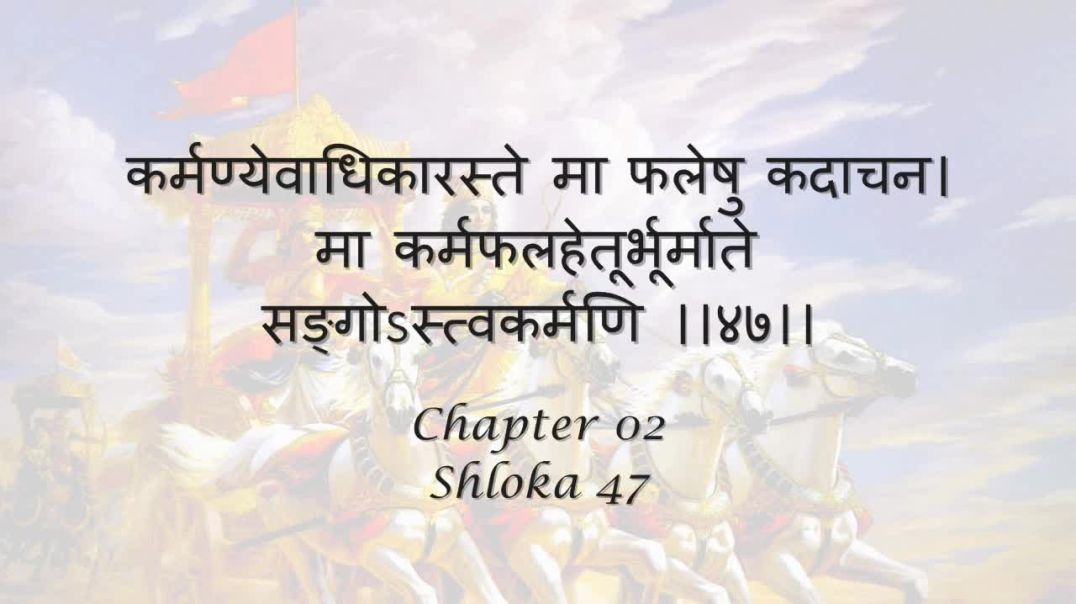
Sanskrit recitation, followed by Hindi translation of Chapter 2, Verse 47.
Text:
कर्मण्येवाधिकारस्ते मा फलेषु कदाचन।
मा कर्मफलहेतूर्भूर्माते सङ्गोऽस्त्वकर्मणि।।४७।।
Translation:
तेरा कर्म करने में ही अधिकार है, उसके फलों में कभी नहीं। इसीलिये तू कर्मों के फल का हेतु मत हो तथा तेरी कर्म न करने में भी आसक्ति न हो।
~~~~~~~~~~~~~~~~
OVERVIEW:
The Bhagavad Gita is a 700-verse scripture that is part of the Hindu epic Mahabharata. This scripture contains a conversation between Pandava prince Arjuna and his guide Lord Krishna on a variety of theological and philosophical issues.
Faced with a fratricidal war, a despondent Arjuna turns to his charioteer Krishna for counsel on the battlefield. Krishna, through the course of the Gita, imparts to Arjuna wisdom, the path to devotion, and the doctrine of selfless action.
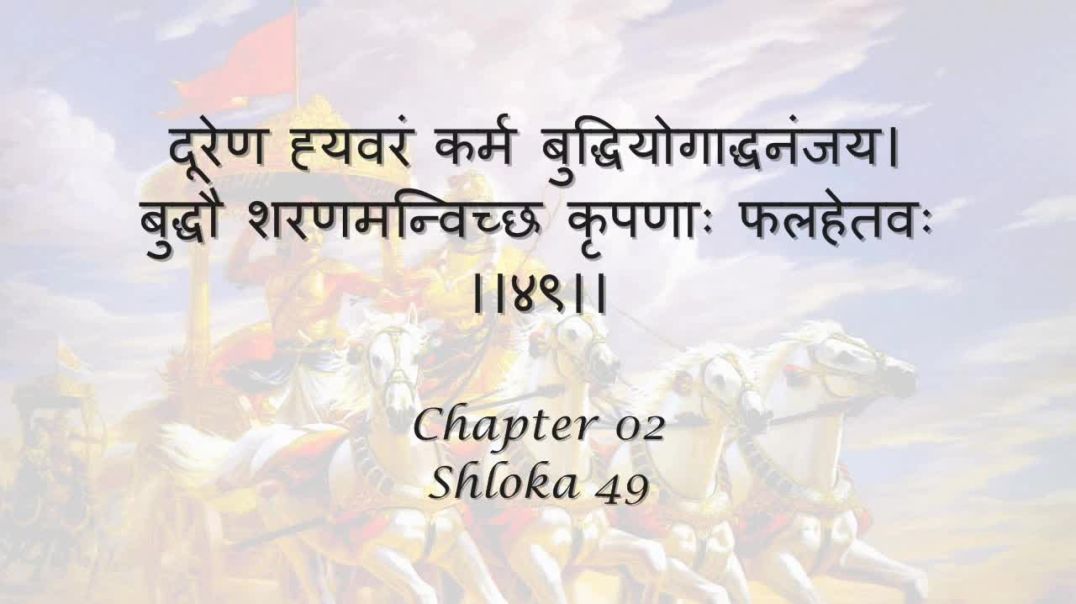
Sanskrit recitation, followed by Hindi translation of Chapter 2, Verse 49.
Text:
दूरेण ह्यवरं कर्म बुद्धियोगाद्धनंजय।
बुद्धौ शरणमन्विच्छ कृपणाः फलहेतवः।।४९।।
Translation:
इस समत्वरूप बुद्धियोग से सकाम कर्म अत्यन्त ही निम्न श्रेणी का है। इसीलिये हे धनंजय! तू समबुद्धि में ही रक्षा का उपाय ढूँढ अर्थात् बुद्धियोग का ही आश्रय ग्रहण कर, क्योंकि फल के हेतु बनने वाले अत्यन्त दीन हैं।
~~~~~~~~~~~~~~~~
OVERVIEW:
The Bhagavad Gita is a 700-verse scripture that is part of the Hindu epic Mahabharata. This scripture contains a conversation between Pandava prince Arjuna and his guide Lord Krishna on a variety of theological and philosophical issues.
Faced with a fratricidal war, a despondent Arjuna turns to his charioteer Krishna for counsel on the battlefield. Krishna, through the course of the Gita, imparts to Arjuna wisdom, the path to devotion, and the doctrine of selfless action.
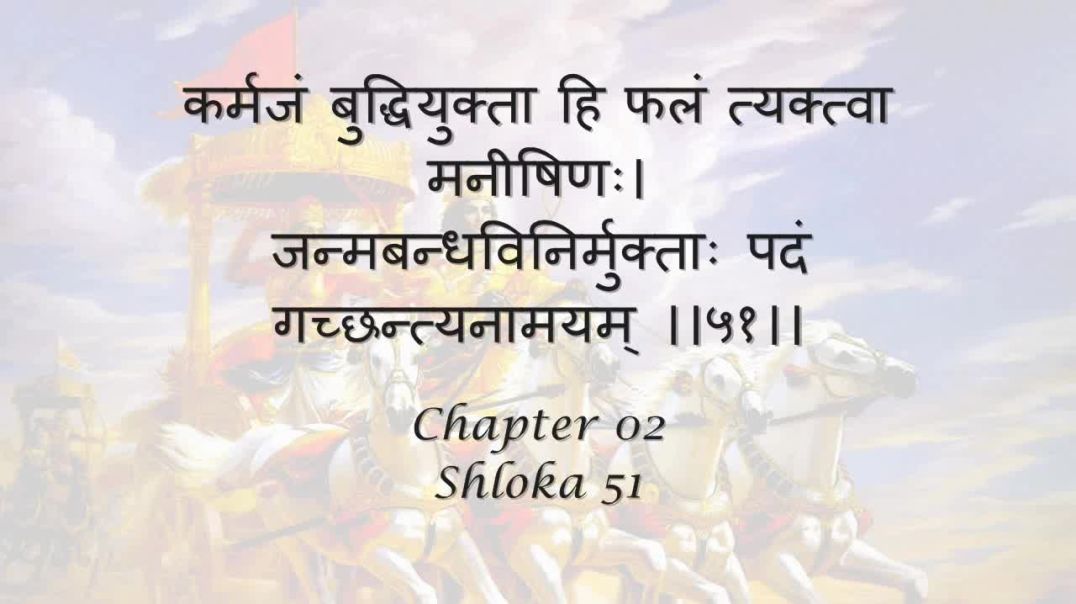
Sanskrit recitation, followed by Hindi translation of Chapter 2, Verse 51.
Text:
कर्मजं बुद्धियुक्ता हि फलं त्यक्त्वा मनीषिणः।
जन्मबन्धविनिर्मुक्ताः पदं गच्छन्त्यनामयम् ।।५१।।
Translation:
क्योंकि समबुद्धि से युक्त ज्ञानीजन कर्मों से उत्पन्न होने वाले फल को त्यागकर जन्मरूप बन्धन से मुक्त हो निर्विकार परम पद को प्राप्त हो जाते हैं।
~~~~~~~~~~~~~~~~
OVERVIEW:
The Bhagavad Gita is a 700-verse scripture that is part of the Hindu epic Mahabharata. This scripture contains a conversation between Pandava prince Arjuna and his guide Lord Krishna on a variety of theological and philosophical issues.
Faced with a fratricidal war, a despondent Arjuna turns to his charioteer Krishna for counsel on the battlefield. Krishna, through the course of the Gita, imparts to Arjuna wisdom, the path to devotion, and the doctrine of selfless action.
SHOW LESS
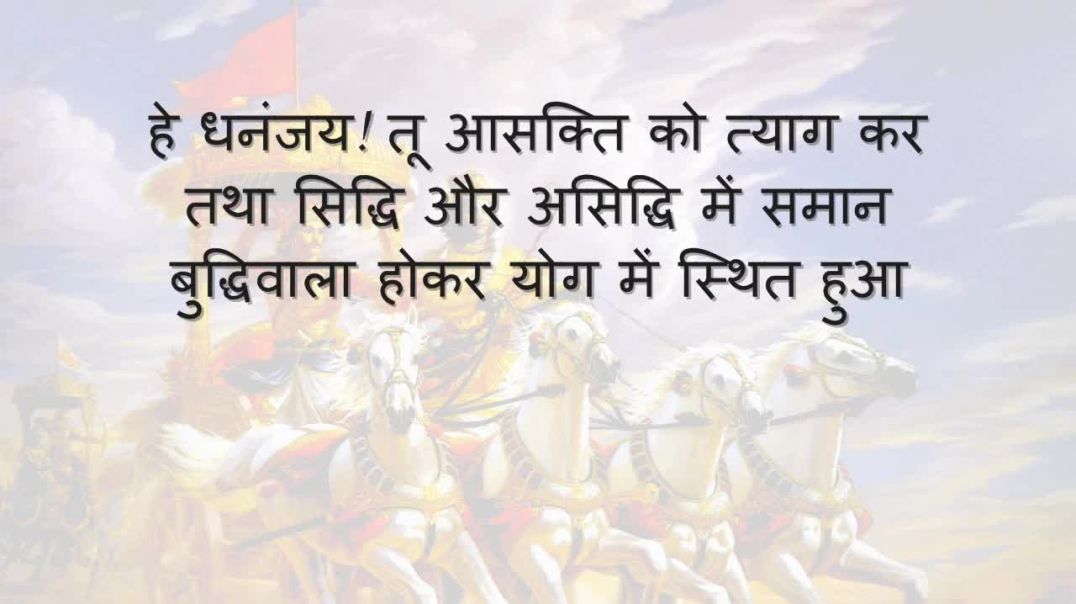
Sanskrit recitation, followed by Hindi translation of Chapter 2, Verse 48.
Text:
योगस्थः कुरु कर्माणि सङ्गं त्यक्त्वा धनंजय।
सिद्ध्यसिद्ध्योः समो भूत्वा समत्वं योग उच्यते ।।४८।।
Translation:
हे धनंजय! तू आसक्ति को त्याग कर तथा सिद्धि और असिद्धि में समान बुद्धिवाला होकर योग में स्थित हुआ कर्तव्यकर्मों को कर, समत्व ही योग कहलाता है।
~~~~~~~~~~~~~~~~
OVERVIEW:
The Bhagavad Gita is a 700-verse scripture that is part of the Hindu epic Mahabharata. This scripture contains a conversation between Pandava prince Arjuna and his guide Lord Krishna on a variety of theological and philosophical issues.
Faced with a fratricidal war, a despondent Arjuna turns to his charioteer Krishna for counsel on the battlefield. Krishna, through the course of the Gita, imparts to Arjuna wisdom, the path to devotion, and the doctrine of selfless action.
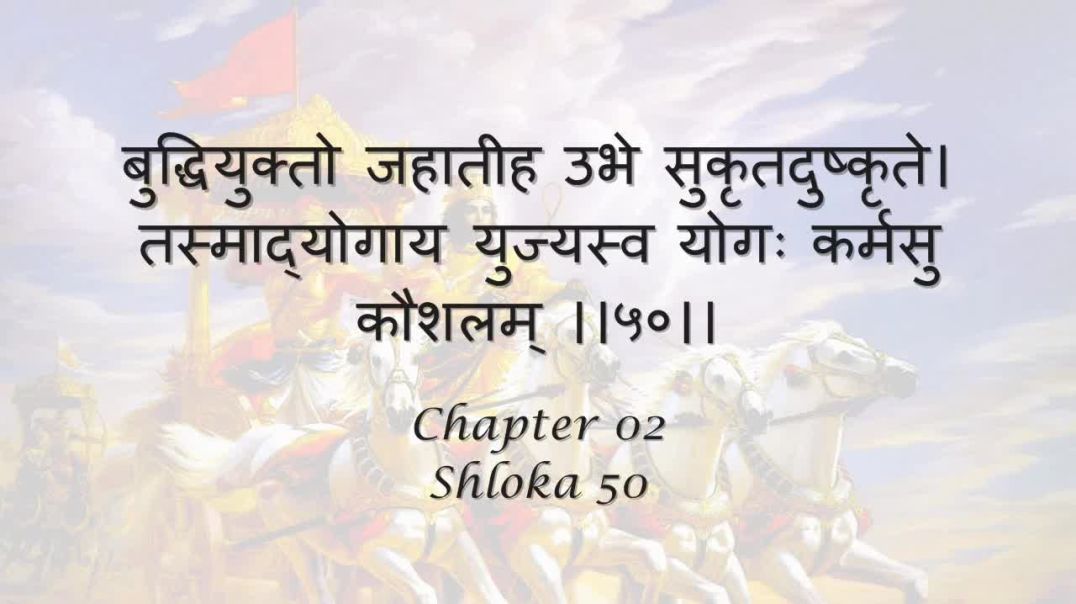
Sanskrit recitation, followed by Hindi translation of Chapter 2, Verse 50.
Text:
बुद्धियुक्तो जहातीह उभे सुकृतदुष्कृते।
तस्माद्योगाय युज्यस्व योगः कर्मसु कौशलम् ।।५०।।
Translation:
समबुद्धियुक्त पुरुष पुण्य और पाप दोनों को इसी लोक में त्याग देता है अर्थात् उनसे मुक्त हो जाता है। इससे तू समत्वरूप योग में लग जा। यह समत्वरूप योग ही कर्मों में कुशलता है अर्थात् कर्मबन्धन से छूटने का उपाय है।
~~~~~~~~~~~~~~~~
OVERVIEW:
The Bhagavad Gita is a 700-verse scripture that is part of the Hindu epic Mahabharata. This scripture contains a conversation between Pandava prince Arjuna and his guide Lord Krishna on a variety of theological and philosophical issues.
Faced with a fratricidal war, a despondent Arjuna turns to his charioteer Krishna for counsel on the battlefield. Krishna, through the course of the Gita, imparts to Arjuna wisdom, the path to devotion, and the doctrine of selfless action.
SHOW LESS
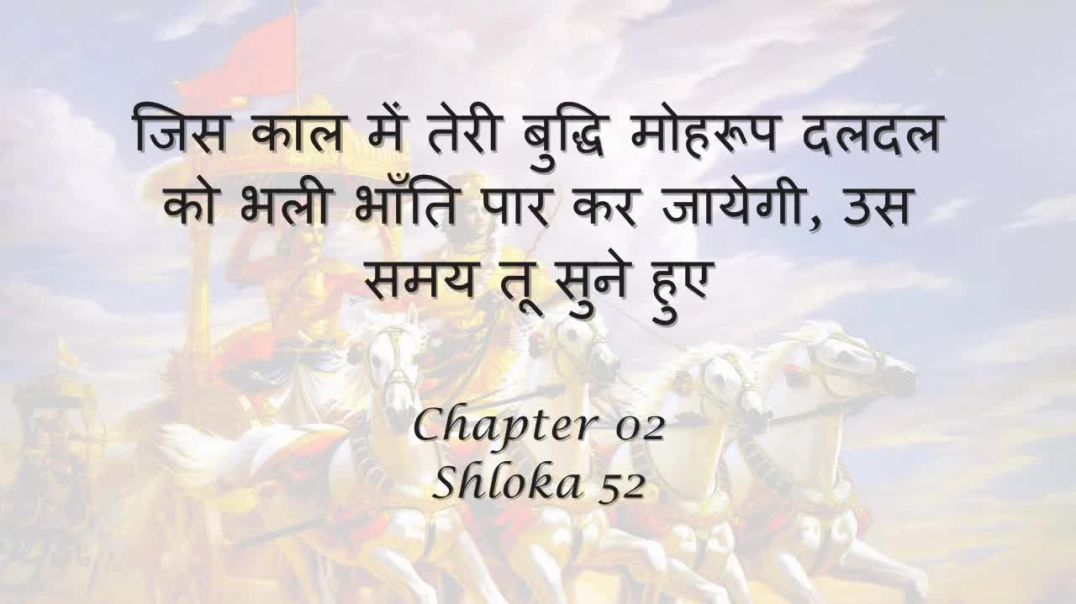
Sanskrit recitation, followed by Hindi translation of Chapter 2, Verse 52.
Text:
यदा ते मोहकलिलं बुद्धिर्व्यतितरिष्यति।
तदा गन्तासि निर्वेदं श्रोतव्यस्य श्रुतस्य च ।।५२।।
Translation:
जिस काल में तेरी बुद्धि मोहरूप दलदल को भली भाँति पार कर जायेगी, उस समय तू सुने हुए और सुनने में आने वाले इस लोक और परलोकसम्बन्धी सभी भोगों से वैराग्य को प्राप्त हो जायेगा।
~~~~~~~~~~~~~~~~
OVERVIEW:
The Bhagavad Gita is a 700-verse scripture that is part of the Hindu epic Mahabharata. This scripture contains a conversation between Pandava prince Arjuna and his guide Lord Krishna on a variety of theological and philosophical issues.
Faced with a fratricidal war, a despondent Arjuna turns to his charioteer Krishna for counsel on the battlefield. Krishna, through the course of the Gita, imparts to Arjuna wisdom, the path to devotion, and the doctrine of selfless action.
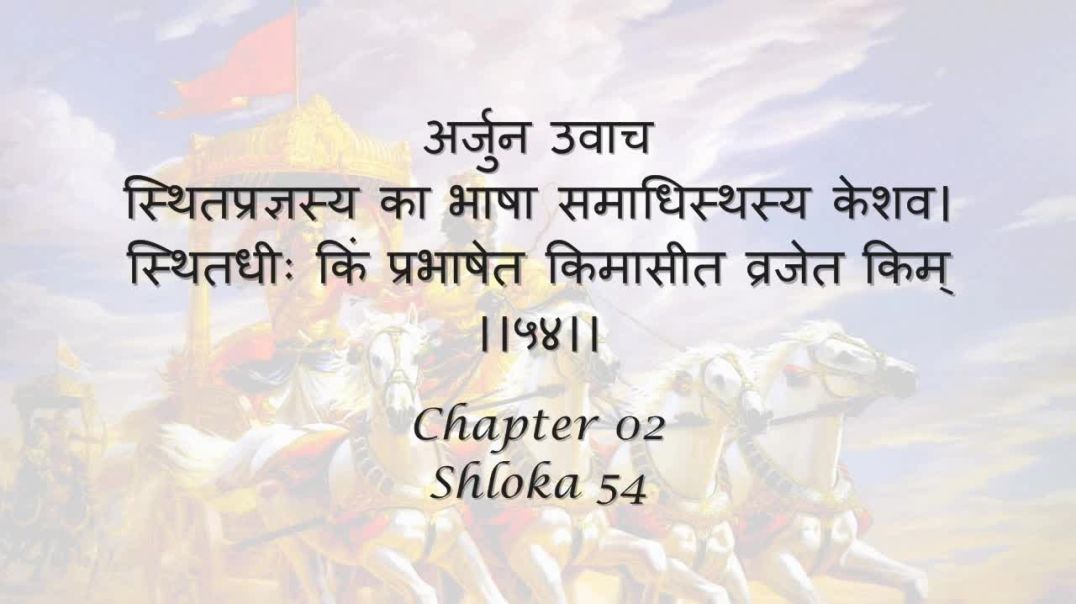
Sanskrit recitation, followed by Hindi translation of Chapter 2, Verse 54.
Text:
अर्जुन उवाच
स्थितप्रज्ञस्य का भाषा समाधिस्थस्य केशव।
स्थितधीः किं प्रभाषेत किमासीत व्रजेत किम् ।।५४।।
Translation:
अर्जुन बोले: हे केशव! समाधि में स्थित परमात्मा को प्राप्त हुए स्थिरबुद्धि पुरुष का क्या लक्षण है? वह स्थिरबुद्धि पुरुष कैसे बोलता है, कैसे बैठता है और कैसे चलता है?
~~~~~~~~~~~~~~~~
OVERVIEW:
The Bhagavad Gita is a 700-verse scripture that is part of the Hindu epic Mahabharata. This scripture contains a conversation between Pandava prince Arjuna and his guide Lord Krishna on a variety of theological and philosophical issues.
Faced with a fratricidal war, a despondent Arjuna turns to his charioteer Krishna for counsel on the battlefield. Krishna, through the course of the Gita, imparts to Arjuna wisdom, the path to devotion, and the doctrine of selfless action.
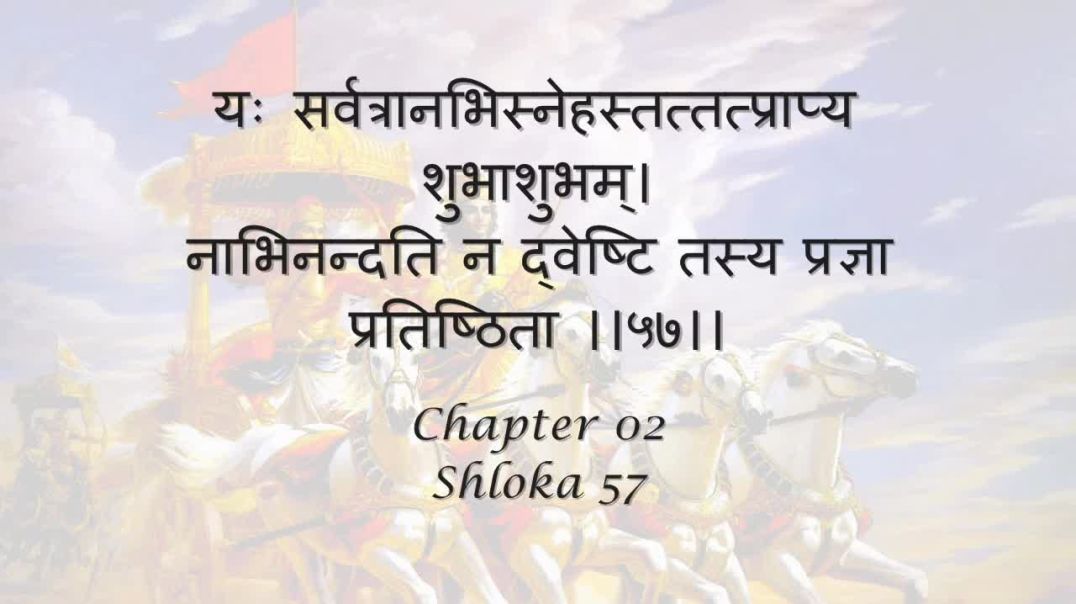
Sanskrit recitation, followed by Hindi translation of Chapter 2, Verse 57.
Text:
यः सर्वत्रानभिस्नेहस्तत्तत्प्राप्य शुभाशुभम्।
नाभिनन्दति न द्वेष्टि तस्य प्रज्ञा प्रतिष्ठिता ।।५७।।
Translation:
जो पुरुष सर्वत्र स्नेह रहित हुआ उस-उस शुभ या अशुभ वस्तु को प्राप्त होकर न प्रसन्न होता है और न द्वेष करता है उसकी बुद्धि स्थिर है।
~~~~~~~~~~~~~~~~
OVERVIEW:
The Bhagavad Gita is a 700-verse scripture that is part of the Hindu epic Mahabharata. This scripture contains a conversation between Pandava prince Arjuna and his guide Lord Krishna on a variety of theological and philosophical issues.
Faced with a fratricidal war, a despondent Arjuna turns to his charioteer Krishna for counsel on the battlefield. Krishna, through the course of the Gita, imparts to Arjuna wisdom, the path to devotion, and the doctrine of selfless action.
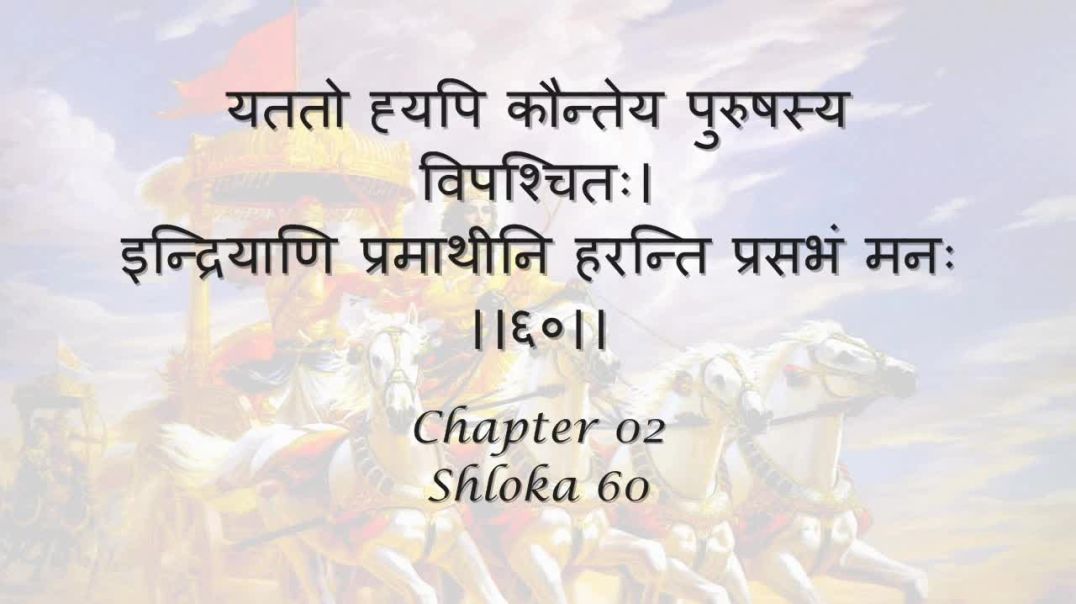
Sanskrit recitation, followed by Hindi translation of Chapter 2, Verse 60.
Text:
यततो ह्यपि कौन्तेय पुरुषस्य विपश्चितः।
इन्द्रियाणि प्रमाथीनि हरन्ति प्रसभं मनः ।।६०।।
Translation:
हे अर्जुन! आसक्ति का नाश न होने के कारण ये प्रमथन स्वभाव वाली इन्द्रियाँ यत्न करते हुए बुद्धिमान पुरुष के मन को भी बलात् हर लेती हैं।
~~~~~~~~~~~~~~~~
OVERVIEW:
The Bhagavad Gita is a 700-verse scripture that is part of the Hindu epic Mahabharata. This scripture contains a conversation between Pandava prince Arjuna and his guide Lord Krishna on a variety of theological and philosophical issues.
Faced with a fratricidal war, a despondent Arjuna turns to his charioteer Krishna for counsel on the battlefield. Krishna, through the course of the Gita, imparts to Arjuna wisdom, the path to devotion, and the doctrine of selfless action.
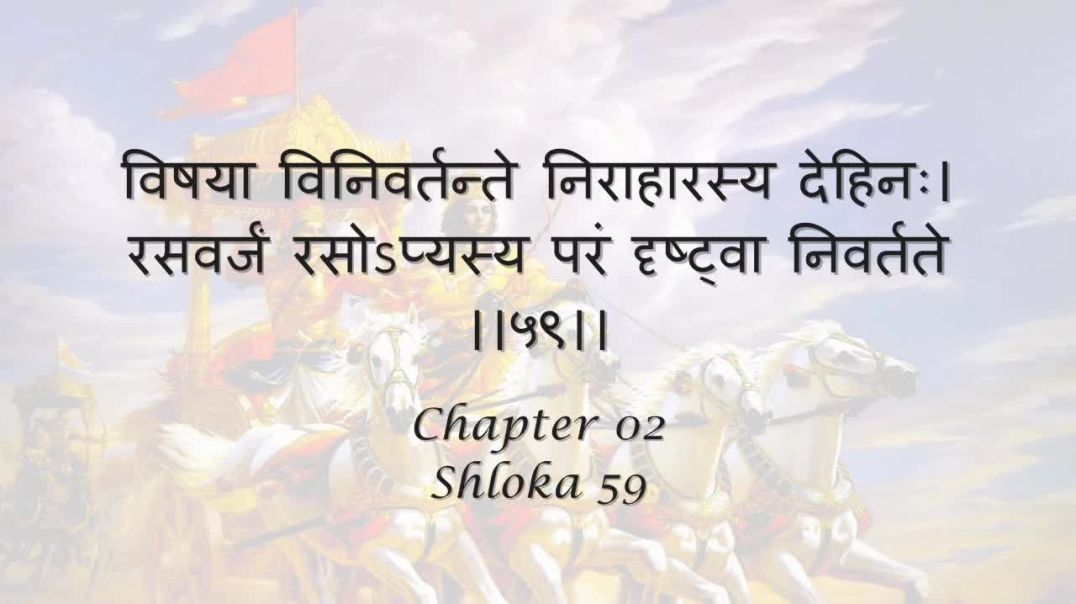
Sanskrit recitation, followed by Hindi translation of Chapter 2, Verse 59.
Text:
विषया विनिवर्तन्ते निराहारस्य देहिनः।
रसवर्जं रसोऽप्यस्य परं दृष्ट्वा निवर्तते ।।५९।।
Translation:
इन्द्रियों के द्वारा विषयों को ग्रहण न करने वाले पुरुष के भी केवल विषय तो निवृत्त् हो जाते हैं, परन्तु उनमें रहने वाली आसक्ति निवृत्त नहीं होती। इस स्थितप्रज्ञ पुरुष की तो आसक्ति भी परमात्मा का साक्षात्कार करके निवृत्त हो जाती है।
~~~~~~~~~~~~~~~~
OVERVIEW:
The Bhagavad Gita is a 700-verse scripture that is part of the Hindu epic Mahabharata. This scripture contains a conversation between Pandava prince Arjuna and his guide Lord Krishna on a variety of theological and philosophical issues.
Faced with a fratricidal war, a despondent Arjuna turns to his charioteer Krishna for counsel on the battlefield. Krishna, through the course of the Gita, imparts to Arjuna wisdom, the path to devotion, and the doctrine of selfless action.
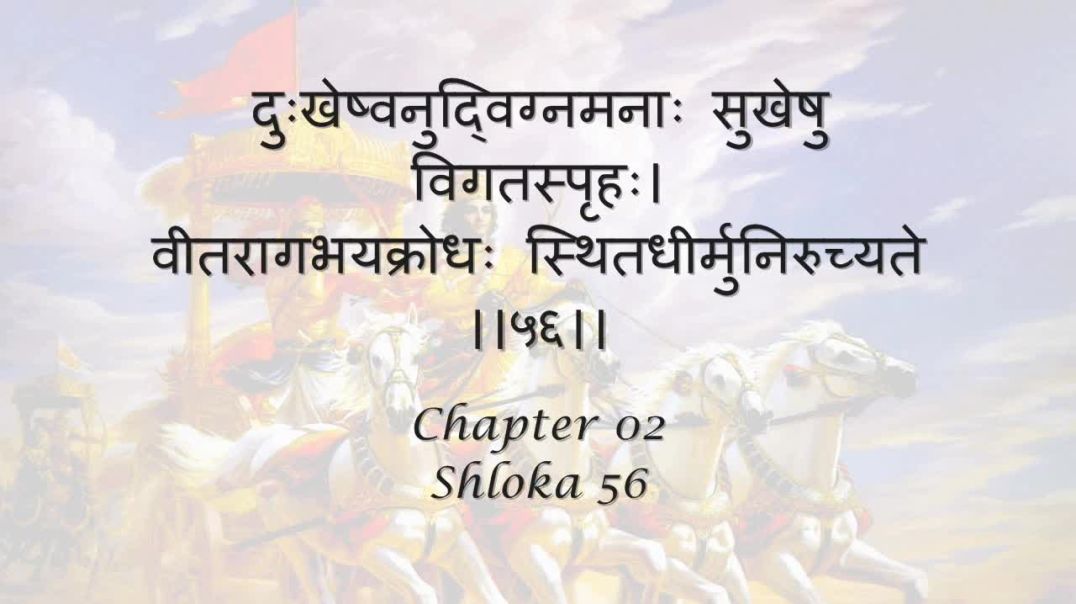
Sanskrit recitation, followed by Hindi translation of Chapter 2, Verse 56.
Text:
दुःखेष्वनुद्विग्नमनाः सुखेषु विगतस्पृहः।
वीतरागभयक्रोधः स्थितधीर्मुनिरुच्यते ।।५६।।
Translation:
दुःखों की प्राप्ति होने पर जिसके मन पर उद्वेग नहीं होता, सुखों की प्राप्ति में जो सर्वथा निःस्पृह है तथा जिसके राग, भय और क्रोध नष्ट हो गये हैं, ऐसा मुनि स्थिरबुद्धि कहा जाता है।
~~~~~~~~~~~~~~~~
OVERVIEW:
The Bhagavad Gita is a 700-verse scripture that is part of the Hindu epic Mahabharata. This scripture contains a conversation between Pandava prince Arjuna and his guide Lord Krishna on a variety of theological and philosophical issues.
Faced with a fratricidal war, a despondent Arjuna turns to his charioteer Krishna for counsel on the battlefield. Krishna, through the course of the Gita, imparts to Arjuna wisdom, the path to devotion, and the doctrine of selfless action.
Sanskrit recitation, followed by Hindi translation of Chapter 2, Verse 55.
Text:
श्रीभगवानुवाच
प्रजहाति यदा कामान्सर्वान्पार्थ मनोगतान्।
आत्मन्येवात्मना तुष्टः स्थितप्रज्ञस्तदोच्यते।।५५।।
Translation:
श्री भगवान बोलेः हे अर्जुन! जिस काल में यह पुरुष मन में स्थित सम्पूर्ण कामनाओं को भली भाँति त्याग देता है और आत्मा से आत्मा में ही संतुष्ट रहता है, उस काल में वह स्थितप्रज्ञ कहा जाता है।
~~~~~~~~~~~~~~~~
OVERVIEW:
The Bhagavad Gita is a 700-verse scripture that is part of the Hindu epic Mahabharata. This scripture contains a conversation between Pandava prince Arjuna and his guide Lord Krishna on a variety of theological and philosophical issues.
Faced with a fratricidal war, a despondent Arjuna turns to his charioteer Krishna for counsel on the battlefield. Krishna, through the course of the Gita, imparts to Arjuna wisdom, the path to devotion, and the doctrine of selfless action.
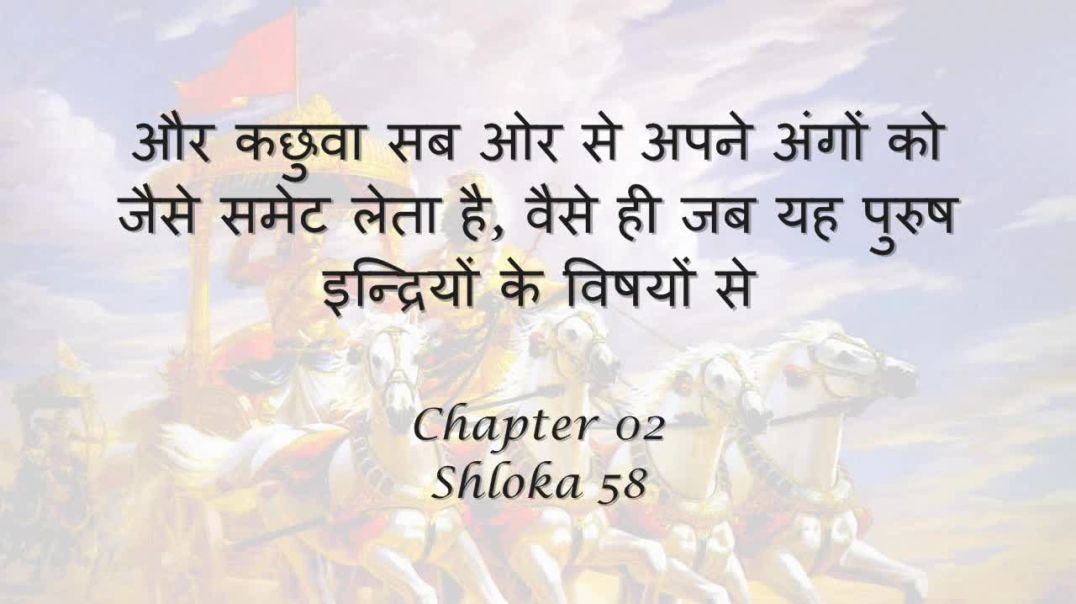
Sanskrit recitation, followed by Hindi translation of Chapter 2, Verse 58.
Text:
यदा संहरते चायं कूर्मोऽङ्गानीव सर्वशः।
इन्द्रियाणीन्द्रियार्थेभ्यस्तस्य प्रज्ञा प्रतिष्ठिता ।।५८।।
Translation:
और कछुवा सब ओर से अपने अंगों को जैसे समेट लेता है, वैसे ही जब यह पुरुष इन्द्रियों के विषयों से इन्द्रियों को सब प्रकार से हटा लेता है, तब उसकी बुद्धि स्थिर है (ऐसा समझना चाहिए)।
~~~~~~~~~~~~~~~~
OVERVIEW:
The Bhagavad Gita is a 700-verse scripture that is part of the Hindu epic Mahabharata. This scripture contains a conversation between Pandava prince Arjuna and his guide Lord Krishna on a variety of theological and philosophical issues.
Faced with a fratricidal war, a despondent Arjuna turns to his charioteer Krishna for counsel on the battlefield. Krishna, through the course of the Gita, imparts to Arjuna wisdom, the path to devotion, and the doctrine of selfless action.
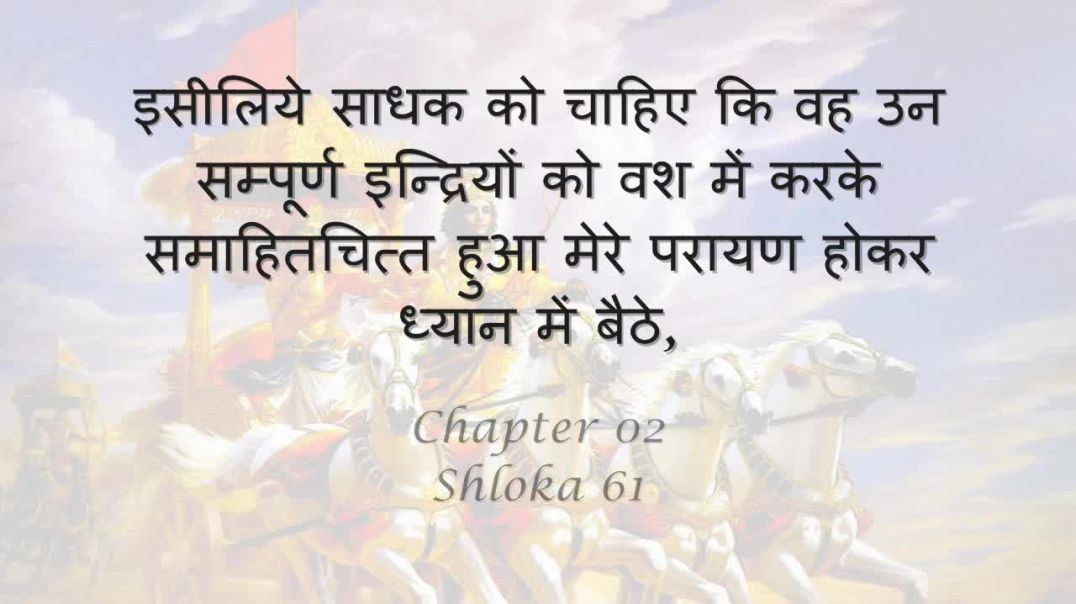
Sanskrit recitation, followed by Hindi translation of Chapter 2, Verse .
Text:
तानि सर्वाणि संयम्य युक्त आसीत मत्परः।
वशे हि यस्येन्द्रियाणि तस्य प्रज्ञा प्रतिष्ठिता ।।६१।।
Translation:
इसीलिये साधक को चाहिए कि वह उन सम्पूर्ण इन्द्रियों को वश में करके समाहितचित्त हुआ मेरे परायण होकर ध्यान में बैठे, क्योंकि जिस पुरुष की इन्द्रियाँ वश में होती हैं, उसी की बुद्धि स्थिर हो जाती है।
~~~~~~~~~~~~~~~~
OVERVIEW:
The Bhagavad Gita is a 700-verse scripture that is part of the Hindu epic Mahabharata. This scripture contains a conversation between Pandava prince Arjuna and his guide Lord Krishna on a variety of theological and philosophical issues.
Faced with a fratricidal war, a despondent Arjuna turns to his charioteer Krishna for counsel on the battlefield. Krishna, through the course of the Gita, imparts to Arjuna wisdom, the path to devotion, and the doctrine of selfless action.
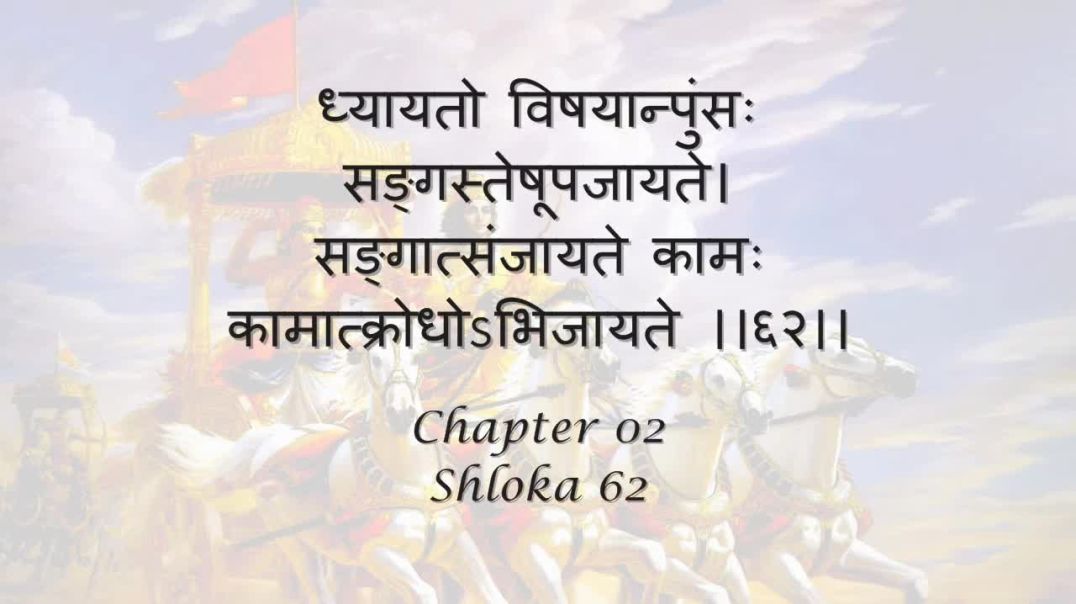
Sanskrit recitation, followed by Hindi translation of Chapter 2, Verse .
Text:
ध्यायतो विषयान्पुंसः सङ्गस्तेषूपजायते।
सङ्गात्संजायते कामः कामात्क्रोधोऽभिजायते ।।६२।।
Translation:
विषयों का चिन्तन करने वाले पुरुष की उन विषयों में आसक्ति हो जाती है, आसक्ति से उन विषयों की कामना उत्पन्न होती है और कामना में विघ्न पड़ने से क्रोध उत्पन्न होता है।
~~~~~~~~~~~~~~~~
OVERVIEW:
The Bhagavad Gita is a 700-verse scripture that is part of the Hindu epic Mahabharata. This scripture contains a conversation between Pandava prince Arjuna and his guide Lord Krishna on a variety of theological and philosophical issues.
Faced with a fratricidal war, a despondent Arjuna turns to his charioteer Krishna for counsel on the battlefield. Krishna, through the course of the Gita, imparts to Arjuna wisdom, the path to devotion, and the doctrine of selfless action.
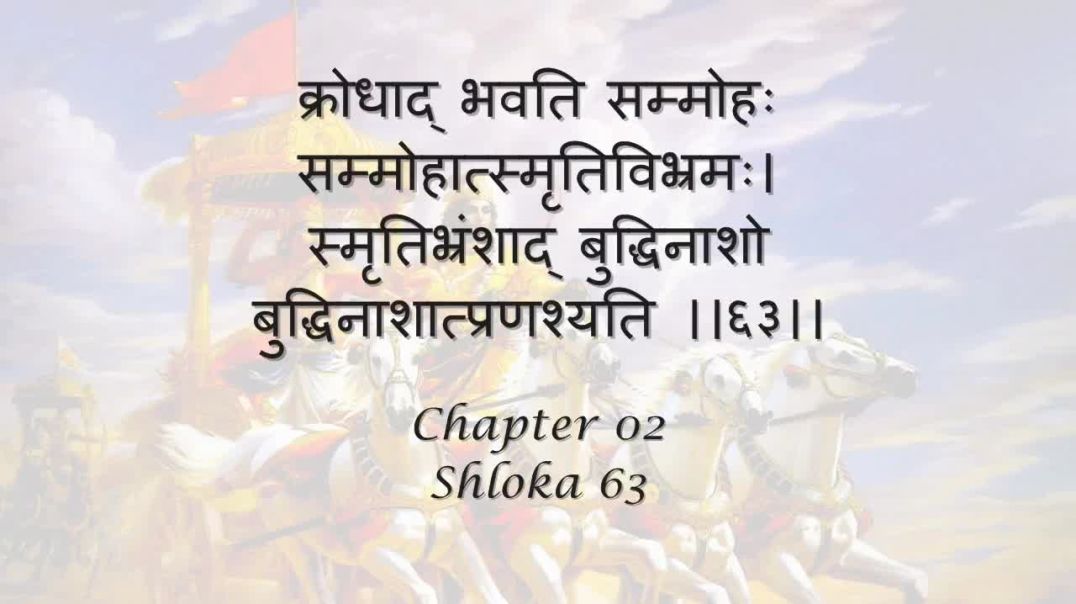
Sanskrit recitation, followed by Hindi translation of Chapter 2, Verse .
Text:
क्रोधाद् भवति सम्मोहः सम्मोहात्स्मृतिविभ्रमः।
स्मृतिभ्रंशाद् बुद्धिनाशो बुद्धिनाशात्प्रणश्यति।।६३।।
Translation:
क्रोध से अत्यन्त मूढ़भाव उत्पन्न हो जाता है, मूढ़भाव से स्मृति में भ्रम हो जाता है, स्मृति में भ्रम हो जाने से बुद्धि अर्थात् ज्ञानशक्ति का नाश हो जाता है और बुद्धि का नाश हो जाने से यह पुरुष अपनी स्थिति से गिर जाता है।
~~~~~~~~~~~~~~~~
OVERVIEW:
The Bhagavad Gita is a 700-verse scripture that is part of the Hindu epic Mahabharata. This scripture contains a conversation between Pandava prince Arjuna and his guide Lord Krishna on a variety of theological and philosophical issues.
Faced with a fratricidal war, a despondent Arjuna turns to his charioteer Krishna for counsel on the battlefield. Krishna, through the course of the Gita, imparts to Arjuna wisdom, the path to devotion, and the doctrine of selfless action.
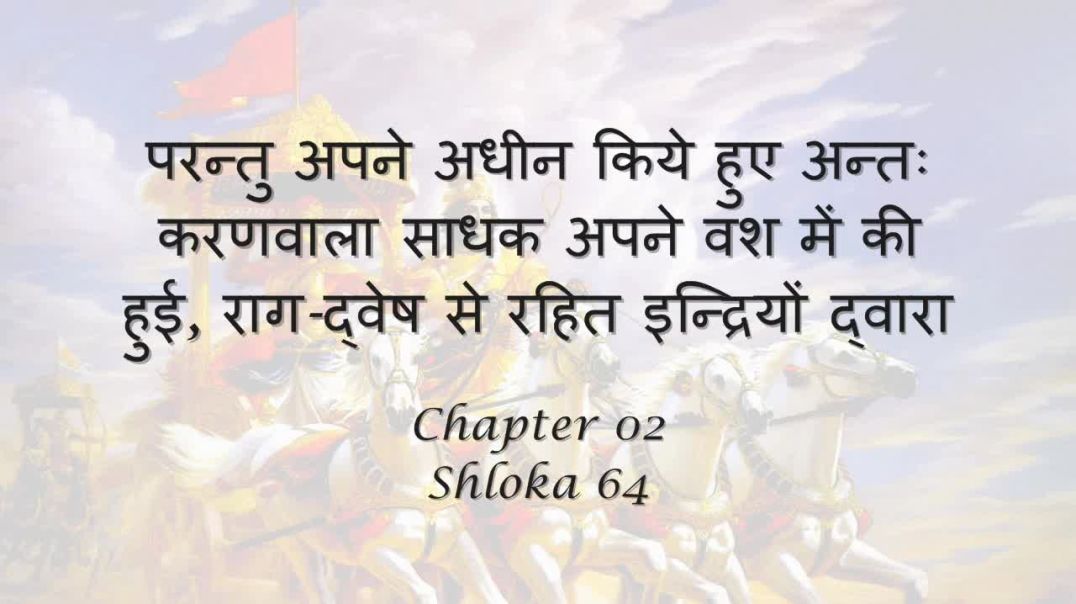
Sanskrit recitation, followed by Hindi translation of Chapter 2, Verse .
Text:
रागद्वेषवियुक्तैस्तु विषयानिन्द्रियैश्चरन्।
आत्मवश्यैर्विधेयात्मा प्रसादमधिगच्छति ।।६४।।
Translation:
परन्तु अपने अधीन किये हुए अन्तः करणवाला साधक अपने वश में की हुई, राग-द्वेष से रहित इन्द्रियों द्वारा विषयों में विचरण करता हुआ अन्तःकरण की प्रसन्नता को प्राप्त होता है।
~~~~~~~~~~~~~~~~
OVERVIEW:
The Bhagavad Gita is a 700-verse scripture that is part of the Hindu epic Mahabharata. This scripture contains a conversation between Pandava prince Arjuna and his guide Lord Krishna on a variety of theological and philosophical issues.
Faced with a fratricidal war, a despondent Arjuna turns to his charioteer Krishna for counsel on the battlefield. Krishna, through the course of the Gita, imparts to Arjuna wisdom, the path to devotion, and the doctrine of selfless action.
SHOW LESS