Latest videos
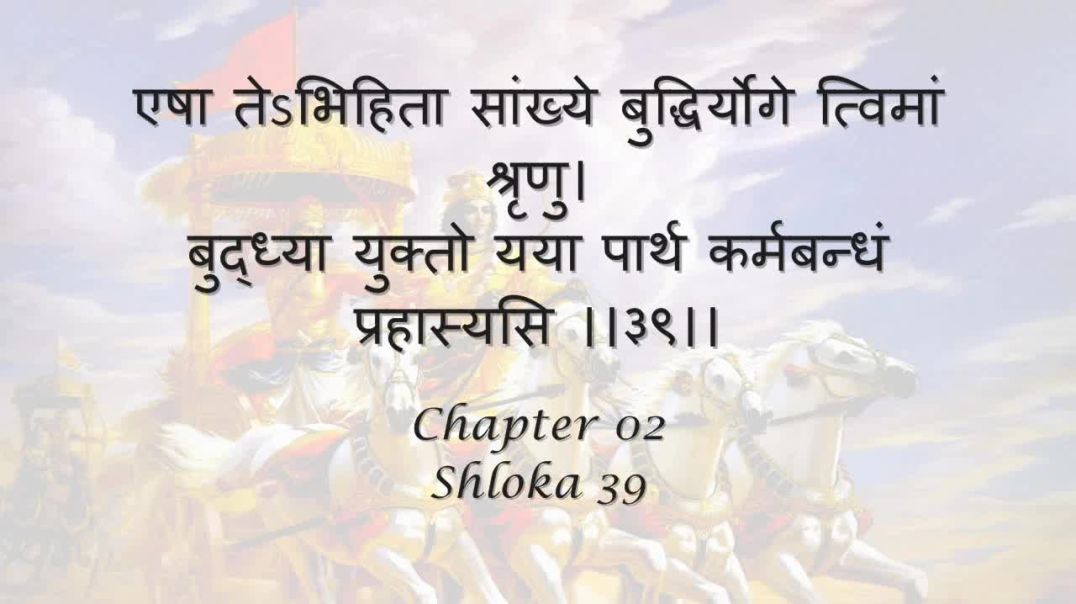
Sanskrit recitation, followed by Hindi translation of Chapter 2, Verse 39.
Text:
एषा तेऽभिहिता सांख्ये बुद्धिर्योगे त्विमां श्रृणु।
बुद्ध्या युक्तो यया पार्थ कर्मबन्धं प्रहास्यसि ।।३९।।
Translation:
हे पार्थ! यह बुद्धि तेरे लिए ज्ञानयोग के विषय में कही गयी और अब तू इसको कर्मयोग के विषय में सुन, जिस बुद्धि से युक्त हुआ तू कर्मों के बन्धन को भलीभाँति त्याग देगा अर्थात् सर्वथा नष्ट कर डालेगा।
~~~~~~~~~~~~~~~~
OVERVIEW:
The Bhagavad Gita is a 700-verse scripture that is part of the Hindu epic Mahabharata. This scripture contains a conversation between Pandava prince Arjuna and his guide Lord Krishna on a variety of theological and philosophical issues.
Faced with a fratricidal war, a despondent Arjuna turns to his charioteer Krishna for counsel on the battlefield. Krishna, through the course of the Gita, imparts to Arjuna wisdom, the path to devotion, and the doctrine of selfless action.
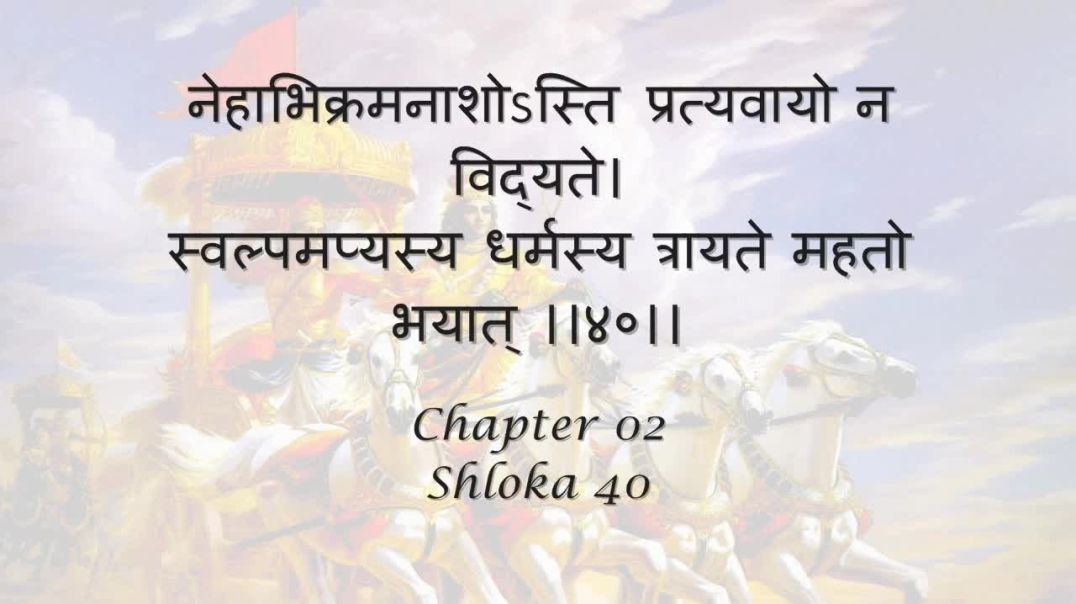
Sanskrit recitation, followed by Hindi translation of Chapter 2, Verse 40.
Text:
नेहाभिक्रमनाशोऽस्ति प्रत्यवायो न विद्यते।
स्वल्पमप्यस्य धर्मस्य त्रायते महतो भयात्।।४०।।
Translation:
इस कर्मयोग में आरम्भ का अर्थात् बीज का नाश नहीं है और उलटा फलरूप दोष भी नहीं है, बल्कि इस कर्मयोगरूप धर्म का थोड़ा सा भी साधन जन्म मृत्युरूप महान भय से रक्षा कर लेता है।
~~~~~~~~~~~~~~~~
OVERVIEW:
The Bhagavad Gita is a 700-verse scripture that is part of the Hindu epic Mahabharata. This scripture contains a conversation between Pandava prince Arjuna and his guide Lord Krishna on a variety of theological and philosophical issues.
Faced with a fratricidal war, a despondent Arjuna turns to his charioteer Krishna for counsel on the battlefield. Krishna, through the course of the Gita, imparts to Arjuna wisdom, the path to devotion, and the doctrine of selfless action.
SHOW LESS

Biryani Challenge Biryani Eating Competition
Ding_Dong_Girls

4 Awesome ideas how to tie a Necktie
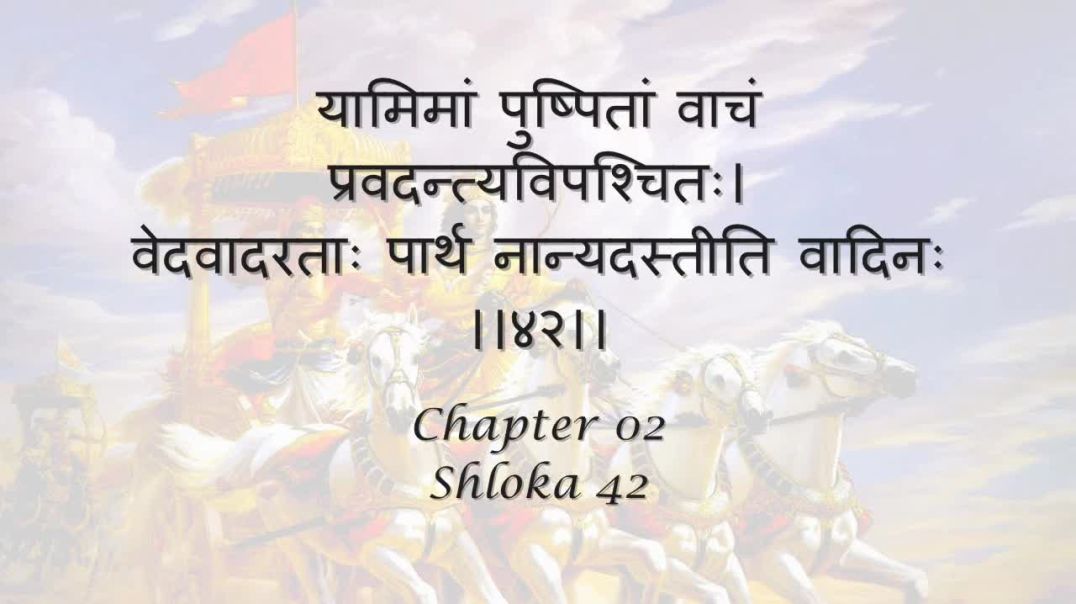
Sanskrit recitation, followed by Hindi translation of Chapter 2, Verses 42-44.
Text:
यामिमां पुष्पितां वाचं प्रवदन्त्यविपश्चितः।
वेदवादरताः पार्थ नान्यदस्तीति वादिनः।।४२।।
कामात्मानः स्वर्गपरा जन्मकर्मफलप्रदाम्।
क्रियाविशेषबहुलां भोगैश्वर्यगतिं प्रति।।४३।।
भोगैश्वर्यप्रसक्तानां तयापहृतचेतसाम्।
व्यवसायात्मिका बुद्धिः समाधौ न विधीयते।।४४।।
Translation:
हे अर्जुन! जो भोगों में तन्मय हो रहे हैं, जो कर्मफल के प्रशंसक वेदवाक्यों में ही प्रीति रखते हैं, जिनकी बुद्धि में स्वर्ग ही परम प्राप्य वस्तु है और जो स्वर्ग से बढ़कर दूसरी कोई वस्तु ही नहीं है- ऐसा कहने वाले हैं, वे अविवेकी जन इस प्रकार की जिस पुष्पित अर्थात् दिखाऊ शोभायुक्त वाणी को कहा करते हैं जो कि जन्मरूप कर्मफल देने वाली एवं भोग तथा ऐश्वर्य की प्राप्ति के लिए नाना प्रकार की बहुत सी क्रियाओं का वर्णन करने वाली है, उस वाणी द्वारा जिनका चित्त हर लिया गया है, जो भोग और ऐश्वर्य में अत्यन्त आसक्त हैं, उन पुरुषों की परमात्मा में निश्चयात्मिका बुद्धि नहीं होती।
~~~~~~~~~~~~~~~~
OVERVIEW:
The Bhagavad Gita is a 700-verse scripture that is part of the Hindu epic Mahabharata. This scripture contains a conversation between Pandava prince Arjuna and his guide Lord Krishna on a variety of theological and philosophical issues.
Faced with a fratricidal war, a despondent Arjuna turns to his charioteer Krishna for counsel on the battlefield. Krishna, through the course of the Gita, imparts to Arjuna wisdom, the path to devotion, and the doctrine of selfless action.
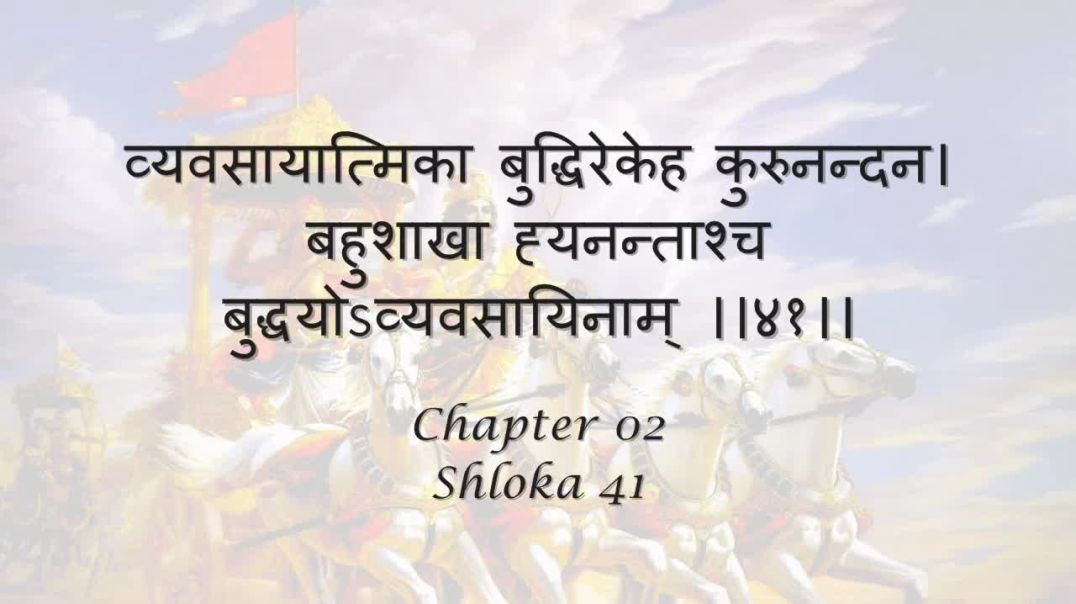
Sanskrit recitation, followed by Hindi translation of Chapter 2, Verse 41.
Text:
व्यवसायात्मिका बुद्धिरेकेह कुरुनन्दन।
बहुशाखा ह्यनन्ताश्च बुद्धयोऽव्यवसायिनाम्।।४१।।
Translation:
हे अर्जुन ! इस कर्मयोग में निश्चयात्मिका बुद्धि एक ही होती है, किन्तु अस्थिर विचार वाले विवेकहीन सकाम मनुष्यों की बुद्धियाँ निश्चय ही बहुत भेदोंवाली और अनन्त होती हैं।
~~~~~~~~~~~~~~~~
OVERVIEW:
The Bhagavad Gita is a 700-verse scripture that is part of the Hindu epic Mahabharata. This scripture contains a conversation between Pandava prince Arjuna and his guide Lord Krishna on a variety of theological and philosophical issues.
Faced with a fratricidal war, a despondent Arjuna turns to his charioteer Krishna for counsel on the battlefield. Krishna, through the course of the Gita, imparts to Arjuna wisdom, the path to devotion, and the doctrine of selfless action.

How to make a Bowtie from Necktie
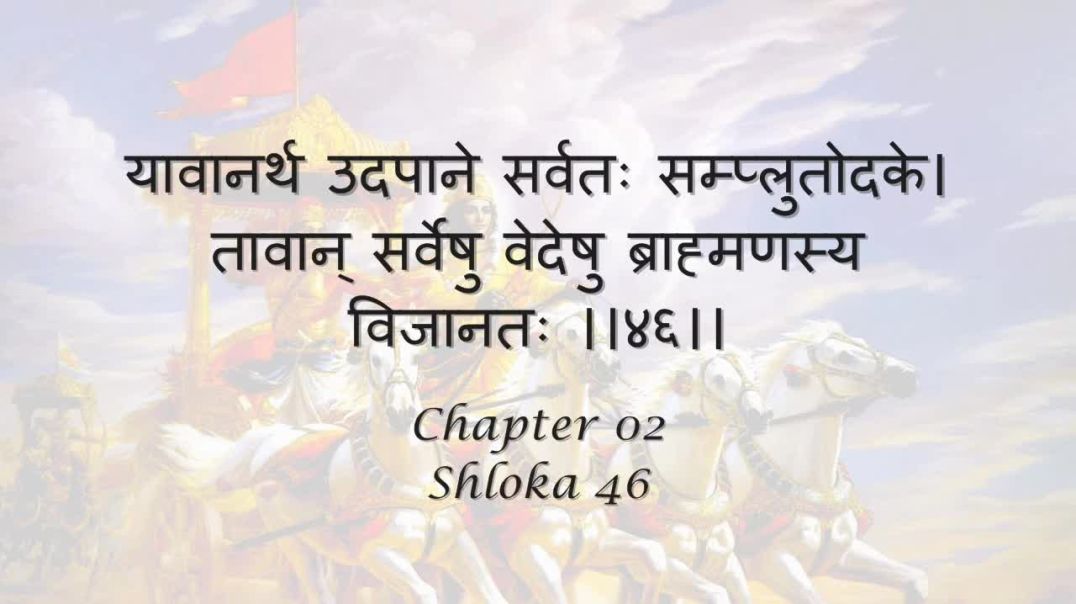
Sanskrit recitation, followed by Hindi translation of Chapter 2, Verse 46.
Text:
यावानर्थ उदपाने सर्वतः सम्प्लुतोदके।
तावान् सर्वेषु वेदेषु ब्राह्मणस्य विजानतः।।४६।।
Translation:
सब ओर से परिपूर्ण जलाशय के प्राप्त हो जाने पर छोटे जलाशय में मनुष्य का जितना प्रयोजन रहता है, ब्रह्म को तत्त्व से जानने वाले ब्राह्मण का समस्त वेदों में उतना ही प्रयोजन रह जाता है।
~~~~~~~~~~~~~~~~
OVERVIEW:
The Bhagavad Gita is a 700-verse scripture that is part of the Hindu epic Mahabharata. This scripture contains a conversation between Pandava prince Arjuna and his guide Lord Krishna on a variety of theological and philosophical issues.
Faced with a fratricidal war, a despondent Arjuna turns to his charioteer Krishna for counsel on the battlefield. Krishna, through the course of the Gita, imparts to Arjuna wisdom, the path to devotion, and the doctrine of selfless action.
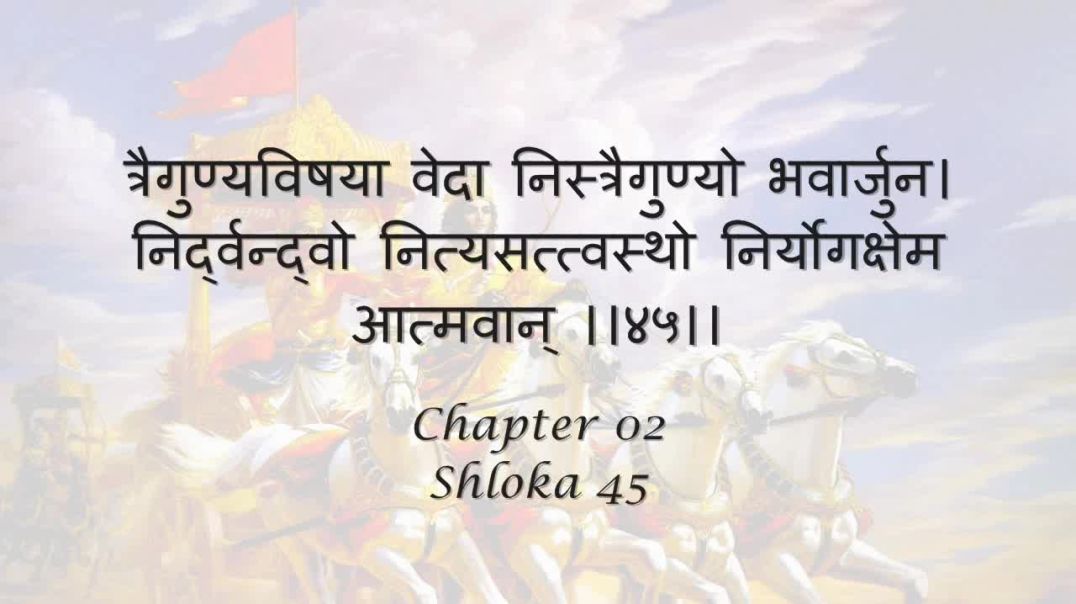
Sanskrit recitation, followed by Hindi translation of Chapter 2, Verse 45.
Text:
त्रैगुण्यविषया वेदा निस्त्रैगुण्यो भवार्जुन।
निर्द्वन्द्वो नित्यसत्त्वस्थो निर्योगक्षेम आत्मवान् ।।४५।।
Translation:
हे अर्जुन! वेद उपर्युक्त प्रकार से तीनों गुणों के कार्यरूप समस्त भोगों एवं उनके साधनों का प्रतिपादन करने वाले हैं, इसीलिये तू उन भोगों एवं उनके साधनों में आसक्तिहीन, हर्ष-शोकादि द्वन्द्वों से रहित, नित्यवस्तु परमात्मा में स्थित योग-क्षेम को न चाहने वाला और स्वाधीन अन्तःकरण वाला हो।
~~~~~~~~~~~~~~~~
OVERVIEW:
The Bhagavad Gita is a 700-verse scripture that is part of the Hindu epic Mahabharata. This scripture contains a conversation between Pandava prince Arjuna and his guide Lord Krishna on a variety of theological and philosophical issues.
Faced with a fratricidal war, a despondent Arjuna turns to his charioteer Krishna for counsel on the battlefield. Krishna, through the course of the Gita, imparts to Arjuna wisdom, the path to devotion, and the doctrine of selfless action.

Biggest Punjabi Thali in Punjabi Look Eating Challenge Biggest Thali Competition Food Challenge
Ding_Dong_Girls

How to tie a tie easy way for Beginners Windsor knot
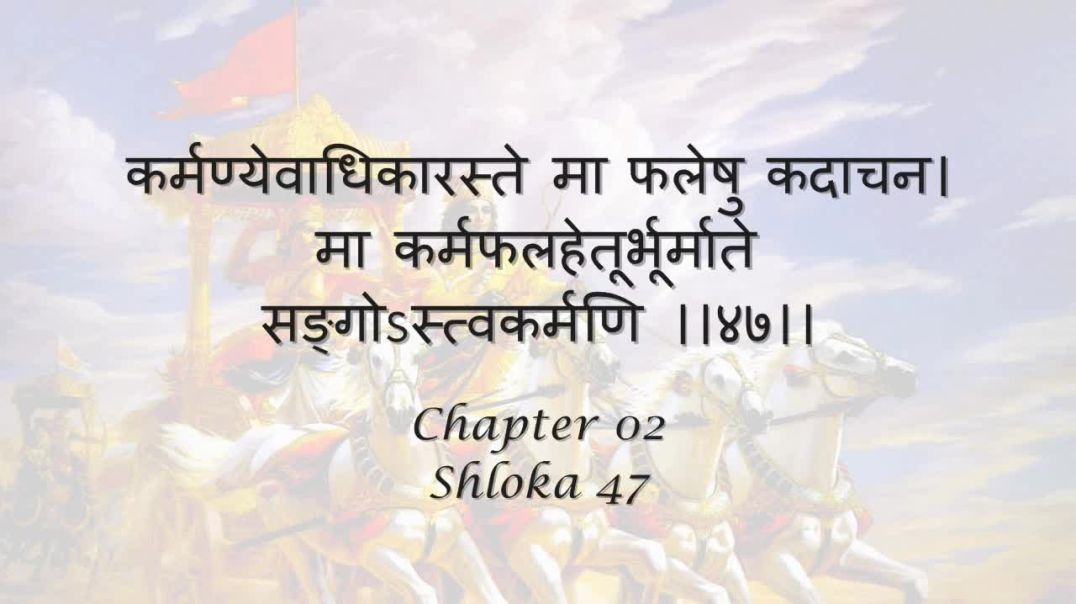
Sanskrit recitation, followed by Hindi translation of Chapter 2, Verse 47.
Text:
कर्मण्येवाधिकारस्ते मा फलेषु कदाचन।
मा कर्मफलहेतूर्भूर्माते सङ्गोऽस्त्वकर्मणि।।४७।।
Translation:
तेरा कर्म करने में ही अधिकार है, उसके फलों में कभी नहीं। इसीलिये तू कर्मों के फल का हेतु मत हो तथा तेरी कर्म न करने में भी आसक्ति न हो।
~~~~~~~~~~~~~~~~
OVERVIEW:
The Bhagavad Gita is a 700-verse scripture that is part of the Hindu epic Mahabharata. This scripture contains a conversation between Pandava prince Arjuna and his guide Lord Krishna on a variety of theological and philosophical issues.
Faced with a fratricidal war, a despondent Arjuna turns to his charioteer Krishna for counsel on the battlefield. Krishna, through the course of the Gita, imparts to Arjuna wisdom, the path to devotion, and the doctrine of selfless action.

Biggest Dosa Eating Challenge Big Dosa Eating Competition Food Challenge
Ding_Dong_Girls
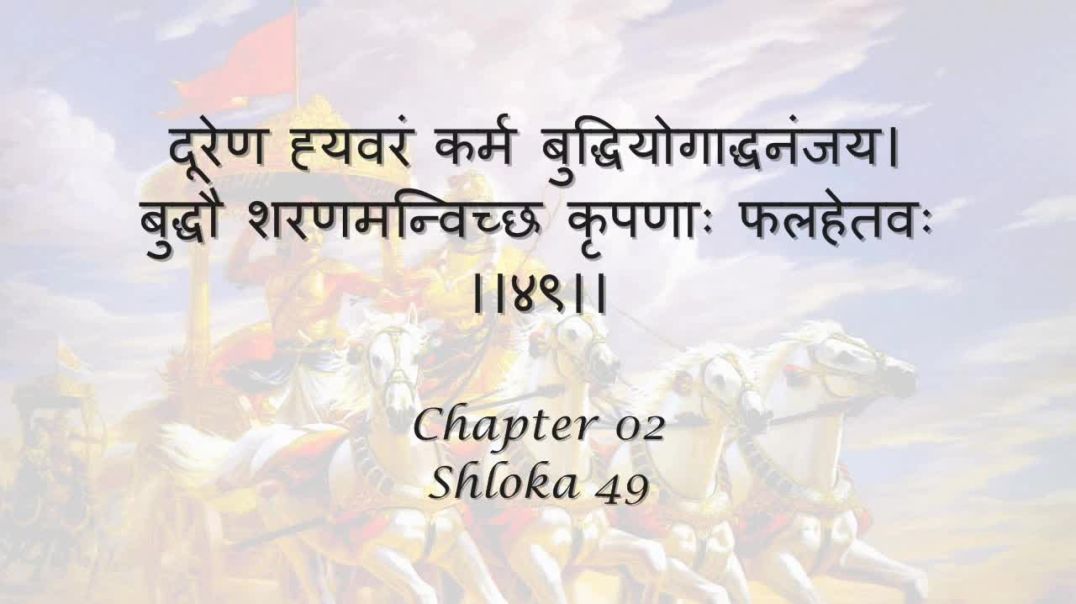
Sanskrit recitation, followed by Hindi translation of Chapter 2, Verse 49.
Text:
दूरेण ह्यवरं कर्म बुद्धियोगाद्धनंजय।
बुद्धौ शरणमन्विच्छ कृपणाः फलहेतवः।।४९।।
Translation:
इस समत्वरूप बुद्धियोग से सकाम कर्म अत्यन्त ही निम्न श्रेणी का है। इसीलिये हे धनंजय! तू समबुद्धि में ही रक्षा का उपाय ढूँढ अर्थात् बुद्धियोग का ही आश्रय ग्रहण कर, क्योंकि फल के हेतु बनने वाले अत्यन्त दीन हैं।
~~~~~~~~~~~~~~~~
OVERVIEW:
The Bhagavad Gita is a 700-verse scripture that is part of the Hindu epic Mahabharata. This scripture contains a conversation between Pandava prince Arjuna and his guide Lord Krishna on a variety of theological and philosophical issues.
Faced with a fratricidal war, a despondent Arjuna turns to his charioteer Krishna for counsel on the battlefield. Krishna, through the course of the Gita, imparts to Arjuna wisdom, the path to devotion, and the doctrine of selfless action.

10 Cool Ways to Fold a Pocket Square

How to tie a tie EASY WAY (Slowly & Mirrored) Windsor knot

How to tie a tie in 10 seconds - 3 ways

Double Eldredge knot for your Necktie
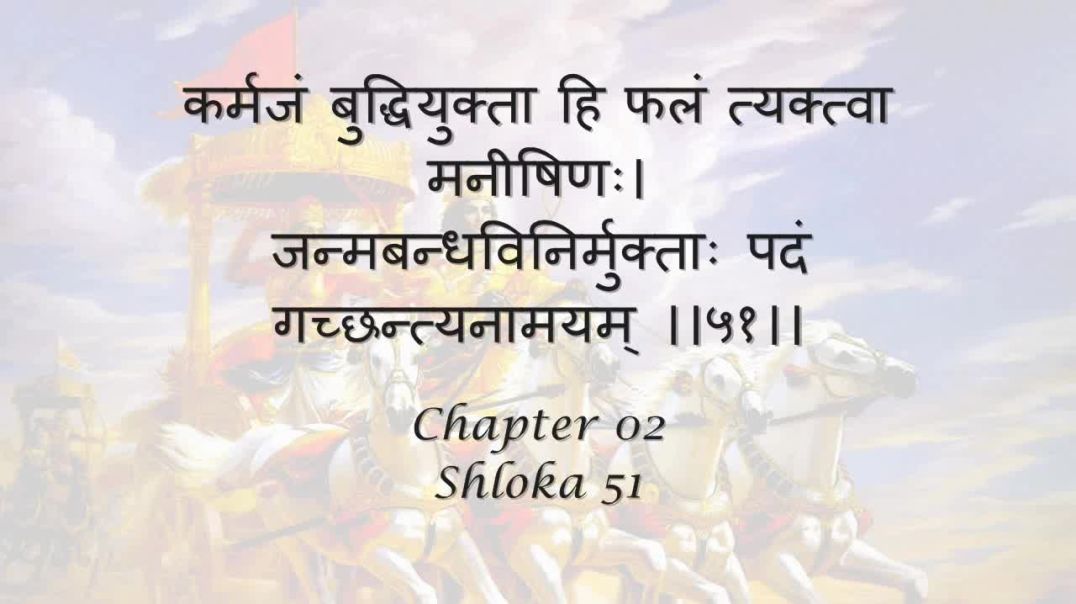
Sanskrit recitation, followed by Hindi translation of Chapter 2, Verse 51.
Text:
कर्मजं बुद्धियुक्ता हि फलं त्यक्त्वा मनीषिणः।
जन्मबन्धविनिर्मुक्ताः पदं गच्छन्त्यनामयम् ।।५१।।
Translation:
क्योंकि समबुद्धि से युक्त ज्ञानीजन कर्मों से उत्पन्न होने वाले फल को त्यागकर जन्मरूप बन्धन से मुक्त हो निर्विकार परम पद को प्राप्त हो जाते हैं।
~~~~~~~~~~~~~~~~
OVERVIEW:
The Bhagavad Gita is a 700-verse scripture that is part of the Hindu epic Mahabharata. This scripture contains a conversation between Pandava prince Arjuna and his guide Lord Krishna on a variety of theological and philosophical issues.
Faced with a fratricidal war, a despondent Arjuna turns to his charioteer Krishna for counsel on the battlefield. Krishna, through the course of the Gita, imparts to Arjuna wisdom, the path to devotion, and the doctrine of selfless action.
SHOW LESS
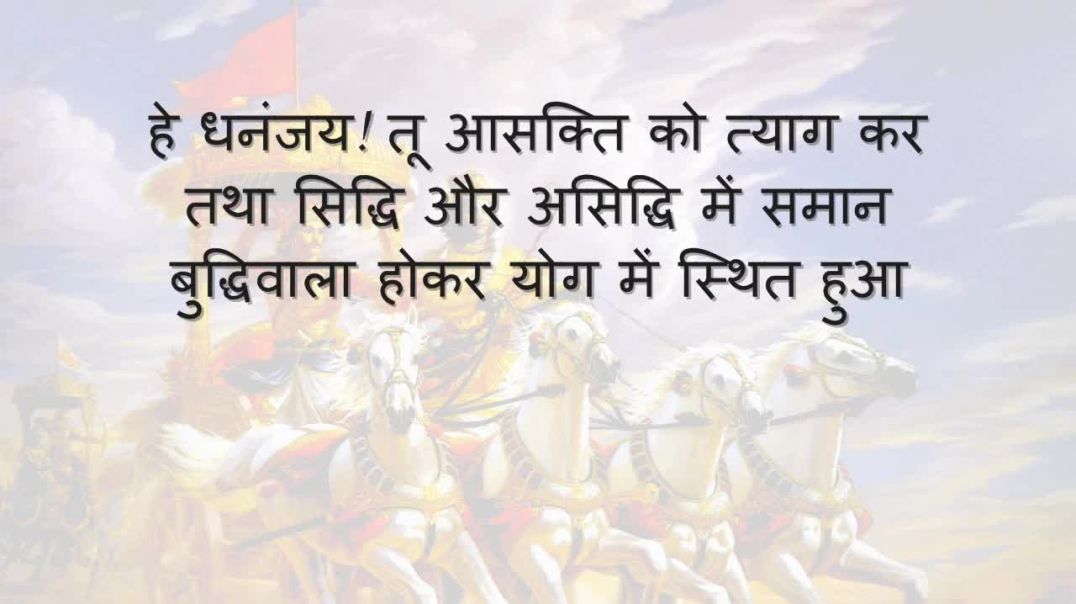
Sanskrit recitation, followed by Hindi translation of Chapter 2, Verse 48.
Text:
योगस्थः कुरु कर्माणि सङ्गं त्यक्त्वा धनंजय।
सिद्ध्यसिद्ध्योः समो भूत्वा समत्वं योग उच्यते ।।४८।।
Translation:
हे धनंजय! तू आसक्ति को त्याग कर तथा सिद्धि और असिद्धि में समान बुद्धिवाला होकर योग में स्थित हुआ कर्तव्यकर्मों को कर, समत्व ही योग कहलाता है।
~~~~~~~~~~~~~~~~
OVERVIEW:
The Bhagavad Gita is a 700-verse scripture that is part of the Hindu epic Mahabharata. This scripture contains a conversation between Pandava prince Arjuna and his guide Lord Krishna on a variety of theological and philosophical issues.
Faced with a fratricidal war, a despondent Arjuna turns to his charioteer Krishna for counsel on the battlefield. Krishna, through the course of the Gita, imparts to Arjuna wisdom, the path to devotion, and the doctrine of selfless action.