Latest videos
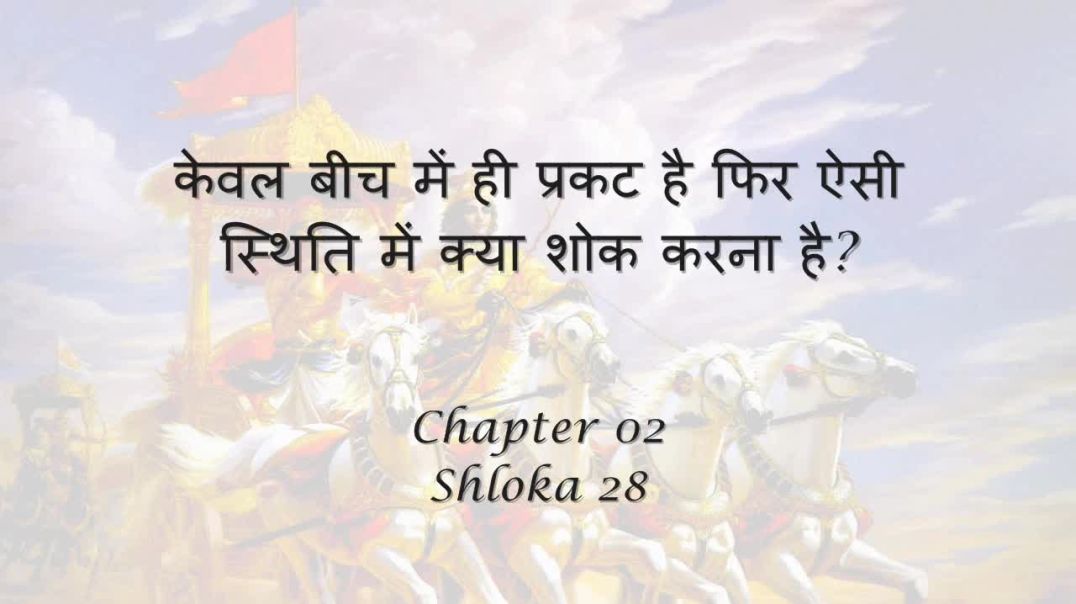
Sanskrit recitation, followed by Hindi translation of Chapter 2, Verse 28.
Text:
अव्यक्तादीनि भूतानि व्यक्तमध्यानि भारत।
अव्यक्तनिधनान्येव तत्र का परिदेवना ।।२८।।
Translation:
हे अर्जुन! सम्पूर्ण प्राणी जन्म से पहले अप्रकट थे और मरने के बाद भी अप्रकट हो जाने वाले हैं, केवल बीच में ही प्रकट है फिर ऐसी स्थिति में क्या शोक करना है?
~~~~~~~~~~~~~~~~
OVERVIEW:
The Bhagavad Gita is a 700-verse scripture that is part of the Hindu epic Mahabharata. This scripture contains a conversation between Pandava prince Arjuna and his guide Lord Krishna on a variety of theological and philosophical issues.
Faced with a fratricidal war, a despondent Arjuna turns to his charioteer Krishna for counsel on the battlefield. Krishna, through the course of the Gita, imparts to Arjuna wisdom, the path to devotion, and the doctrine of selfless action.
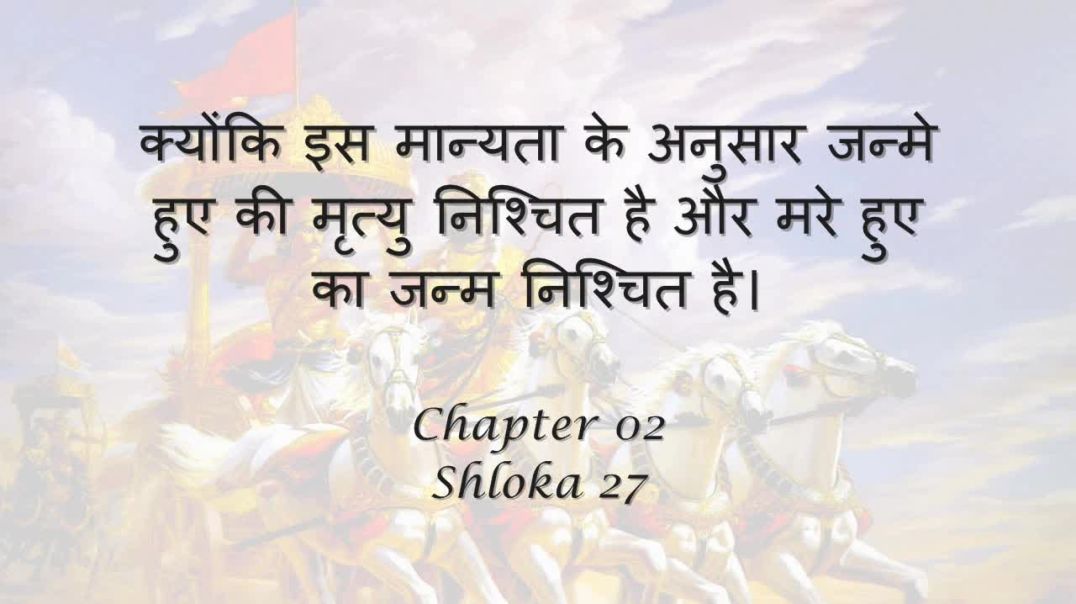
Sanskrit recitation, followed by Hindi translation of Chapter 2, Verse 27.
Text:
जातस्य हि ध्रुवो मृत्युर्ध्रुवं जन्म मृतस्य च।
तस्मादपरिहार्येऽर्थे न त्वं शोचितुमर्हसि ।।२७।।
Translation:
क्योंकि इस मान्यता के अनुसार जन्मे हुए की मृत्यु निश्चित है और मरे हुए का जन्म निश्चित है। इससे भी इस बिना उपाय वाले विषय में तू शोक करने को योग्य नहीं है।
~~~~~~~~~~~~~~~~
OVERVIEW:
The Bhagavad Gita is a 700-verse scripture that is part of the Hindu epic Mahabharata. This scripture contains a conversation between Pandava prince Arjuna and his guide Lord Krishna on a variety of theological and philosophical issues.
Faced with a fratricidal war, a despondent Arjuna turns to his charioteer Krishna for counsel on the battlefield. Krishna, through the course of the Gita, imparts to Arjuna wisdom, the path to devotion, and the doctrine of selfless action.
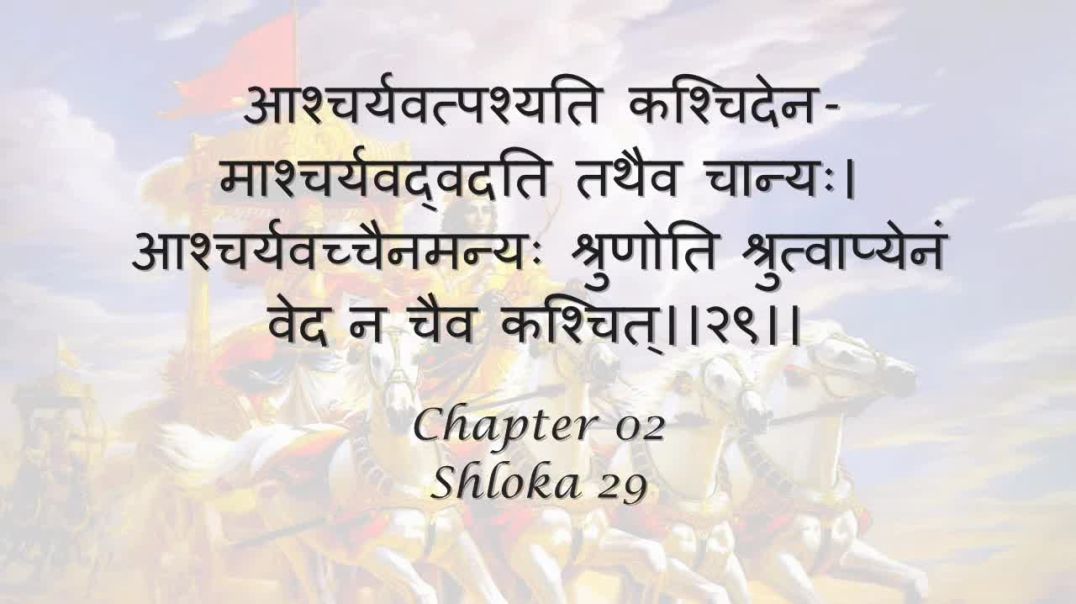
Sanskrit recitation, followed by Hindi translation of Chapter 2, Verse 29.
Text:
आश्चर्यवत्पश्यति कश्चिदेन-माश्चर्यवद्वदति तथैव चान्यः।
आश्चर्यवच्चैनमन्यः श्रुणोति श्रुत्वाप्येनं वेद न चैव कश्चित् ।।२९।।
Translation:
कोई एक महापुरुष ही इस आत्मा को आश्चर्य की भाँति देखता है और वैसे ही दूसरा कोई महापुरुष ही इसके तत्त्व का आश्चर्य की भाँति वर्णन करता है तथा दूसरा कोई अधिकारी पुरुष ही इसे आश्चर्य की भाँति सुनता है और कोई-कोई तो सुनकर भी इसको नहीं जानता।
~~~~~~~~~~~~~~~~
OVERVIEW:
The Bhagavad Gita is a 700-verse scripture that is part of the Hindu epic Mahabharata. This scripture contains a conversation between Pandava prince Arjuna and his guide Lord Krishna on a variety of theological and philosophical issues.
Faced with a fratricidal war, a despondent Arjuna turns to his charioteer Krishna for counsel on the battlefield. Krishna, through the course of the Gita, imparts to Arjuna wisdom, the path to devotion, and the doctrine of selfless action.
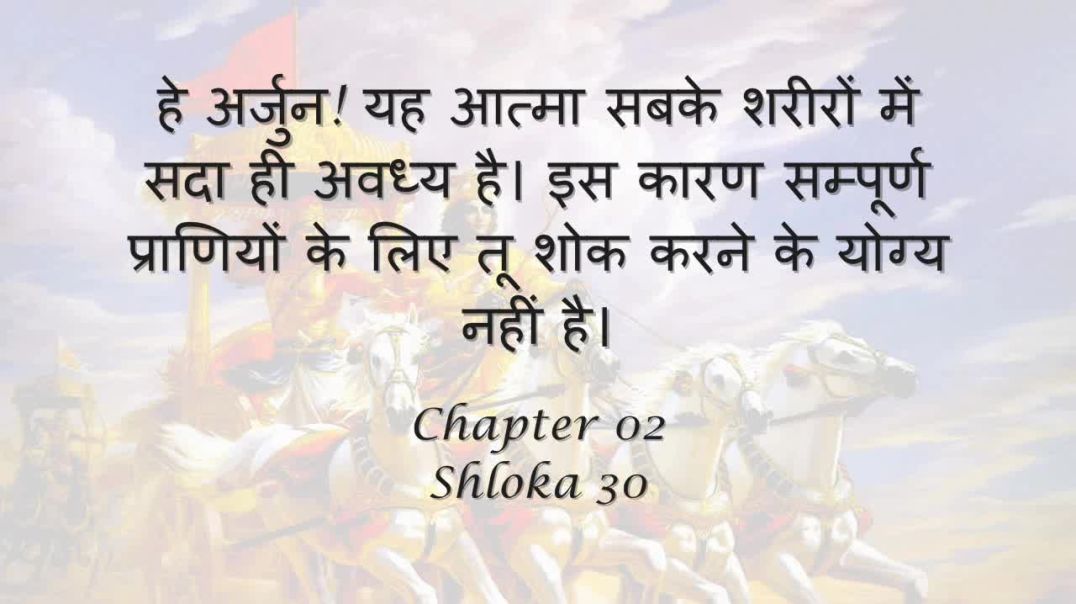
Sanskrit recitation, followed by Hindi translation of Chapter 2, Verse 30.
Text:
देही नित्यमवध्योऽयं देहे सर्वस्य भारत।
तस्मात्सर्वाणि भूतानि न त्वं शोचितुमर्हसि।।३०।।
Translation:
हे अर्जुन! यह आत्मा सबके शरीरों में सदा ही अवध्य है। इस कारण सम्पूर्ण प्राणियों के लिए तू शोक करने के योग्य नहीं है।
~~~~~~~~~~~~~~~~
OVERVIEW:
The Bhagavad Gita is a 700-verse scripture that is part of the Hindu epic Mahabharata. This scripture contains a conversation between Pandava prince Arjuna and his guide Lord Krishna on a variety of theological and philosophical issues.
Faced with a fratricidal war, a despondent Arjuna turns to his charioteer Krishna for counsel on the battlefield. Krishna, through the course of the Gita, imparts to Arjuna wisdom, the path to devotion, and the doctrine of selfless action.
SHOW LESS

#Food#mumbaifood#foodvlogs#foodvideos#videoshedio#amchimumbai
Sanskrit recitation, followed by Hindi translation of Chapter 2, Verse 31.
Text:
स्वधर्ममपि चावेक्ष्य न विकम्पितुमर्हसि।
धर्म्याद्धि युद्धाच्छ्रेयोऽन्यत्क्षत्रियस्य न विद्यते ।।३१।।
Translation:
तथा अपने धर्म को देखकर भी तू भय करने योग्य नहीं है अर्थात् तुझे भय नहीं करना चाहिए क्योंकि क्षत्रिय के लिए धर्मयुक्त युद्ध से बढ़कर दूसरा कोई कल्याणकारी कर्तव्य नहीं है।
~~~~~~~~~~~~~~~~
OVERVIEW:
The Bhagavad Gita is a 700-verse scripture that is part of the Hindu epic Mahabharata. This scripture contains a conversation between Pandava prince Arjuna and his guide Lord Krishna on a variety of theological and philosophical issues.
Faced with a fratricidal war, a despondent Arjuna turns to his charioteer Krishna for counsel on the battlefield. Krishna, through the course of the Gita, imparts to Arjuna wisdom, the path to devotion, and the doctrine of selfless action.
SHOW LESS

#Food#mumbaifood#foodvlogs#foodvideos#videoshedio#amchimumbai

SaraNu SaraNu raamachaMdra naraeMdraa
sari mammugaavu raamachaMdraa naraeMdraa
ghana daSarathunaku kausalyaadaevikini
jananamaMdina raamachaMdraa naraeMdraa
kanali taaTaki chaMpi kauSukujannamu gaachi
chanavulichchina raamachaMdraa naraeMdraa
aridi seeta peMDlaaDi abhayamaMdarikichchi
SaradhigaTTina raamachaMdraa naraeMdraa
arasi raavaNu chaMpi ayaedhyaanagara maeli
saravinaelina raamachaMdraa naraeMdraa
pannuga nalamaelmaMgapati SreevaeMkaTaeSvaru
sannidhinilchina raamachaMdraa naraeMdraa
anniTaa lakshmaNabharataaMjanaeyaSatrughnula
sannutikekkina raamachaMdraa naraeMdraa
~~~~~~~~~~~~~~~~
TELUGU
శరణు శరణు రామచంద్ర నరేంద్రా
సరి మమ్ముగావు రామచంద్రా నరేంద్రా
ఘన దశరథునకు కౌసల్యాదేవికిని
జననమందిన రామచంద్రా నరేంద్రా
కనలి తాటకి చంపి కౌశుకుజన్నము గాచి
చనవులిచ్చిన రామచంద్రా నరేంద్రా
అరిది సీత పెండ్లాడి అభయమందరికిచ్చి
శరధిగట్టిన రామచంద్రా నరేంద్రా
అరసి రావణు చంపి అయేధ్యానగర మేలి
సరవినేలిన రామచంద్రా నరేంద్రా
పన్నుగ నలమేల్మంగపతి శ్రీవేంకటేశ్వరు
సన్నిధినిల్చిన రామచంద్రా నరేంద్రా
అన్నిటా లక్ష్మణభరతాంజనేయశత్రుఘ్నుల
సన్నుతికెక్కిన రామచంద్రా నరేంద్రా
~~~~~~~~~~~~~~~~
INFO:
Track: Saranu Saranu Ramachandra
Album: Annamacharya Keerthanalu
Performer: Taaraka Rama Rao
Sanskrit recitation, followed by Hindi translation of Chapter 2, Verse 33.
Text:
अथ चेत्त्वमिमं धर्म्यं संग्रामं न करिष्यसि।
ततः स्वधर्मं कीर्तिं च हित्वा पापमवाप्स्यसि ।।३३।।
Translation:
किन्तु यदि तू इस धर्मयुक्त युद्ध को नहीं करेगा तो स्वधर्म और कीर्ति को खोकर पाप को प्राप्त होगा।
~~~~~~~~~~~~~~~~
OVERVIEW:
The Bhagavad Gita is a 700-verse scripture that is part of the Hindu epic Mahabharata. This scripture contains a conversation between Pandava prince Arjuna and his guide Lord Krishna on a variety of theological and philosophical issues.
Faced with a fratricidal war, a despondent Arjuna turns to his charioteer Krishna for counsel on the battlefield. Krishna, through the course of the Gita, imparts to Arjuna wisdom, the path to devotion, and the doctrine of selfless action.
Sanskrit recitation, followed by Hindi translation of Chapter 2, Verse 32.
Text:
यदृच्छया चोपपन्नं स्वर्गद्वारमपावृतम्।
सुखिनः क्षत्रियाः पार्थ लभन्ते युद्धमीदृशम्।।३२।।
Translation:
हे पार्थ ! अपने आप प्राप्त हुए और खुले हुए स्वर्ग के द्वाररूप इस प्रकार के युद्ध को भाग्यवान क्षत्रिय लोग ही पाते हैं।
~~~~~~~~~~~~~~~~
OVERVIEW:
The Bhagavad Gita is a 700-verse scripture that is part of the Hindu epic Mahabharata. This scripture contains a conversation between Pandava prince Arjuna and his guide Lord Krishna on a variety of theological and philosophical issues.
Faced with a fratricidal war, a despondent Arjuna turns to his charioteer Krishna for counsel on the battlefield. Krishna, through the course of the Gita, imparts to Arjuna wisdom, the path to devotion, and the doctrine of selfless action.
SHOW LESS
Sanskrit recitation, followed by Hindi translation of Chapter 2, Verse 34.
Text:
अकीर्तिं चापि भूतानि कथयिष्यन्ति तेऽव्ययाम्।
सम्भावितस्य चाकीर्तिर्मरणादतिरिच्यते ।।३४।।
Translation:
तथा सब लोग तेरी बहुत काल तक रहने वाली अपकीर्ति का भी कथन करेंगे और माननीय पुरुष के लिए अपकीर्ति मरण से भी बढ़कर है।
~~~~~~~~~~~~~~~~
OVERVIEW:
The Bhagavad Gita is a 700-verse scripture that is part of the Hindu epic Mahabharata. This scripture contains a conversation between Pandava prince Arjuna and his guide Lord Krishna on a variety of theological and philosophical issues.
Faced with a fratricidal war, a despondent Arjuna turns to his charioteer Krishna for counsel on the battlefield. Krishna, through the course of the Gita, imparts to Arjuna wisdom, the path to devotion, and the doctrine of selfless action.
SHOW LESS
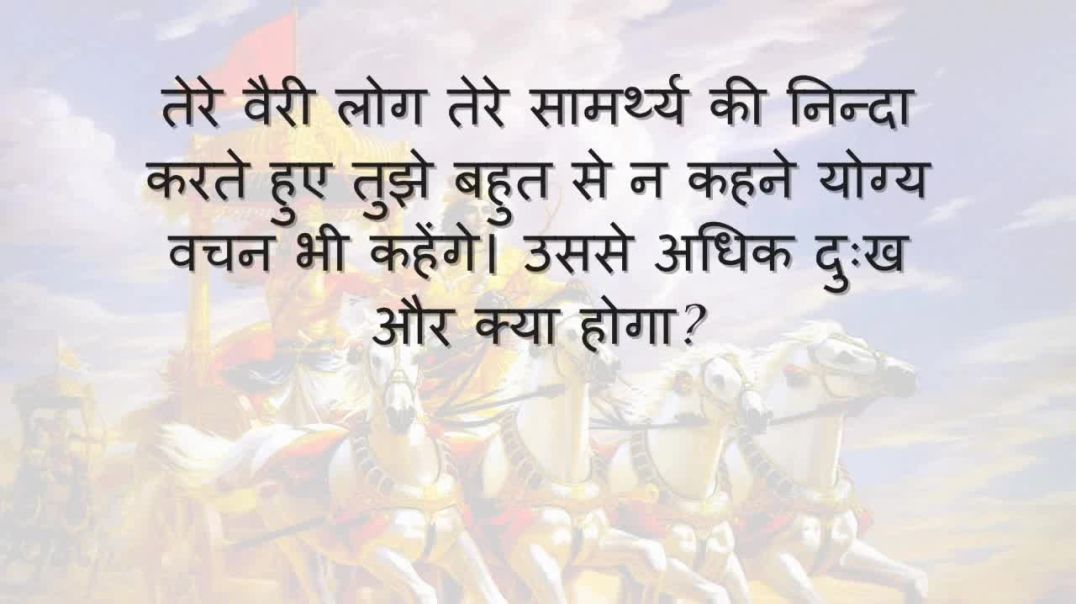
Sanskrit recitation, followed by Hindi translation of Chapter 2, Verse 36.
Text:
अवाच्यवादांश्च बहून् वदिष्यन्ति तवाहिताः।
निन्दन्तस्तव सामर्थ्यं ततो दुःखतरं नु किम् ।।३६।।
Translation:
तेरे वैरी लोग तेरे सामर्थ्य की निन्दा करते हुए तुझे बहुत से न कहने योग्य वचन भी कहेंगे। उससे अधिक दुःख और क्या होगा?
~~~~~~~~~~~~~~~~
OVERVIEW:
The Bhagavad Gita is a 700-verse scripture that is part of the Hindu epic Mahabharata. This scripture contains a conversation between Pandava prince Arjuna and his guide Lord Krishna on a variety of theological and philosophical issues.
Faced with a fratricidal war, a despondent Arjuna turns to his charioteer Krishna for counsel on the battlefield. Krishna, through the course of the Gita, imparts to Arjuna wisdom, the path to devotion, and the doctrine of selfless action.
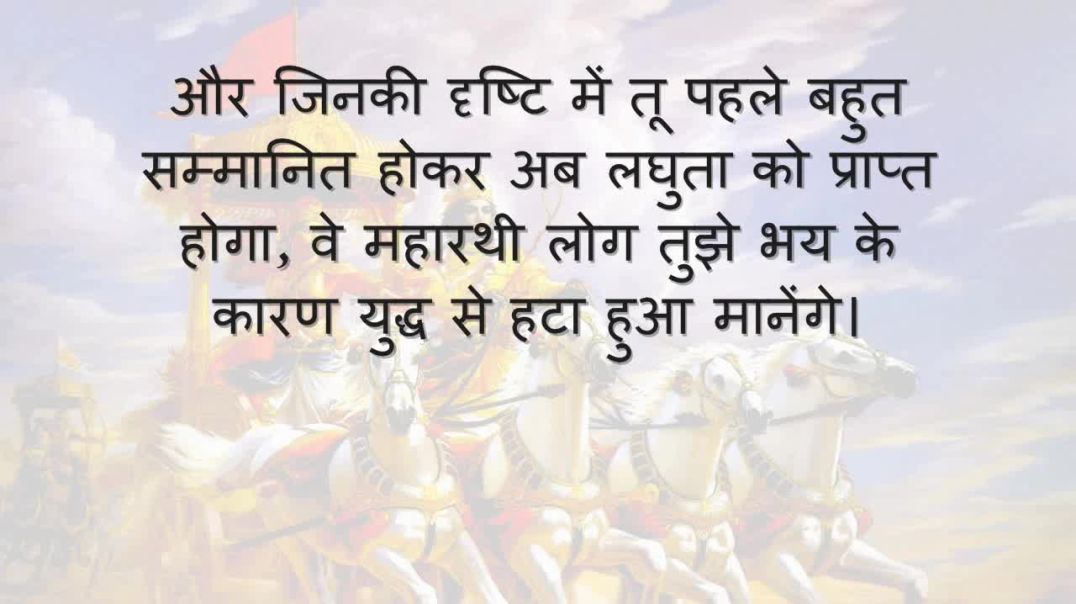
Sanskrit recitation, followed by Hindi translation of Chapter 2, Verse 35.
Text:
भयाद्रणादुपरतं मंस्यन्ते त्वां महारथाः।
येषां च त्वं बहुमतो भूत्वा यास्यसि लाघवम् ।।३५।
Translation:
और जिनकी दृष्टि में तू पहले बहुत सम्मानित होकर अब लघुता को प्राप्त होगा, वे महारथी लोग तुझे भय के कारण युद्ध से हटा हुआ मानेंगे।
~~~~~~~~~~~~~~~~
OVERVIEW:
The Bhagavad Gita is a 700-verse scripture that is part of the Hindu epic Mahabharata. This scripture contains a conversation between Pandava prince Arjuna and his guide Lord Krishna on a variety of theological and philosophical issues.
Faced with a fratricidal war, a despondent Arjuna turns to his charioteer Krishna for counsel on the battlefield. Krishna, through the course of the Gita, imparts to Arjuna wisdom, the path to devotion, and the doctrine of selfless action.
SHOW LESS

Naanaati Brathuku Naatakamu Kaanaka Kannadhi Kaivalyamu
Puttutayu Nijamu Povutayu Nijamu Nattanatimeepani Naatakamu
Yettanedhutaagaladhi Prapanchamu Kattagatapadhithi Kaivalyamu
Thegadhu Paapamu Theeradhu Punyamu Naki Naki Kaalamu Naatakamu
Yeguvanai Shree Venkateshwarudelika Gaganamu Meethidhi Kaivalyamu
~~~~~~~~~~~~~~~~
INFO:
Track: Nanati Brathuku
Album: Annamayya Sankirtanas Vol - 1
Performers: Jayasri - Gayatri - Lavanya
Music: Radha Gopi
~~~~~~~~~~~~~~~~
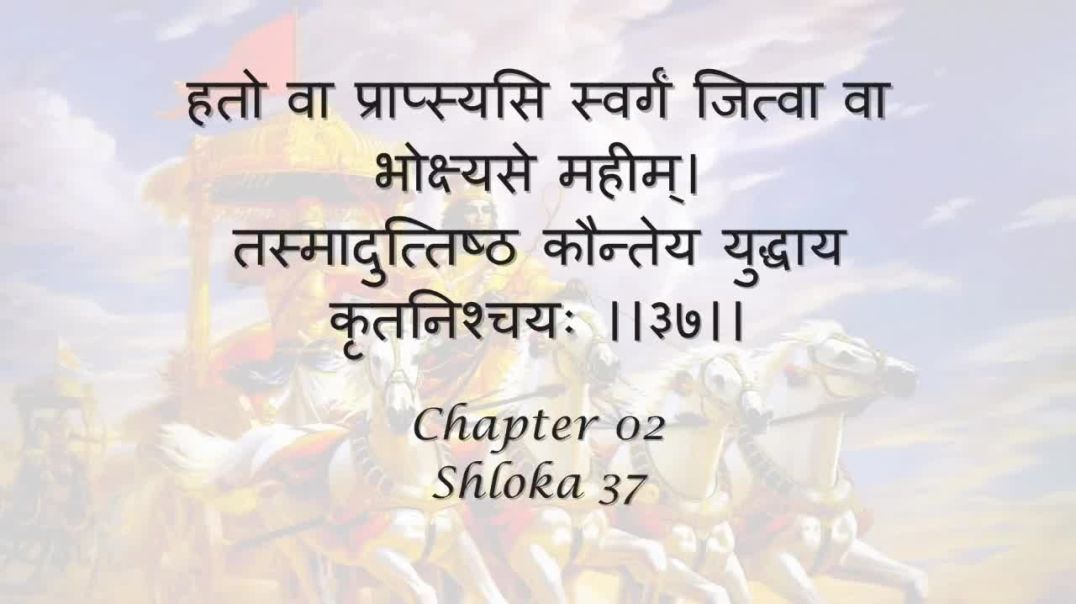
Sanskrit recitation, followed by Hindi translation of Chapter 2, Verse 37.
Text:
हतो वा प्राप्स्यसि स्वर्गं जित्वा वा भोक्ष्यसे महीम्।
तस्मादुत्तिष्ठ कौन्तेय युद्धाय कृतनिश्चयः ।।३७।।
Translation:
या तो तू युद्ध में मारा जाकर स्वर्ग को प्राप्त होगा अथवा संग्राम में जीतकर पृथ्वी का राज्य भोगेगा। इस कारण हे अर्जुन! तू युद्ध के लिए निश्चय करके खड़ा हो जा।
~~~~~~~~~~~~~~~~
OVERVIEW:
The Bhagavad Gita is a 700-verse scripture that is part of the Hindu epic Mahabharata. This scripture contains a conversation between Pandava prince Arjuna and his guide Lord Krishna on a variety of theological and philosophical issues.
Faced with a fratricidal war, a despondent Arjuna turns to his charioteer Krishna for counsel on the battlefield. Krishna, through the course of the Gita, imparts to Arjuna wisdom, the path to devotion, and the doctrine of selfless action.
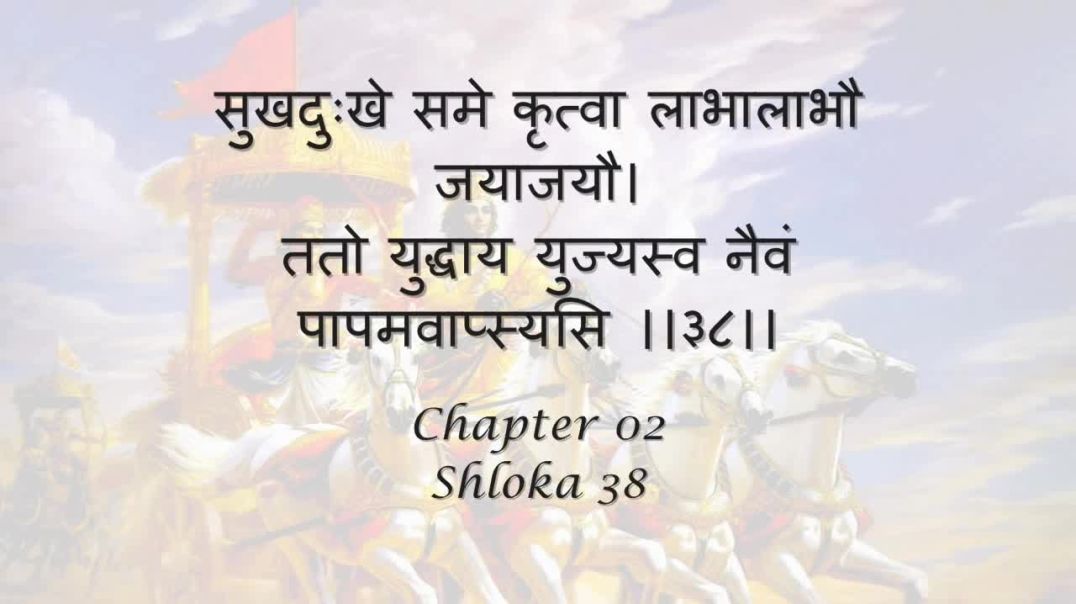
Sanskrit recitation, followed by Hindi translation of Chapter 2, Verse 38.
Text:
सुखदुःखे समे कृत्वा लाभालाभौ जयाजयौ।
ततो युद्धाय युज्यस्व नैवं पापमवाप्स्यसि ।।३८।।
Translation:
जय-पराजय, लाभ-हानि और सुख-दुःख को समान समझकर, उसके बाद युद्ध के लिए तैयार हो जा। इस प्रकार युद्ध करने से तू पाप को नहीं प्राप्त होगा।
~~~~~~~~~~~~~~~~
OVERVIEW:
The Bhagavad Gita is a 700-verse scripture that is part of the Hindu epic Mahabharata. This scripture contains a conversation between Pandava prince Arjuna and his guide Lord Krishna on a variety of theological and philosophical issues.
Faced with a fratricidal war, a despondent Arjuna turns to his charioteer Krishna for counsel on the battlefield. Krishna, through the course of the Gita, imparts to Arjuna wisdom, the path to devotion, and the doctrine of selfless action.

Burger King Vs The Burger Club Vs McDonalds Burger Challenge with French Fries Food Challenge
Ding_Dong_Girls

Burger king challenge in Local Market #HimmiStyles #foodchallenge
Ding_Dong_Girls

Burger King all Menu Apart Burger Challenge Spicy French Fries, Rice Bowl Food Challenge
Ding_Dong_Girls

Traditional Desi Highway Dhaba _ Street Food India _ Best Punjabi Dhaba
official_Sahi_Hai