Musica
Concluding verses of Shri Vishnu Sahasranama.
itiidaM kiirtaniiyasya keshavasya mahaatmanaH |
naamnaaM sahasraM divyaanaam asheshheNa prakiirtitam ||
ya edaM shrunyaa-Nityam yashchapi parikirtayaet |
Naa-aShubham praptyunaat kinCHIT-somutreH cha manavaH ||
veedantago brahmana-asyat Kshatriyo vijayee bhavaet |
vaishyo dhana-SamRidhasya-chhuudra-sukhamvaapnuyaat ||
dharmaarthii praapnuyaad-dharmam.arthaarthii cha.arthamaapnuyaat |
kaamaanava.apnuyaatkaamii prajaarthii cha-apnuyaat prajaaH ||
........
================================
INFO:
~~~~~
Song: Phalasruthi
Album: Vishnu Sahasranamam and Lalitha Sahasranamam
Artist: T S Ranganathan
================================
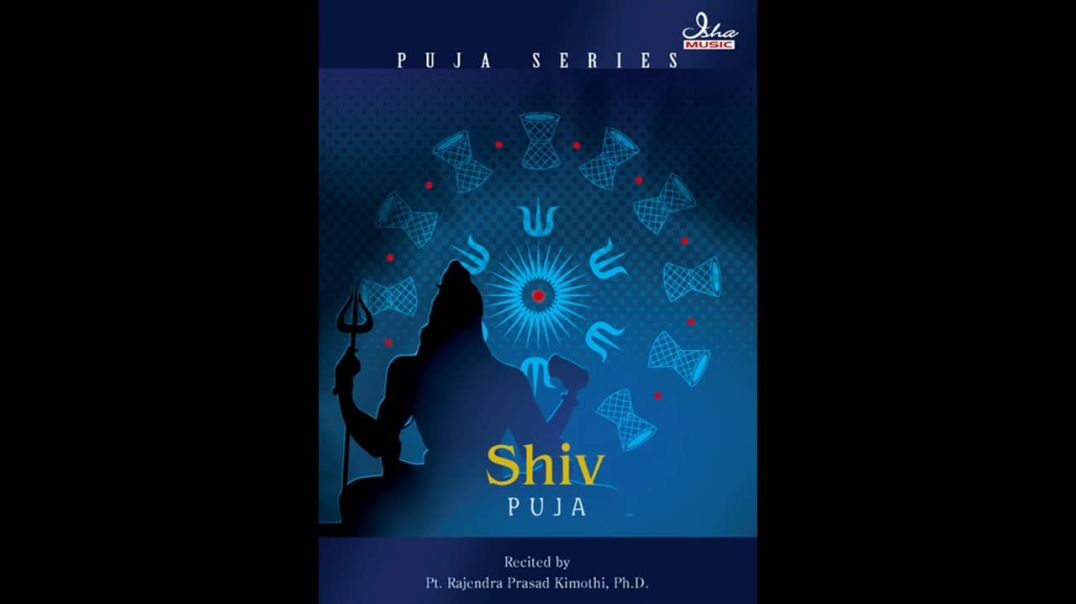
Shlokas of a complete Shiva Puja, recited by Pandit R P Kimothi.
Lord Shiva resides at his abode of Mount Kailash, with Devi Durga. They have two sons, Kartikeya and Ganesh. The Shiva family includes his devotee Bhringi and the bull Nandi, which is also Shiva's vehicle.
According to the Vedic texts, a complete puja of Lord Shiva is performed only when the whole Shiva family is included in the puja. Hence, this puja album includes the ganesh-ambika puja and the shiv parivaar puja. The album also includes the shodash upchaar puja and the shiv ashtottar shat naamavali (108 names of Lord Shiva). This is followed by the panch vaktra puja which is the puja of the five constituents of Lord Shiva as mentioned above. The album ends with a prayer for forgiveness to Lord Shiva.
===============================================
INFO:
Track: Puja Aarambh
Artist: Pt. Rajendra Prasad Kimothi, Ph.D.
Album: Shiv Puja
===============================================
![Rudri Path - Tritiya Adhyaya [Chapter Three]](https://videoshideo.com/upload/photos/2022/09/3e2fdbf6054f442944304e8cf6625620594d025bGCNFx8oNnjVPvbGlBP53.video_thumb_9017_11.jpeg)
Rudrashtadhyayi - Chapter 3
Lord Shiva is also called 'Rudra', because He has the capacity to destroy all our sorrows. The method of doing a puja of Lord Shiva in the Rudra form has been prescribed in the Yajurveda; the collection of these mantra is called the Rudra Ashtaadhyaayi. The benefits of performing this puja are peace, prosperity, progeny, good health and deep devotion of Lord Shiva. Rudri puja consists of the following parts:
The first chapter contains verses in praise of Lord Ganesha. These mantras are also called the, Shiva Sankalpa Sookta.
The second chapter contains the verses in praise of Lord Vishnu. The first sixteen mantras are also called the, Purush Sookta. The next six mantras are called the Uttara Narayan Sookta.
The third chapter has verses in praise of Lord Indra. These mantras are also called the, Apratiratha Sookta. These mantras are used for gaining victory over enemies.
The fourth chapter contains seventeen verses in praise of Lord Surya (Sun God). These mantras are also called the, Maitri Sookta.
The fifth chapters contains one hundred names of Lord Rudra and verses in praise of Lord Rudra. This chapter has sixty-six mantras and is also called the, Shat-Rudriya. This is one of the main chapters and is used for purification of oneself. This chapter is also called the Rudra Sookta. Since most of the mantras in this chapter start with namaha this chapter is also called the namakam chapter.
The sixth chapter is called the Mahachhir. This chapter contains the famous Mahamrityunjaya mantra and is a chapter in praise of Lord Shiva in the Mrityunjaya form. In this we pray to Lord Shiva for a long and a healthy life, free from disease and sorrow, and a peaceful end to our earthly life.
The seventh chapter is called the Jataa. The verses in this chapter are in praise of Lord Marut.
The eighth chapter is called the Chamakam. This is because most of the mantras end in the letters Chame. There are twenty-nine mantras in this chapter and are all dedicated to Lord Agni, the Fire God and the havan that is being performed.
The last chapter is called Shaantipaath which contains mantras chanted for peace and prosperity.
INFO:
Track: Triteeya Adhyaya
Artist: Pt. Ganesh Pant Vedpaathi
Album: Rudri
![Sampoorna Shani Puja [संपूर्ण शनि पूजा ]](https://videoshideo.com/upload/photos/2022/09/cb2b48e16c1280e7d43a7d21ea956f1fd5e03fd7eWk8ioKpgtf6xJT5aggB.video_thumb_8384_25.jpeg)
Complete Shani Puja, recited by Pundit R P Kimothi.
ABOUT:
Shani, which is the planet Saturn, is one of the nine planets that are taken into account while casting a person's horoscope. As per Indian astrology, Shani is represented by the colour black, a lame person or a person doing menial jobs. Shani also represents the highest level of intellect, hard work, lawyers and statesmen. Thus, for a person to rise in life as a great lawyer or politician he must have the divine grace of Shani bestowed upon him/her. A well-placed Shani in the horoscope can give immense wealth and power to the person. A badly placed Shani in the horoscope, on the other hand, leads to abject poverty, ill health and disrepute.
Astrologically, the cycle of Shani is thirty years, which keeps repeating itself through a person's life. Hence, a person with a normal life span will probably go through two or three cycles of Shani. During every cycle, there is period of seven and a half years called the Saade Saati period which is generally a time of hardships. Indian astrologers seriously recommend regular puja of Shani during this period.
Shani is ruled by Lord Shiva in his Mahamrityunjaya form. Thus, when a person wishes to please Shani, he/she should do so by praying to the Mahamrityunjaya form of Lord Shiva. Whether it is done to mitigate the ill effects of a badly placed Saturn, or to enhance the benefits of a well placed one, Shani puja, should be performed every Saturday.
This album contains all the ingredients that are required for seeking the divine grace of Shani. The shani aavaran puja incorporates the 108 names of Shani. This is followed by the shani rakhsa stavam, which is a prayer to Shani asking for his protection. Next is the mahakaal shani mrityunjaya stotra which, according to the Purans, was a prayer composed and sung by King Dashrath, the father of Lord Rama. The album ends with the shani stavaraaj, the shani stotra, and a prayer for forgiveness.
==============================================
INFO:
Artist: Pt. Rajendra Prasad Kimothi, Ph.D.
Album: Shani Puja
![Rudri Path - Chaturtha Adhyaya [Chapter Four]](https://videoshideo.com/upload/photos/2022/09/67287328e7ec7ec25c2e8dd983279302803dd6beuZyvsrLMaNLO8NOj3gNv.video_thumb_5544_11.jpeg)
Rudrashtadhyayi - Chapter 4
Lord Shiva is also called 'Rudra', because He has the capacity to destroy all our sorrows. The method of doing a puja of Lord Shiva in the Rudra form has been prescribed in the Yajurveda; the collection of these mantra is called the Rudra Ashtaadhyaayi. The benefits of performing this puja are peace, prosperity, progeny, good health and deep devotion of Lord Shiva. Rudri puja consists of the following parts:
The first chapter contains verses in praise of Lord Ganesha. These mantras are also called the, Shiva Sankalpa Sookta.
The second chapter contains the verses in praise of Lord Vishnu. The first sixteen mantras are also called the, Purush Sookta. The next six mantras are called the Uttara Narayan Sookta.
The third chapter has verses in praise of Lord Indra. These mantras are also called the, Apratiratha Sookta. These mantras are used for gaining victory over enemies.
The fourth chapter contains seventeen verses in praise of Lord Surya (Sun God). These mantras are also called the, Maitri Sookta.
The fifth chapters contains one hundred names of Lord Rudra and verses in praise of Lord Rudra. This chapter has sixty-six mantras and is also called the, Shat-Rudriya. This is one of the main chapters and is used for purification of oneself. This chapter is also called the Rudra Sookta. Since most of the mantras in this chapter start with namaha this chapter is also called the namakam chapter.
The sixth chapter is called the Mahachhir. This chapter contains the famous Mahamrityunjaya mantra and is a chapter in praise of Lord Shiva in the Mrityunjaya form. In this we pray to Lord Shiva for a long and a healthy life, free from disease and sorrow, and a peaceful end to our earthly life.
The seventh chapter is called the Jataa. The verses in this chapter are in praise of Lord Marut.
The eighth chapter is called the Chamakam. This is because most of the mantras end in the letters Chame. There are twenty-nine mantras in this chapter and are all dedicated to Lord Agni, the Fire God and the havan that is being performed.
The last chapter is called Shaantipaath which contains mantras chanted for peace and prosperity.
INFO:
Track: Chaturtha Adhyaya
Artist: Pt. Ganesh Pant Vedpaathi
![Rudri Path - Dvitiya Adhyaya [Chapter Two]](https://videoshideo.com/upload/photos/2022/09/6fe0462fe6df892e0fd244cb4b883ea2beb3dd69DuqMHdD52q6uNBNu4YSh.video_thumb_5617_11.jpeg)
Rudrashtadhyayi - Chapter 2
Lord Shiva is also called 'Rudra', because He has the capacity to destroy all our sorrows. The method of doing a puja of Lord Shiva in the Rudra form has been prescribed in the Yajurveda; the collection of these mantra is called the Rudra Ashtaadhyaayi. The benefits of performing this puja are peace, prosperity, progeny, good health and deep devotion of Lord Shiva. Rudri puja consists of the following parts:
The first chapter contains verses in praise of Lord Ganesha. These mantras are also called the, Shiva Sankalpa Sookta.
The second chapter contains the verses in praise of Lord Vishnu. The first sixteen mantras are also called the, Purush Sookta. The next six mantras are called the Uttara Narayan Sookta.
The third chapter has verses in praise of Lord Indra. These mantras are also called the, Apratiratha Sookta. These mantras are used for gaining victory over enemies.
The fourth chapter contains seventeen verses in praise of Lord Surya (Sun God). These mantras are also called the, Maitri Sookta.
The fifth chapters contains one hundred names of Lord Rudra and verses in praise of Lord Rudra. This chapter has sixty-six mantras and is also called the, Shat-Rudriya. This is one of the main chapters and is used for purification of oneself. This chapter is also called the Rudra Sookta. Since most of the mantras in this chapter start with namaha this chapter is also called the namakam chapter.
The sixth chapter is called the Mahachhir. This chapter contains the famous Mahamrityunjaya mantra and is a chapter in praise of Lord Shiva in the Mrityunjaya form. In this we pray to Lord Shiva for a long and a healthy life, free from disease and sorrow, and a peaceful end to our earthly life.
The seventh chapter is called the Jataa. The verses in this chapter are in praise of Lord Marut.
The eighth chapter is called the Chamakam. This is because most of the mantras end in the letters Chame. There are twenty-nine mantras in this chapter and are all dedicated to Lord Agni, the Fire God and the havan that is being performed.
The last chapter is called Shaantipaath which contains mantras chanted for peace and prosperity.
INFO:
Track: Dviteeya Adhyaya
Artist: Pt. Ganesh Pant Vedpaathi
Album: Rudri
Chandrashekara Chandrashekara Pahimam!!
The Chandrashekara Ashtakam is believed to have been written by Sage Markandeya, a Hindu sage who was saved by Chandrashekara [Lord Shiva] from Yama [Lord of Death] at the age of 16.
===============================================
TEXT:
रत्नसानुशरासनं रजताद्रिशृङ्गनिकॆतनं
शिञ्जिनीकृतपन्नगॆश्वरमच्युताननसायकम् ।
क्षिप्रदग्धपुरत्रयं त्रिदिवालयैरभिवन्दितं
चन्द्रशॆखरमाश्रयॆ मम किं करिष्यति वै यमः ॥
पंचपादपपुष्पगन्धपदाम्बुजद्वयशॊभितं
फाललॊचनजातपावकदग्द्धमन्मथविग्रहम् ।
भस्मदिग्द्धकलॆबरं भवनाशनं भवमव्ययं
चन्द्रशॆखरमाश्रयॆ मम किं करिष्यति वै यमः ॥
मत्तवारणमुख्यचर्मकृतॊत्तरीयमनॊहरं
पङ्कजासन पद्मलॊचनपूजितांघ्रिसरॊरुहम् ।
दॆवसिन्धुतरंगशीकरसिक्तशुभ्रजटाधरं
चन्द्रशॆखरमाश्रयॆ मम किं करिष्यति वै यमः ॥
यक्षराजसखं भगाक्षहरं भुजंगविभूषणं
शैलराजसुतापरिष्कृतचारुवामकलॆबरम् ।
क्ष्वॆलनीलगलं परश्वधधारिणं मृगधारिणं
चन्द्रशॆखरमाश्रयॆ मम किं करिष्यति वै यमः ॥
कुण्डलीकृतकुण्डलीश्वरमण्डलं वृषवाहनं
नारदादिमुनीश्वरस्तुतवैभवं भुवनॆश्वरम ।
अन्धकान्तकमाश्रितामरपादपं शमनान्तकं
चन्द्रशॆखरमाश्रयॆ मम किं करिष्यति वै यमः ॥
भॆषजं भवरॊगिणामखिलापदामपहारिणं
दक्षयज्ञविनाशनं त्रिगुणात्मकं त्रिविलॊचनम् ।
भुक्ति मुक्ति फलप्रदं सकलाघसंघनिबर्हणं
चन्द्रशॆखरमाश्रयॆ मम किं करिष्यति वै यमः ॥
भक्तवत्सलमर्चतां निधिमक्षयं हरिदम्बरं
सर्वभूतपतिं परात्परमप्रमॆयमनुत्तमम् ।
सॊमवारिनभूहुताशनसॊमपानिलखाकृतिं
चन्द्रशॆखरमाश्रयॆ मम किं करिष्यति वै यमः ॥
विश्वसृष्टिविधायिनं पुनरॆव पालनतत्परं
संहरन्तमपि प्रपञ्चमशॆषलॊकनिवासिनम् ।
क्रीडयन्तमहर्निशं गणनाथयूथसमन्वितं
चन्द्रशॆखरमाश्रयॆ मम किं करिष्यति वै यमः ॥
मृत्युभीतमृकण्डुसूनुकृतस्तवं शिवसन्निधौ
यत्र कुत्र च यः पठॆन्न हि तस्य मृत्युभयं भवॆत् ।
पूर्णमायुररॊगतामखिलार्थसंपदमादरात्
चन्द्रशॆखर एव तस्य ददाति मुक्तिमयत्नतः ॥
===============================================
INFO:
Track: Chandra sekaraashtakam
Album: Shiva Stuthi Vol - 2
Artist: T S Ranganathan
Shiva Stuti composed by Adi Shankara.
TEXT:
prabhum prananatham vibhum vishvanatham
jagannathanatham sadanandabhajamh
bhavadbhavyabhuteshvaram bhutanatham
shivamshankaram shambhumishanamide 1
gale rundamalam tanau sarpajalam
mahakalakalam ganeshadhipalamh
jatajutabhangottarangairvishalam shivam
shankaram shambhumishanamide 2
mudamakaram mandanam mandayantam
mahamandala bhasmabhushhadharamtam
anadihyaparam mahamohaharam
shivam shankaram shambhumishanamide 3
vatadho nivasam mahattattahasam
mahapapanasham sadasuprakashamh
girishamganesham sureshammahesham
shivamshankaram shambhumishanamide 4
girindratmajasangrahitardhadeham
girau sansthitam sarvada sannageham
parabrahmabrahmadibhirvandhyamanam
shivam shankaram shambhumishanamide 5
kapalam trishulam karabhyam dadhanam
padambhojanamraya kamam dadanam
balivardayanam suranam pradhanam
shivam shankaram shambhumishanamide 6
sharachchandragatram gunananda patram
trinetram pavitram dhaneshasya mitram
aparnakalatram charitram vichitram
shivam shankaram shambhumishanamide 7
haramsarpaharam chitabhuviharam
bhavamvedasaram sadanirvikaram
smashaanevadantam manojamdahantam
shivamshankaram shambhumishanamide 8
stavam yah prabhate narah shulapane
patheth stotraratnam vhaprapyaratnam
sputram sudhyanam sumitram kalatram
vichitrai samaradya moksham prayati 9
SHOW LESS
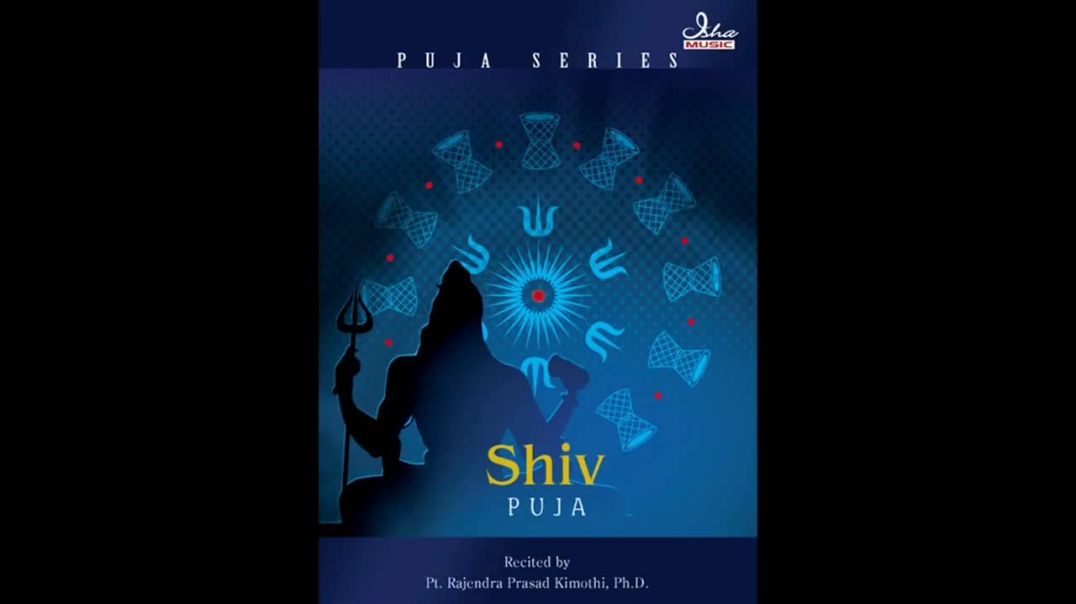
Shlokas of a complete Shiva Puja, recited by Pandit R P Kimothi.
Lord Shiva resides at his abode of Mount Kailash, with Devi Durga. They have two sons, Kartikeya and Ganesh. The Shiva family includes his devotee Bhringi and the bull Nandi, which is also Shiva's vehicle.
According to the Vedic texts, a complete puja of Lord Shiva is performed only when the whole Shiva family is included in the puja. Hence, this puja album includes the ganesh-ambika puja and the shiv parivaar puja. The album also includes the shodash upchaar puja and the shiv ashtottar shat naamavali (108 names of Lord Shiva). This is followed by the panch vaktra puja which is the puja of the five constituents of Lord Shiva as mentioned above. The album ends with a prayer for forgiveness to Lord Shiva.
===============================================
INFO:
Track: Sankalp
Artist: Pt. Rajendra Prasad Kimothi, Ph.D.
Album: Shiv Puja
===============================================
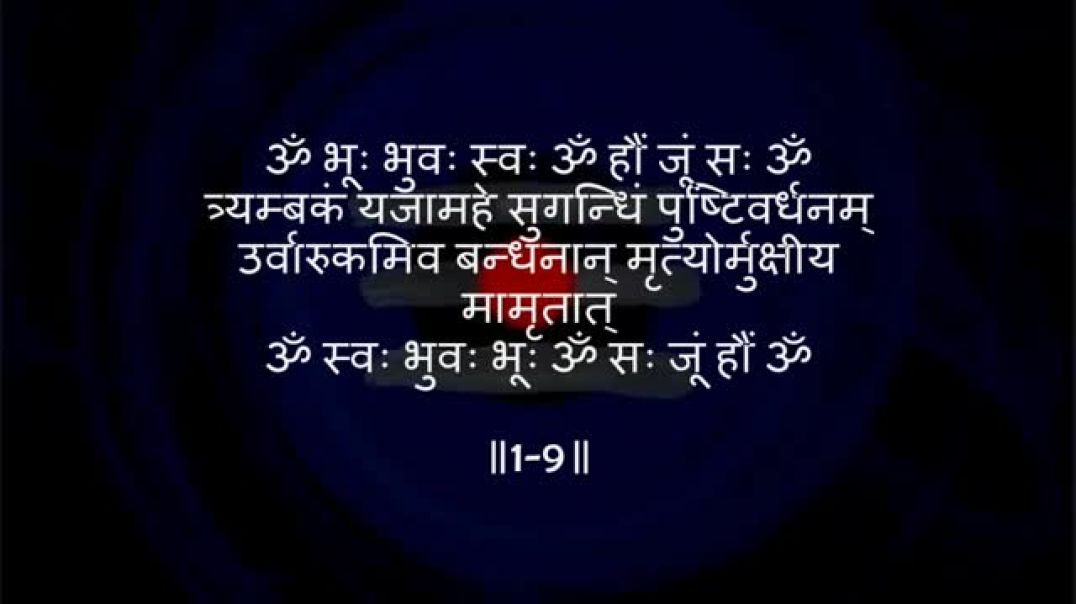
108 repetitions of the Maha Mrityunjaya Mantra (महामृत्युंजय मंत्र), along with the beej mantras.
This mantra, when chanted or heard with faith and dedication has the power to rid man of all his past sins. We can rid ourselves of problems such as disease, misery, lack of progeny and ill-fortune. Even untimely death can be overcome by the chanting of this mantra.
LYRICS:
Om Bhuha Bhuvaha Swaha Om Houm Jum Saha
Om Trayambakam Yajamahe Sugandhim Pushtivardhanam
Urvarukamivabandhanan Mrutyormukshiryamamrutat
Om Swaha Bhuvaha Bhuha Om Saha Jum Houm Om
INFO:
Track: Maha Mrityunjaya Mantra
Artist: Shubha Mudgal and chorus
Album: Mahamrityunjaya
================================================
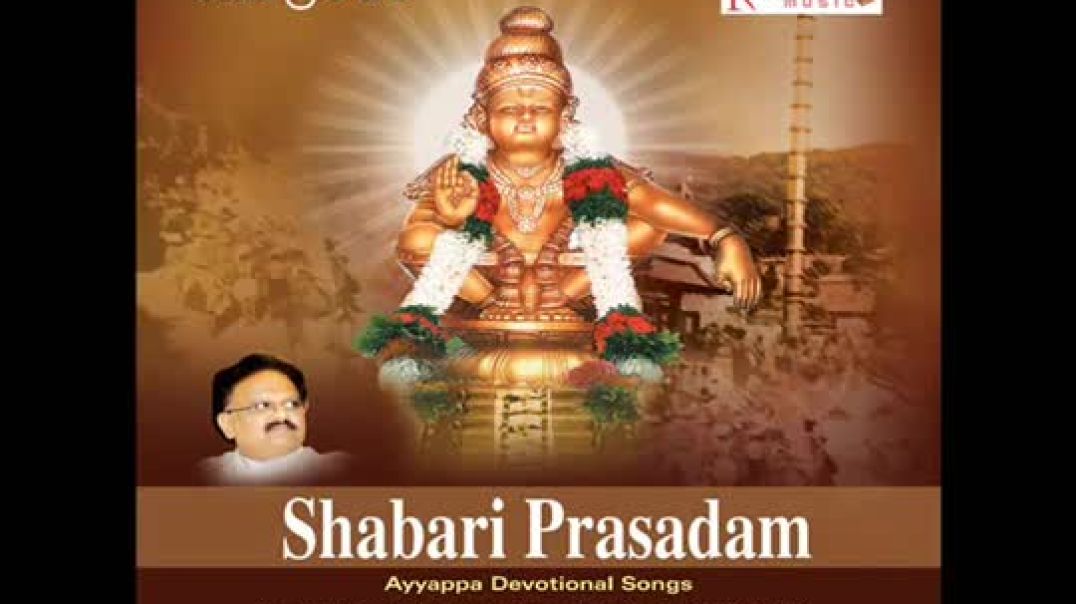
Swamy Ayyappa Telugu Devotional Song
INFO:
Album: Shabari Prasadam
Artist: Srikanth
Ayyappan Telugu Devotional Song
INFO:
Album: Shabari Prasadam
Artist: Srikanth
![Vasudeva Sutam Devam [Krishnashtakam] _ Shri Krishna Stotram _ with Sanskrit lyrics](https://videoshideo.com/upload/photos/2022/09/7a0bc1aae484e2d334da21e39c79be2ff595358bF71Kmsxgz9nw3kcBH9KM.video_thumb_5010_11.jpeg)
Peaceful Lord Krishna Bhajan. Composed by sage Adi Shankaracharya
LYRICS:
वसुदेवसुतं देवं कंस चाणूर मर्दनम् ।
देवकीपरमानन्दं कृष्णं वन्दे जगद्गुरुम् ॥
अतसी पुष्प सङ्काशं हार नूपुर शोभितम् ।
रत्नकङ्कण केयूरं कृष्णं वन्दे जगद्गुरुम् ॥
कुटिलालक संयुक्तं पूर्णचन्द्र निभाननम् ।
विलसत्कुण्डलधरं कृष्णं वन्दे जगद्गुरम् ॥
मन्दार गन्ध संयुक्तं चारुहासं चतुर्भुजम् ।
बर्हिपिञ्छाव चूडाङ्गं कृष्णं वन्दे जगद्गुरुम् ॥
उत्फुल्लपद्मपत्राक्षं नील जीमूत सन्निभम् ।
यादवानां शिरोरत्नं कृष्णं वन्दे जगद्गुरुम् ॥
रुक्मिणीकेलिसंयुक्तं पीताम्बर सुशोभितम् ।
अवाप्त तुलसी गन्धं कृष्णं वन्दे जगद्गुरुम् ॥
गोपिकानां कुचद्वन्द कुङ्कुमाङ्कित वक्षसम् ।
श्रीनिकेतं महेष्वासं कृष्णं वन्दे जगद्गुरुम् ॥
श्रीवत्साङ्कं महोरस्कं वनमाला विराजितम् ।
शङ्खचक्रधरं देवं कृष्णं वन्दे जगद्गुरुम् ॥
कृष्णाष्टकमिदंपुण्यं प्रातरुत्थाय यः पठेत् ।
कोटिजन्मकृतं पापं स्मरणेन विनश्यति ॥
================================================
INFO:
Track: Krishnashtakam
Album: Sri Krsna Sowthrani - Vol.1
Performers: Various Artists
Music: Radha Gopi
Sanskrit mantra for having good health and overcoming disease.
LYRICS:
rogan sheshanapahansi tushta
rushta tu kaman sakalanabhishtan
tyamashritanam na vipannaranam
tvamashrita hya shrayatam prayanti
रोगान शेषा नपहंसि तुष्टा रूष्टा तु कामान् सकलानाभीष्टान्।
त्यामाश्रितानां न विपन्नराणां त्वामाश्रिता ह्या श्रयतां प्रयान्ति।
================================================
INFO:
Track: Roga Naash Mantra (for Overcoming Disease)
Artist: Jitender Singh
Album: Moksha - 25 Mantras for Health, Happiness and Prosperity
================================================
Sri Devi Khadgamala Namavali - Names of Devi Khadgamala
Meenakshi Pancharatnam (aka Minakshi Pancha Ratnam) is a stotram by the great sage Adi Shankaracharya, addressed to Goddess Meenakshi, an incarnation of Goddess Parvathi.
LYRICS:
मीनाक्षी पञ्चरत्नम्
उद्यद्भानुसहस्रकोटिसदृशां केयूरहारोज्ज्वलां
विम्बोष्ठीं स्मितदन्तपङ्क्तिरुचिरां पीताम्बरालङ्कृताम् ।
विष्णुब्रह्मसुरेन्द्रसेवितपदां तत्त्वस्वरूपां शिवां
मीनाक्षीं प्रणतोऽस्मि सन्ततमहं कारुण्यवारांनिधिम् ॥१॥
मुक्ताहारलसत्किरीटरुचिरां पूर्णेन्दुवक्त्रप्रभां
शिञ्जन्नूपुरकिङ्किणीमणिधरां पद्मप्रभाभासुराम् ।
सर्वाभीष्टफलप्रदां गिरिसुतां वाणीरमासेवितां ।
मीनाक्षीं प्रणतोऽस्मि सन्ततमहं कारुण्यवारांनिधिम् ॥२॥
श्रीविद्यां शिववामभागनिलयां ह्रीङ्कारमन्त्रोज्ज्वलां
श्रीचक्राङ्कितबिन्दुमध्यवसतिं श्रीमत्सभानायिकाम् ।
श्रीमत्षण्मुखविघ्नराजजननीं श्रीमज्जगन्मोहिनीं ।
मीनाक्षीं प्रणतोऽस्मि सन्ततमहं कारुण्यवारांनिधिम् ॥३॥
श्रीमत्सुन्दरनायिकां भयहरां ज्ञानप्रदां निर्मलां
श्यामाभां कमलासनार्चितपदां नारायणस्यानुजाम् ।
वीणावेणुमृदङ्गवाद्यरसिकां नानाविधामम्बिकां ।
मीनाक्षीं प्रणतोऽस्मि सन्ततमहं कारुण्यवारांनिधिम् ॥४॥
नानायोगिमुनीन्द्रहृत्सुवसतिं नानार्थसिद्धिप्रदां
नानापुष्पविराजिताङ्घ्रियुगलां नारायणेनार्चिताम् ।
नादब्रह्ममयीं परात्परतरां नानार्थतत्त्वात्मिकां ।
मीनाक्षीं प्रणतोऽस्मि सन्ततमहं कारुण्यवारांनिधिम् ॥५॥
Prayer to Goddess Sharada, an incarnation of Goddess Saraswathi. Composed by the sage Adi Shankaracharya.
LYRICS:
~~~~~~
सुवक्षोजकुम्भां सुधापूर्णकुम्भां
प्रसादावलम्बां प्रपुण्यावलम्बाम् ।
सदास्येन्दुबिम्बां सदानोष्ठबिम्बां
भजे शारदाम्बामजस्रं मदम्बाम्॥१॥
Suvakshoja kumbham, sudha poorna kumbhaam,
Prasadavalambhaam, prapunyavalambaam,
Sadasyendu bhimbhaam, sadanoshta bhimbhaam,
Bhaje Saradambhaam ajasram madhambham., 1
कटाक्षे दयार्द्रां करे ज्ञानमुद्रां
कलाभिर्विनिद्रां कलापैः सुभद्राम् ।
पुरस्त्रीं विनिद्रां पुरस्तुङ्गभद्रां
भजे शारदाम्बामजस्रं मदम्बाम् ॥२॥
Kadakshe dayardhraam, kare gnana mudhraam,
Kalabhir vinidhram, kalapai subhadhraam,
Purasthreem vinidhraam, pura sthunga bhadram,
Bhaje Saradambhaam ajasram madhambham., 2
ललामाङ्कफालां लसद्गानलोलां
स्वभक्तैकपालां यशःश्रीकपोलाम् ।
करे त्वक्षमालां कनत्प्रत्नलोलां
भजे शारदाम्बामजस्रं मदम्बाम् ॥३॥
Lalaamanga phaalaam lasad gana lolaam,
Swabhakthaika paalaam, yasa sree kapolaam,
Kare thwaksha maalaam, kanath prathna lolaam,
Bhaje Saradambhaam ajasram madhambham., 3
सुसीमन्तवेणीं दृशा निर्जितैणीं
रमत्कीरवाणीं नमद्वज्रपाणीम् ।
सुधामन्थरास्यां मुदा चिन्त्यवेणीं
भजे शारदाम्बामजस्रं मदम्बाम् ॥४॥
Su seemantha veneem drusa nirjithaineem,
Ramath keera vaneem Namath vajra panim,
Sudhamandharasyam, mudha chinthya veneem,
Bhaje Saradambhaam ajasram madhambham., 4
सुशान्तां सुदेहां दृगन्ते कचान्तां
लसत्सल्लताङ्गीमनन्तामचिन्त्याम् ।
स्मृतां तापसैः सर्गपूर्वस्थितां तां
भजे शारदाम्बामजस्रं मदम्बाम् ॥५॥
Susantham sudeham druganthe kachanthaam,
Lasad salla thagee manthama chinthyam,
Smara thapasai sanga poorva sthitham thaam,
Bhaje Saradambhaam ajasram madhambham., 5
कुरङ्गे तुरङ्गे मृगेन्द्रे खगेन्द्रे
मराले मदेभे महोक्षेऽधिरूढाम् ।
महत्यां नवम्यां सदा सामरूपां
भजे शारदाम्बामजस्रं मदम्बाम् ॥६॥
Kurange, thurange Mrugendre, Khagendre,
Maraale madhebhe mahokshe adhi rodaam,
Mahathyam navamyam sada saama roopam,
Bhaje Saradambhaam ajasram madhambham., 6
ज्वलत्कान्तिवह्निं जगन्मोहनाङ्गीं
भजे मानसाम्भोजसुभ्रान्तभृङ्गीम् ।
निजस्तोत्रसंगीतनृत्यप्रभाङ्गीम्
भजे शारदाम्बामजस्रं मदम्बाम् ॥७॥
Jwalath kanthi vahnim, jagan mohanaamgeem,
Bhaje maanasam bhoja subrantha brungeem,
Nija stotra Sangeetha nruthya prabhangeem,
Bhaje Saradambhaam ajasram madhambham., 7
भवाम्भोजनेत्राजसम्पूज्यमानां
लसन्मन्दहासप्रभावक्त्रचिह्नाम् ।
चलच्चञ्चलाचारुताटङ्ककर्णां
भजे शारदाम्बामजस्रं मदम्बाम् ॥८॥
Bhavambhoja nethraja sampoojyamanam,
Lasan manda hasa prabha vakthra chihnaam,
Chlath chanchalodhara thadanga karnam,
Bhaje Saradambhaam ajasram madhambham., 8
================================================
![Mahishasura Mardini Stotram [Aigiri Nandini Nandita Medini]](https://videoshideo.com/upload/photos/2022/09/311cbcd2ae9bb4edc478b432a53d6ccd898406b3vsPKSUWARCGDg6xSdUdJ.video_thumb_8017_11.jpeg)
Mahishasura Mardini stotram is dedicated to Devi Durga.
Mahishasur Mardini was an incarnation of Goddess Durga created to kill the demon Mahishasur. In this form, Goddess Durga is depicted with 10 arms, riding on a lion and carrying weapons.
================================================
LYRICS:
ayi giri nandini, nandita medini, visva vinodini, nandinute ||
giri vara vindhya shirodhini vasini vishnuvilaasini jisnunute ||
bhagavati he shitikaNthakutumbini bhoorikutumbini bhoorikrute ||
jaya jaya he mahishaasuramardhini ramyakapardini shailasute ||
अयि गिरिनंदिनि नंदितमेदिनि विश्वविनोदिनि नंदनुते
गिरिवर विंध्य शिरोधिनिवासिनि विष्णुविलासिनि जिष्णुनुते |
भगवति हे शितिकण्ठकुटुंबिनि भूरि कुटुंबिनि भूरि कृते
जय जय हे महिषासुरमर्दिनि रम्यकपर्दिनि शैलसुते ||
........
================================================
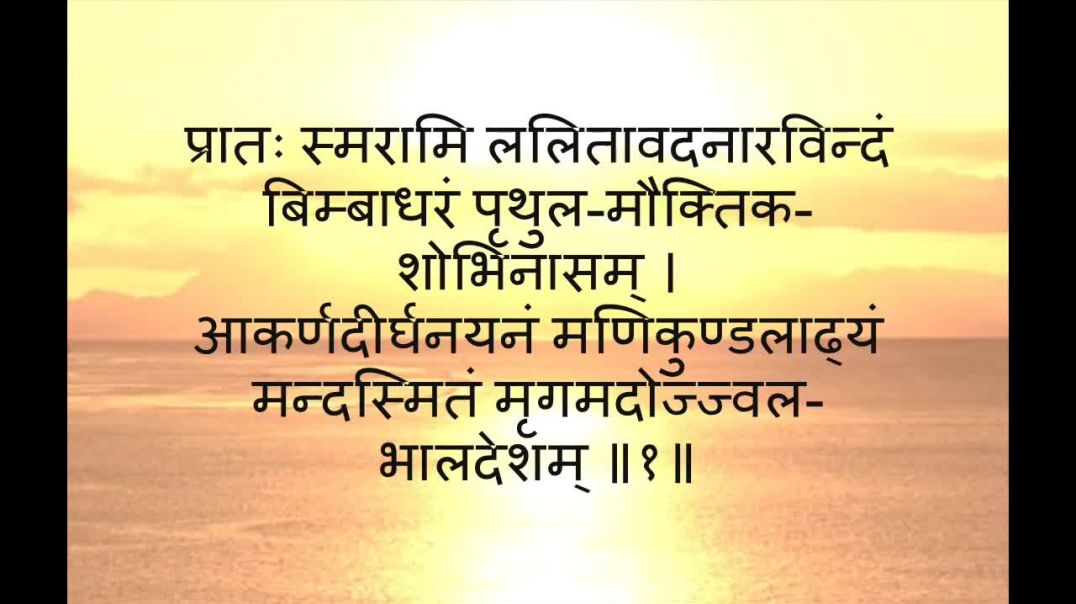
The Lalita Pancha Ratnam [Five Gems on Lalita] is a Sanskrit stothram composed by the great sage Sri Adi Shankaracharya in honour of Goddess Lalita Devi,
TEXT (Sanskrit):
प्रातः स्मरामि ललितावदनारविन्दं
बिम्बाधरं पृथुल-मौक्तिक-शोभिनासम् ।
आकर्णदीर्घनयनं मणिकुण्डलाढ्यं
मन्दस्मितं मृगमदोज्ज्वल-भालदेशम् ॥१॥
प्रातर्भजामि ललिताभुजकल्पवल्लीं
रक्तांगुलीय-लसदंगुलि-पल्लवाढ्याम्।
माणिक्य-हेम-बलयांगद-शोभमानां
पुण्ड्रेक्षुचापकुसुमेषुसृणीःदधानाम् ॥२॥
प्रातर्नमामि ललिताचरणारविन्दं
भक्तेष्टदाननिरतं भवसिन्धुपोतम् ।
पद्मासनादि-सुरनायक-पूजनीयं
पद्मांकुश-ध्वज-सुदर्शन-लांछनाढ्यम् ॥३॥
प्रातः स्तुवे परशिवां ललितां भवानीं
त्रय्यन्तवेद्यविभवां करुणानवाद्याम् ।
विश्वस्य सृष्टि-विलय-स्थितिहेतुभूतां
विद्येश्वरीं निगमवांगमनसाविदूराम् ॥४ ॥
प्रातर्वदामि ललिते तव पुण्यनाम-
कामेश्वरीति कमलेति महेश्वरीति ।
श्रीशाम्भवीति जगतां जननी परेति
वाग्देवतेति वचसा त्रिपुरेश्वरीति ॥५ ॥
================================================
TEXT & MEANINGS (English):
Pratha smarami Lalitha vadanaravindam,
Bimbadaram pradhula maukthika shobhi nasam,
Aakarna deerga nayanam mani kundaladyam,
Mandasmitham mruga madojjwala phala desam. 1
Meaning: I meditate early in the morning upon that enchanting lotus like visage of Shree Lalitha whose lips are deep red like the Bimba flower, the nose bedight with a pearl pendant; whose eyes are big as to be spreading up to the ears wearing the jewelled rings and whose forehead has a comely musk mark. Her smiling face appears very captivating.
Prathar Bhajami Lalitha Bhuja kalpa vallim,
Rathnanguleeya lasathanguli pallavadyam,
Manikhya hema valayangadha Shobha maanam,
Pundreshu Chapa kusumeshu sruneen dadhanam. 2
Meaning: I concentrate early in the morning on the svelt-creeper like comely arms of Shree Lalita Devi whose hands are bedight with the red ring worn on her fingers and with the jewel embedded gold bangles (on the wrist). Her hands hold the bow made of the sugarcane of red variety, the arrow made of flowers and a cumulus.
Prathar namami lalitha charanaravindam,
Bhakteshta dana niratham bhava sindhu potham,
Padmasanadhi sura nayaka poojaneeyam,
Padmangusa dwaja sudarsana lanchanadyam. 3
Meaning: I bow early in the morning to the lotus-like soft feet of Shree Lalita Devi which readily grant the devotees desires and are like the veritable firm ship to take one across the sea of mortal existence; which are ever adored by the lotus-seated Brahma and other leaders of the godhead and sitting in the lotus posture, who holds a lotus, a goad, a flag and the sudarshana (wheel) in her hands.
Pratha sthuthave parasivaam lalithaam bhavaneem,
Trayyanha vedhya vibhavam karunanan vadhyam,
Viswasya srushti vilaya sthithi hethu bhootham,
Visweswareem nigama vang mana sathi dhooram. 4
Meaning: I sing early in the morning the virtues of Sri Lalitha Bhavani , who is source of Shiva’s power, the slayer of arrogance, whose glory has been described in the Vedas and Upanishads, who is the pure and auspicious form of mercy, the root cause of creation, sustenance and destruction of this world and who is the beyond the reach of reach of mind and words.
Prathar vadami lalithe thava punya nama,
Kameswarethi, kamalethi Maheswareethi,
Sri shambhaveethi jagatham janani parethi,
Vag deva thethi vachasa tripureswareethi. 5
Meaning: O Goddess Lalitha! I chant early in the morning your sacred names: Kameshwari, Kamala, Maheshwari, Shambhavee, Jagat Janani, Para, Vagdevi and Tirpureshwari.
================================================
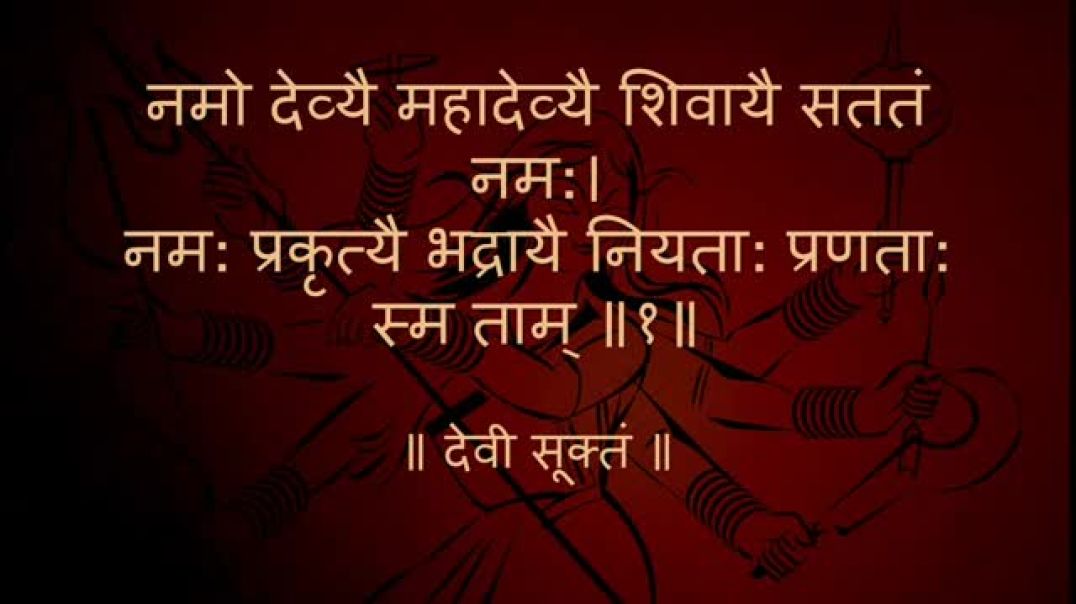
Complete Devi Suktam, with sing-along lyrics (in Sanskrit) and meanings in English.
TRANSLATION:
We bow to the Goddess, to the great Goddess, to the energy of Infinite Goodness. We prostrate, with hands together, to Nature, to the excellent one. II1II
We bow to the Reliever of Sufferings, to the eternal, to the embodiment of rays of light. We continually bow to the Goddess who manifests light, to the form of devotion, to Happiness. II2II
We bow to the welfare of those who bow. To change, to perfection, to dissolution, to the wealth which sustains earth, to the wife of Consciousness, we bow. II3II
We bow to the one who removes difficulties, who removes beyond all difficulties, to the essence. We continually bow to the doer of all, to perception and to the unknowable one. II4II
We bow to the extremely beautiful and to the extremely fierce, we bow, we bow. We bow to the establisher of the perceivable world and and Who is the mundane existence, we bow, we bow. II5II
We bow to the divine Goddess in all existence who is addressed as the perceivable form of the consciousness which pervades all. We bow to her thrice; we bow to her continuously. II6II
We bow to the divine Goddess in all existence who resides all throughout the Consciousness and is known by the reflections of mind. We bow to her thrice; we bow to her continuously. II7II
We bow to the divine Goddess in all existence who resides in the form of intelligence. We bow to her thrice; we bow to her continuously. II8II
We bow to the divine Goddess in all existence who resides in the form of Sleep. We bow to her thrice; we bow to her continuously. II9II
We bow to the divine Goddess in all existence who resides in the form of Hunger. We bow to her thrice; we bow to her continuously. II10II
We bow to the divine Goddess in all existence who resides in the form of appearance. We bow to her thrice; we bow to her continuously. II11II
We bow to the divine Goddess in all existence who resides in the form of energy. We bow to her thrice; we bow to her continuously. II12II
We bow to the divine Goddess in all existence who resides in the form of desire. We bow to her thrice; we bow to her continuously. II13II
We bow to the divine Goddess in all existence who resides in the form of patient forgiveness. We bow to her thrice; we bow to her continuously. II14II
We bow to the divine Goddess in all existence who resides in the form of all living beings. We bow to her thrice; we bow to her continuously. II15II
We bow to the divine Goddess in all existence who resides in the form of humility. We bow to her thrice; we bow to her continuously. II16II
We bow to the divine Goddess in all existence who resides in the form of peace. We bow to her thrice; we bow to her continuously. II17II
We bow to the divine Goddess in all existence who resides in the form of faith. We bow to her thrice; we bow to her continuously. II18II
We bow to the divine Goddess in all existence who resides in the form of beauty enhanced by love. We bow to her thrice; we bow to her continuously. II19II
We bow to the divine Goddess in all existence who resides in the form of true wealth. We bow to her thrice; we bow to her continuously. II20II
We bow to the divine Goddess in all existence who resides in the form of change. We bow to her thrice; we bow to her continuously. II21II
We bow to the divine Goddess in all existence who resides in the form of recollection or memory. We bow to her thrice; we bow to her continuously. II22II
We bow to the divine Goddess in all existence who resides in the form of compassion. We bow to her thrice; we bow to her continuously. II23II
We bow to the divine Goddess in all existence who resides in the form of Satisfaction. We bow to her thrice; we bow to her continuously. II24II
We bow to the divine Goddess in all existence who resides in the form of Mother. We bow to her thrice; we bow to her continuously. II25II
We bow to the divine Goddess in all existence who resides in the form of confusion. We bow to her thrice; we bow to her continuously. II26II
Presiding over the senses of all beings and pervading all existence, to the Omnipresent Goddess who individualizes creation we bow, we bow. II27II
In the form of consciousness she distinguishes the individual phenomena of the perceivable universe. we bow, we bow, we bow, we bow to her. II28II
================================================